Free Shipping on Every Order
Shipping details

30-Day Returns on Eligible Items
No restocking fees. View return policy
Secure Checkout


30-Day Returns on Eligible Items
No restocking fees. View return policy
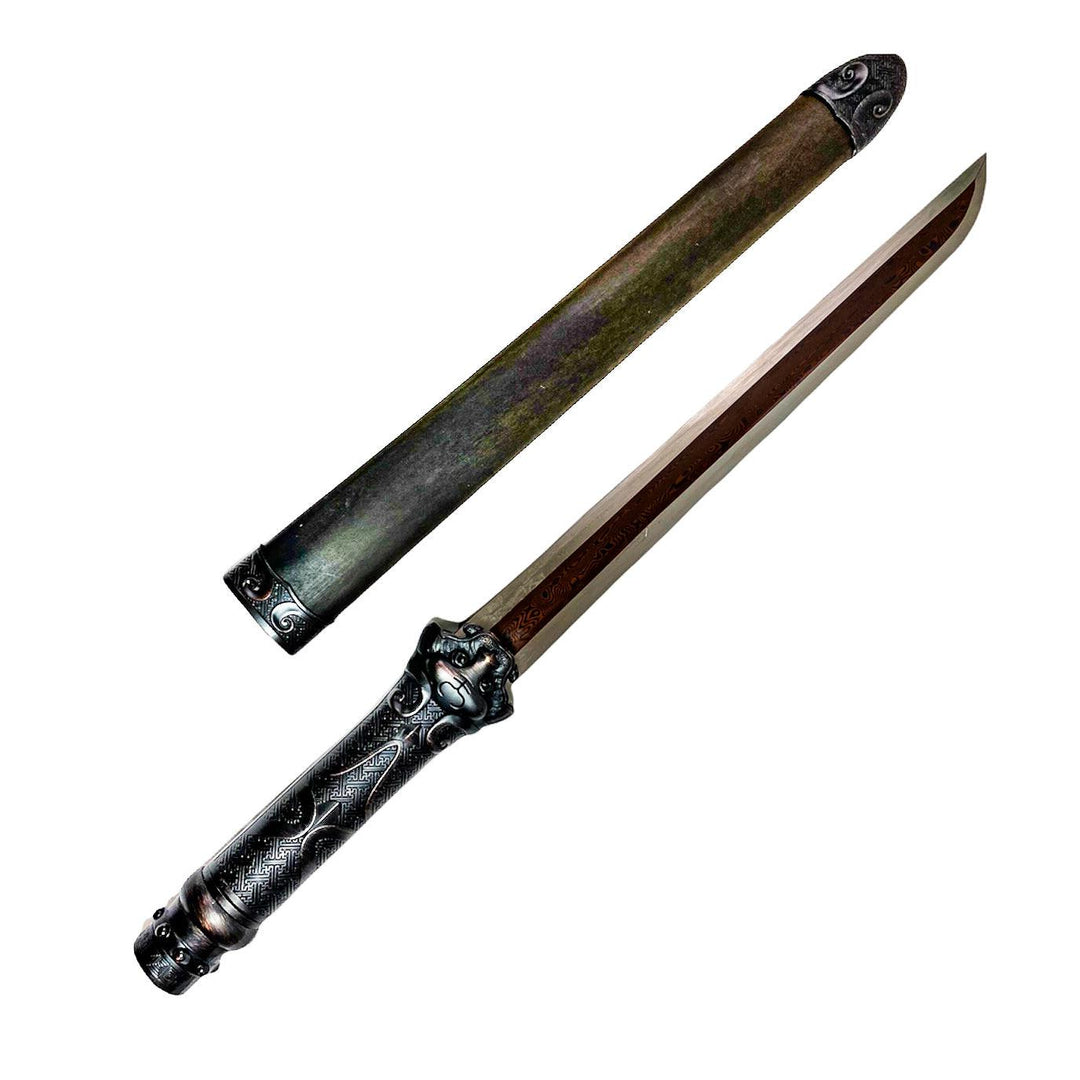
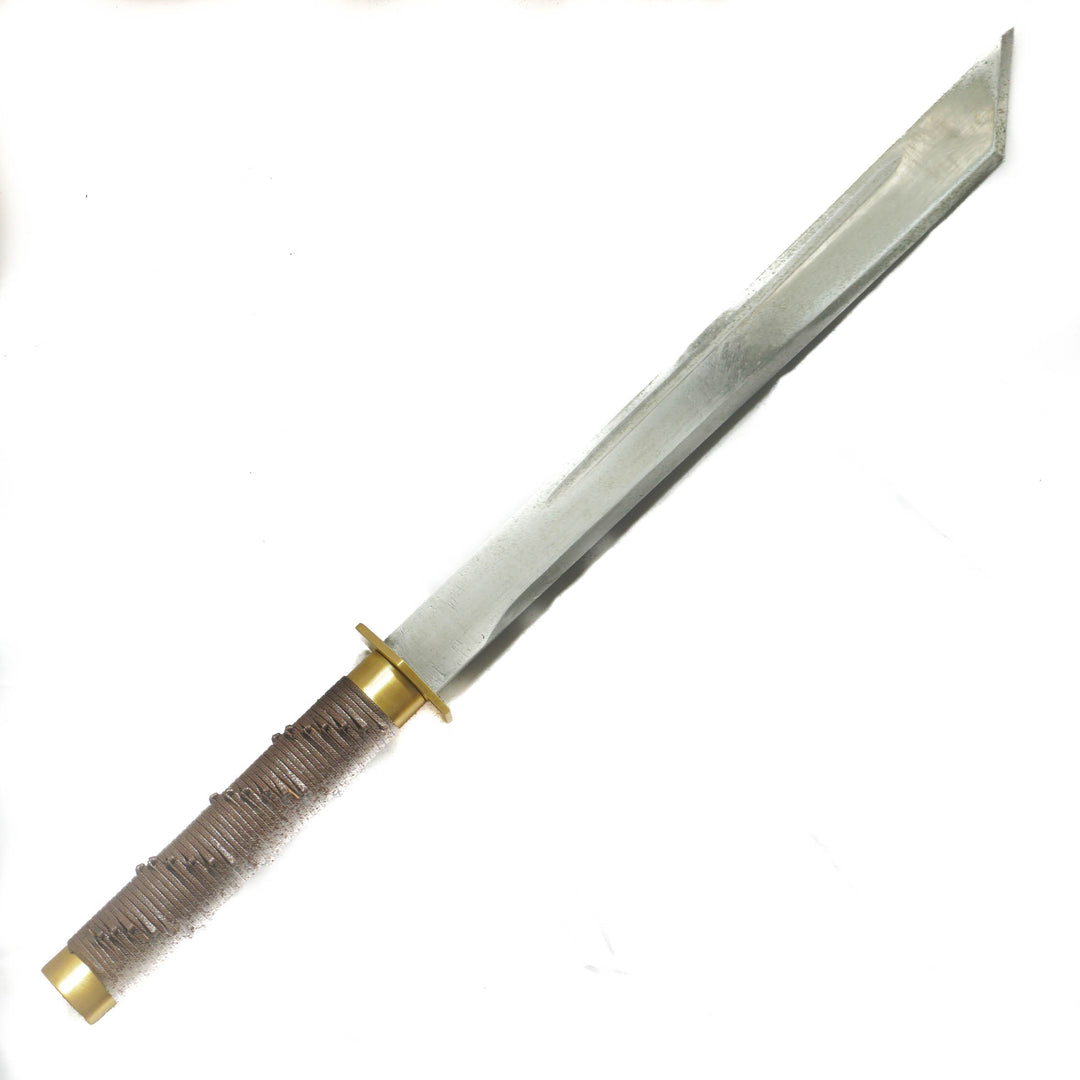
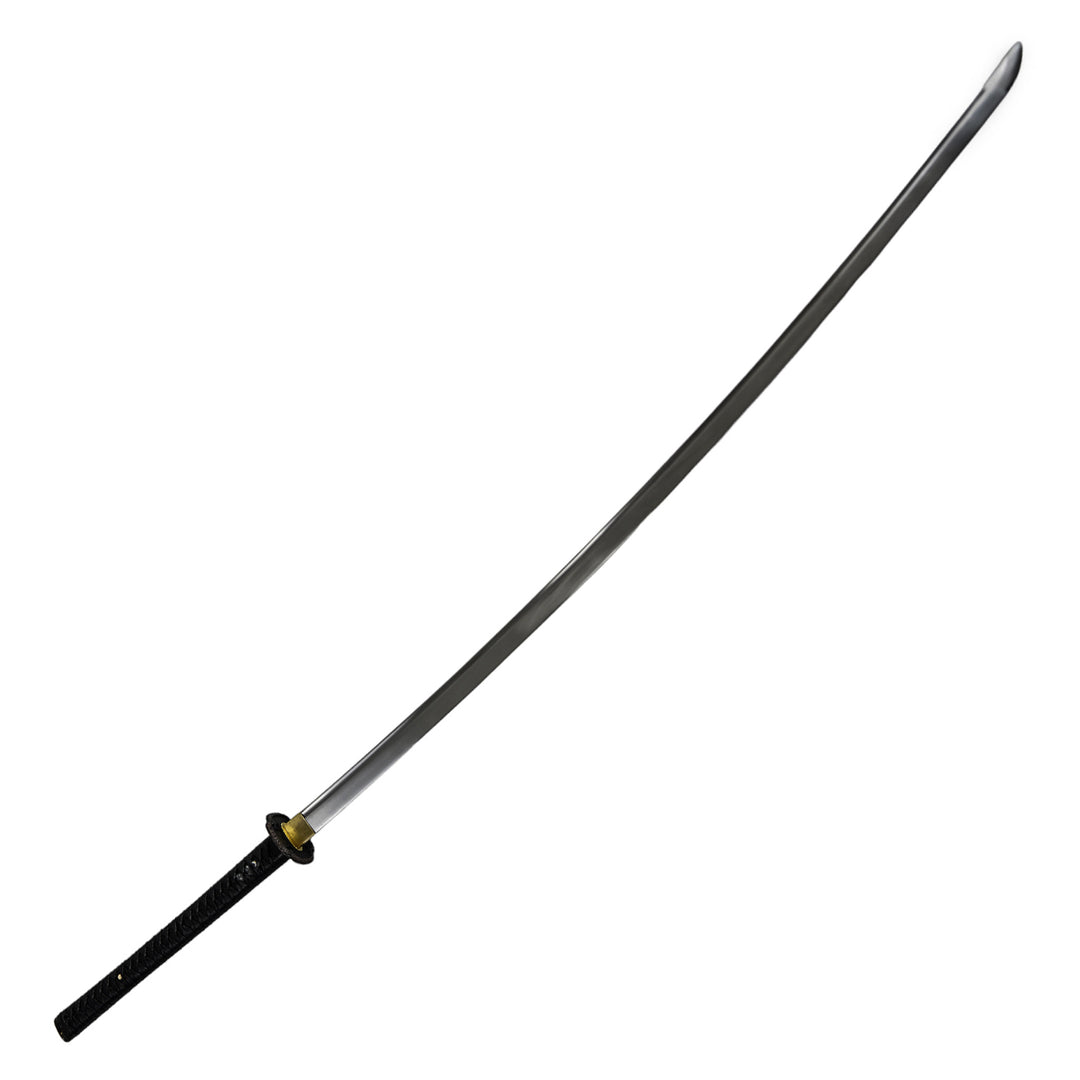
Every Japanese blade Battling Blades makes, on one page. The katana is the sword most people mean when they say samurai sword, but it was one of a family: the wakizashi worn beside it as the daisho pair, the tanto carried as a knife, the odachi too long to wear at all, the naginata and yari that armed the ranks, and the straight ninjato that belongs more to film than to history. If you already know the type you want, the family collections below are faster. If you want to compare them side by side, this is the page, and the types of Japanese swords guide explains every one in order.
Our katana, wakizashi and the rest are hand forged in 1095 high carbon or pattern-welded Damascus steel. Steel, hardness, tang construction and dimensions are stated on each listing, and they vary by design, so read the piece you are buying rather than assuming from the family.
The curved, single-edged long sword worn edge up through the belt, around 40 inches overall. The largest group here by far, including the Dragon, Black Lightning, Anime and Highest Grade lines. See katana swords for the full buying guide.
The shorter companion blade that made up the daisho with the katana, and the sword a samurai kept on when the katana came off indoors. See wakizashi.
The oversized field sword, 47 to 62 inches overall, slung across the back rather than worn. See odachi.
The short blade, here as fixed-blade knives from 12 to 19 inches with the angular American tanto point. See tanto knives.
The straight-bladed short sword with a square guard, 30 to 41 inches. See ninjato swords and, for the sai that go with them, ninja weapons.
The Japanese glaive and spear, 71 to 79 inches on the shaft. See naginata.
1095 is the traditional monosteel, typically finishing around 56 to 58 HRC. Where a clay tempered option is listed, the spine is left softer than the edge and a visible hamon line marks the boundary, which is the construction the original Japanese smiths used. Damascus is layered high carbon steel forged and folded so the pattern runs the length of the blade; it is a modern choice rather than a traditional one, and no two patterns repeat. Both are high carbon steels and both want to be kept clean, dry and lightly oiled.
The tsuka (grip), tsuba (guard) and saya (scabbard) are where Japanese swords differ most from one listing to the next. Cord wrap colour, ray skin, tsuba design and saya finish are photographed on each product page.
A katana fits a standard two-hook stand. An odachi does not, and needs a mount rated for the span and the weight. Wakizashi and tanto display well on a small single stand or as part of a daisho set. Our sword stands collection has both.
The katana, wakizashi and tanto guide explains how the three blades related to each other, the katana buying guide covers what to check before ordering, and protecting your katana collection covers care.
What are the main types of Japanese sword?
The katana (long sword), wakizashi (short companion sword), tanto (knife), odachi or nodachi (oversized field sword), tachi (the earlier, more curved long sword worn edge down), and the naginata and yari polearms. The ninjato is a modern addition.
What is a daisho?
The matched pair of katana and wakizashi worn together by the samurai class from the 16th century onward. The word means large and small.
What is the difference between a katana and a wakizashi?
Length and role. The katana is the long sword, around 40 inches overall. The wakizashi is the shorter sword worn beside it and kept on indoors where the katana was set aside.
Are these sharpened?
Each listing states how that piece is finished. The steel is hardened either way.
How do I know how a particular sword is built?
Read the listing. Steel, hardness, tang construction and dimensions are stated on every product page and vary by design.
Can they be engraved?
Yes. Blade and saya engraving and etching are done in our Illinois workshop. See the engraving options on each listing.
"Comp. Value" is a reference value for this item or a substantially similar item. It may be based on one or more of the following: prior Battling Blades pricing, comparable products, supplier or manufacturer pricing, marketplace pricing, or other retail reference data. It is provided for comparison only and is not a claim that this exact item was previously sold at the Comp. Value, that the Comp. Value is an MSRP, or that any specific retailer currently charges that amount. We make no representation that a purchaser will realize savings equal to the difference between the Comp. Value and our price.