


Parts of a Sword
Every part of a sword has a name and a job. The diagram below labels them on a European longsword — free to republish with credit.

The parts, explained
- Pommel — the weight at the end of the hilt. It counterbalances the blade so the sword pivots near the guard instead of dragging at the tip.
- Grip — the handle, traditionally wood wrapped in leather or wire.
- Tang — the blade's steel continuing through the grip. A full tang runs the whole way and is what separates a working sword from a wall-hanger.
- Cross-guard (quillons) — the bar protecting the hand and controlling an opponent's blade.
- Hilt — the pommel, grip and guard together; everything that isn't blade.
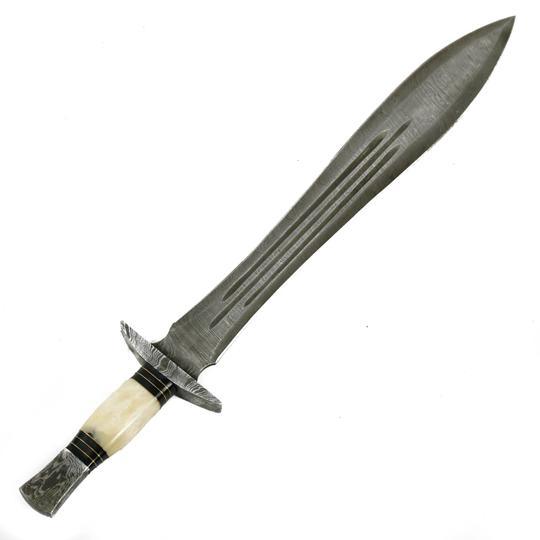
- Fuller — the groove down the blade. It removes weight while keeping stiffness — like an I-beam. It is not a “blood groove”; that's a myth.
- Edge — the sharpened side. European longswords are double-edged.
- Point — the tip, for thrusting.
- Forte — the strong half of the blade nearest the guard, used for parrying.
- Foible — the weak half toward the point: less leverage, more speed.
The pommel, up close
The sword pommel is the most underrated part of the weapon. Its first job is balance: by adding weight behind the hand, it moves the pivot point back toward the grip, which is why a well-made four-pound sword feels lighter than a cheap three-pound one. Its second job is retention, stopping the hand sliding off, and on many medieval swords it doubled as a striking surface in close quarters (the origin of the word "pommeling"). Pommel shapes date blades the way tail fins date cars: Viking-age swords carry lobed and brazil-nut pommels, high-medieval arming swords the classic wheel pommel, and renaissance blades everything from scent-stoppers to fishtails. On a full-tang sword the tang is peened or threaded through the pommel, which is what holds the whole hilt together.
The hilt and handle, up close
The hilt is everything that is not blade: guard, grip and pommel working as one unit. The sword handle itself, the grip, is usually a wooden core shaped to the hand and wrapped in leather, cord or wire; grip length is what separates one-handed swords (about 4 inches of grip) from hand-and-a-half bastard swords (6 to 8 inches) and true two-handers (10 inches or more). What matters when buying: the grip should be seated on a full tang with no rattle or twist, the wrap should be tight enough not to shift under a swing, and the guard should sit square to the blade. A loose hilt is the most common failure point on cheap swords, and the easiest thing to check in hand.
Use this diagram
This diagram is free to republish — on blogs, in classrooms, in game guides — with credit. Copy this line:
<a href="https://battlingblades.com/pages/parts-of-a-sword">Sword anatomy diagram by Battling Blades</a>
See how these parts are made in our hand-forged swords, or read more about fullers. See the real thing in our longsword collection, or compare with the parts of a katana sword.