

 Fast & Free Shipping
 30 day Money Back
 Secure Checkout
 Fast & Free Shipping
30 day Money Back
Secure Checkout
Fast & Free Shipping
30 day Money Back
Secure Checkout
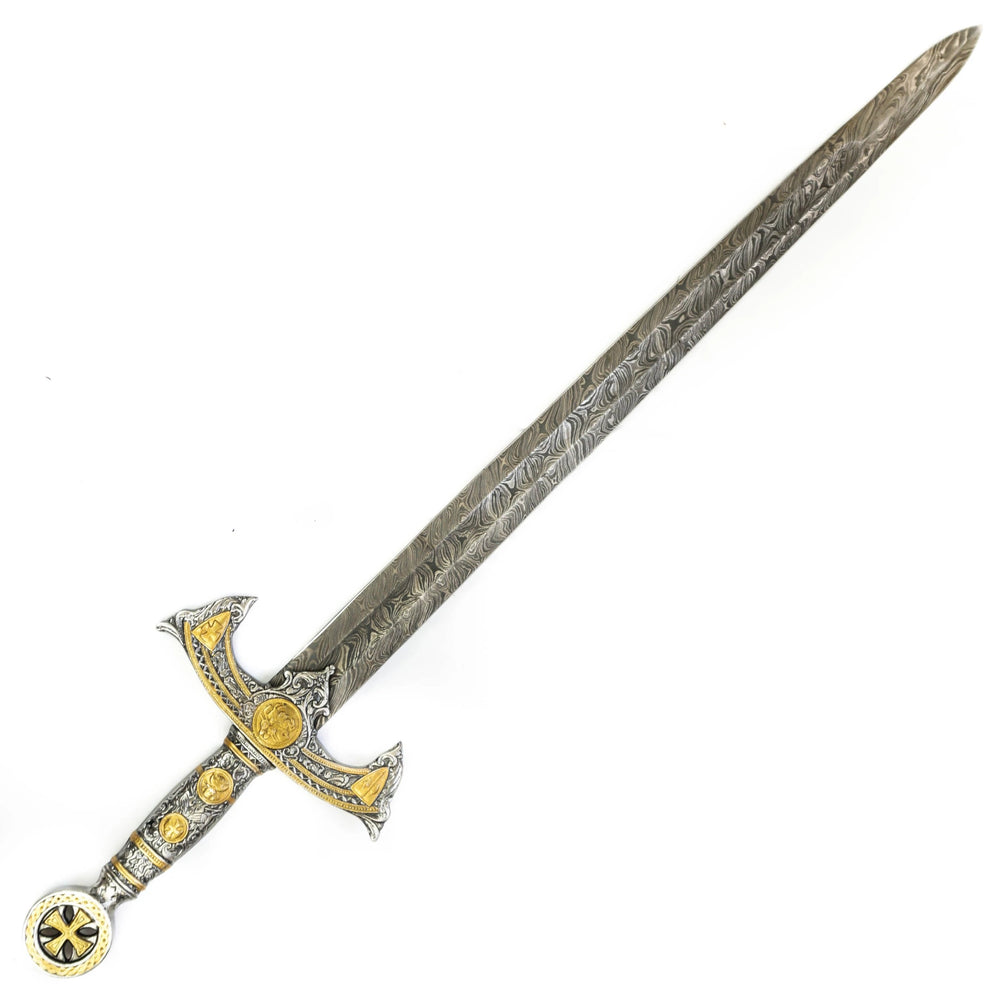
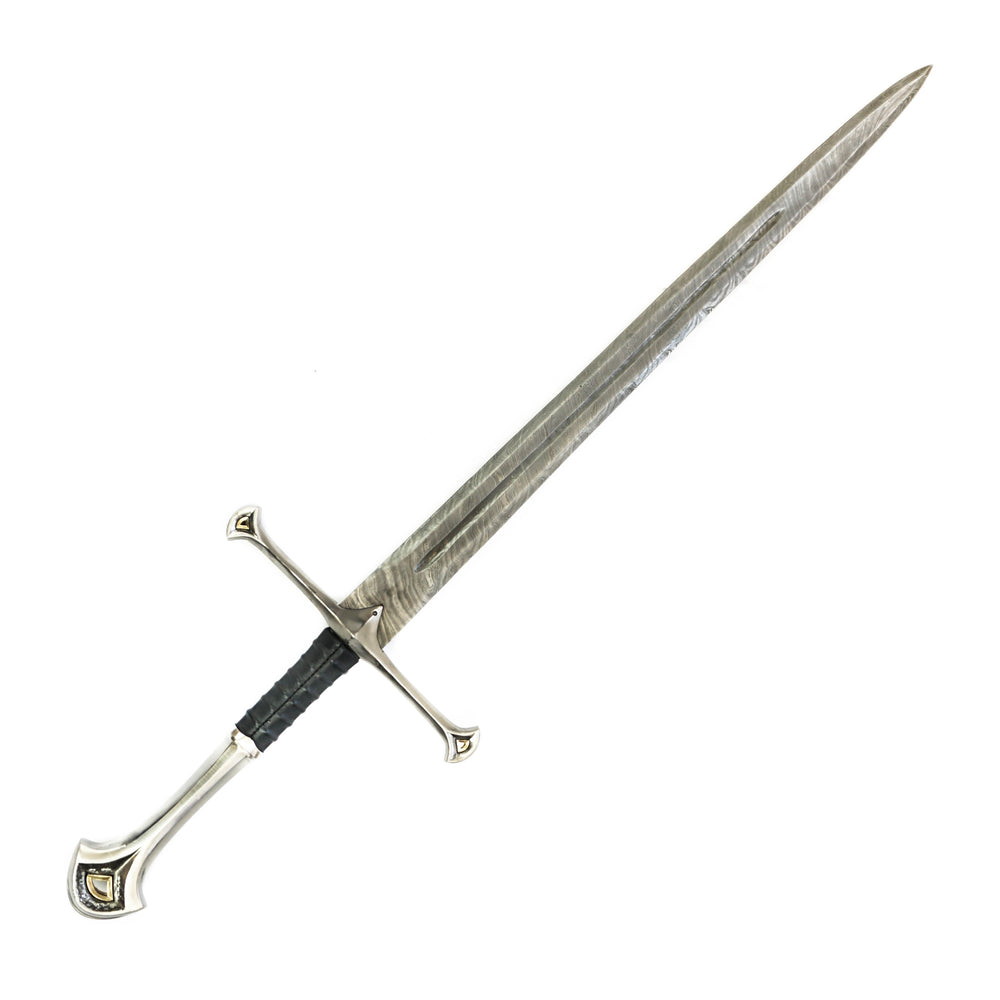
A sword is one of the oldest and most enduring objects humanity has ever made. Across nearly every culture that produced one, the sword came to mean far more than a blade: it stood for status, lineage, ceremony, craftsmanship, and identity. Battling Blades offers a wide selection of swords drawn from the great sword traditions of the world, from Japanese katanas to European longswords, Viking and Carolingian blades, Roman gladii, Renaissance rapiers, and many more, made in 1095 high carbon, folded Damascus, D2, and stainless steel.
This page is the starting point for our full sword catalog. Below you can explore swords by type, learn what distinguishes each tradition, and follow the links to every dedicated sword collection we carry.
The sword emerged in the Bronze Age, more than 3,000 years ago, as metalworking advanced enough to produce a blade long enough to be its own weapon rather than a knife or spearhead. As ironworking spread, swords became central to the cultures of the ancient Mediterranean, Europe, and Asia, each developing its own distinctive form shaped by its metallurgy, fighting traditions, and artistry.
Through the classical era, the Roman gladius and the Greek xiphos defined the swords of the ancient Mediterranean. In early medieval Europe, the broad, double-edged Viking and Carolingian swords gave way over centuries to the knightly arming sword and the two-handed longsword of the High and Late Middle Ages. In Japan, a parallel tradition produced the curved, single-edged katana, refined through clay tempering and folding into one of the most revered blades in the world. The Renaissance brought the slender rapier and the broad cutting blades of the cavalry, while regional traditions across the Middle East, China, and beyond produced the scimitar, the jian and dao, and countless other forms.
By the modern era the sword had largely left the battlefield, but it never lost its meaning. Today swords are collected, studied, displayed, and treasured as connections to history and craftsmanship, which is exactly the spirit in which our swords are made.
One of the things that sets Battling Blades apart is that we are a custom sword maker. If you cannot find exactly what you are looking for among the traditions below, you can have a sword built to your own specifications. With our custom sword builder, you choose the style, blade steel, length, handle, guard, pommel, scabbard, and engraving, or submit your own design from a photo, drawing, or written description. Every custom sword is made to order and produced according to the details you select.
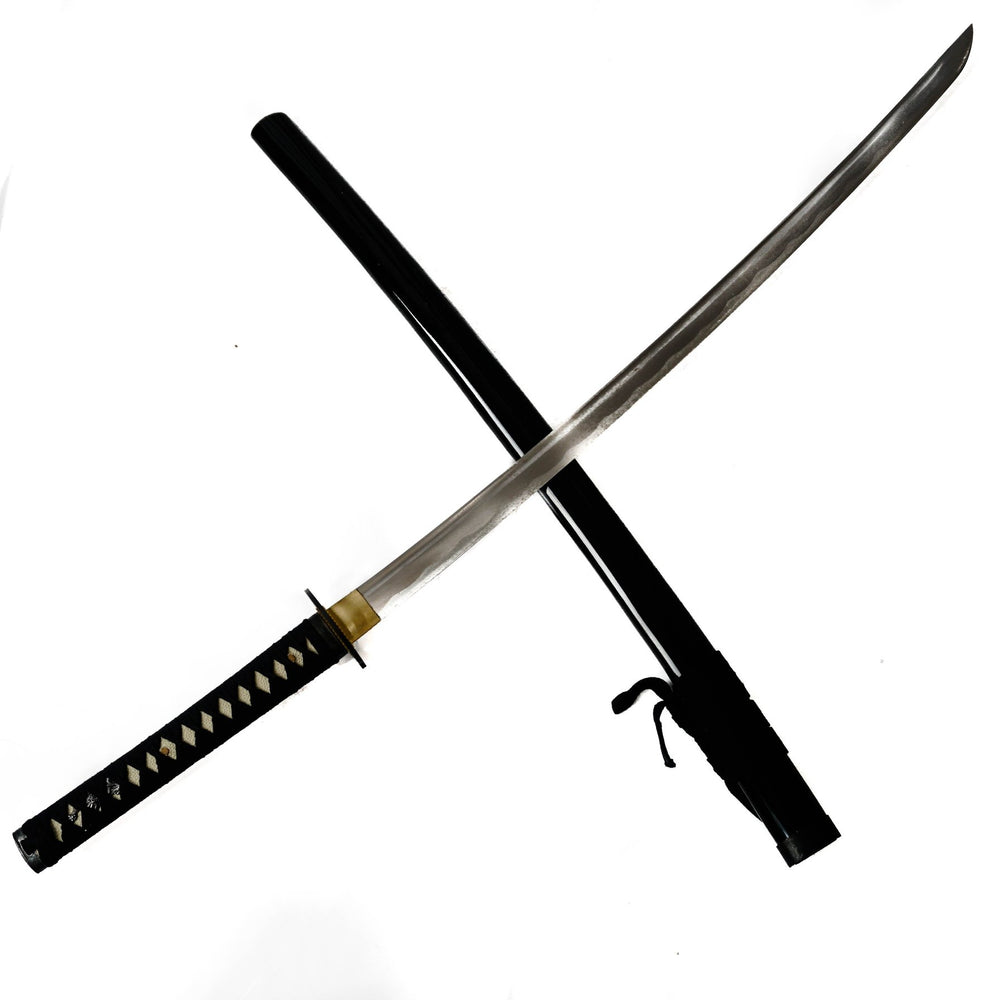
Katana Swords
The iconic curved, single-edged sword of Japan. Recognized worldwide by its graceful curve, circular or squared guard, and long two-hand grip, the katana is the most popular sword type among modern collectors. Our katanas include traditional 1095 clay-tempered blades with a visible hamon and folded Damascus options.
Longswords
The two-handed, double-edged sword of late medieval and Renaissance Europe, also known as the bastard or hand-and-a-half sword. With its cruciform hilt and straight blade, the longsword is one of the most recognizable forms of the European Middle Ages. See also our Bastard Swords.
Viking Swords
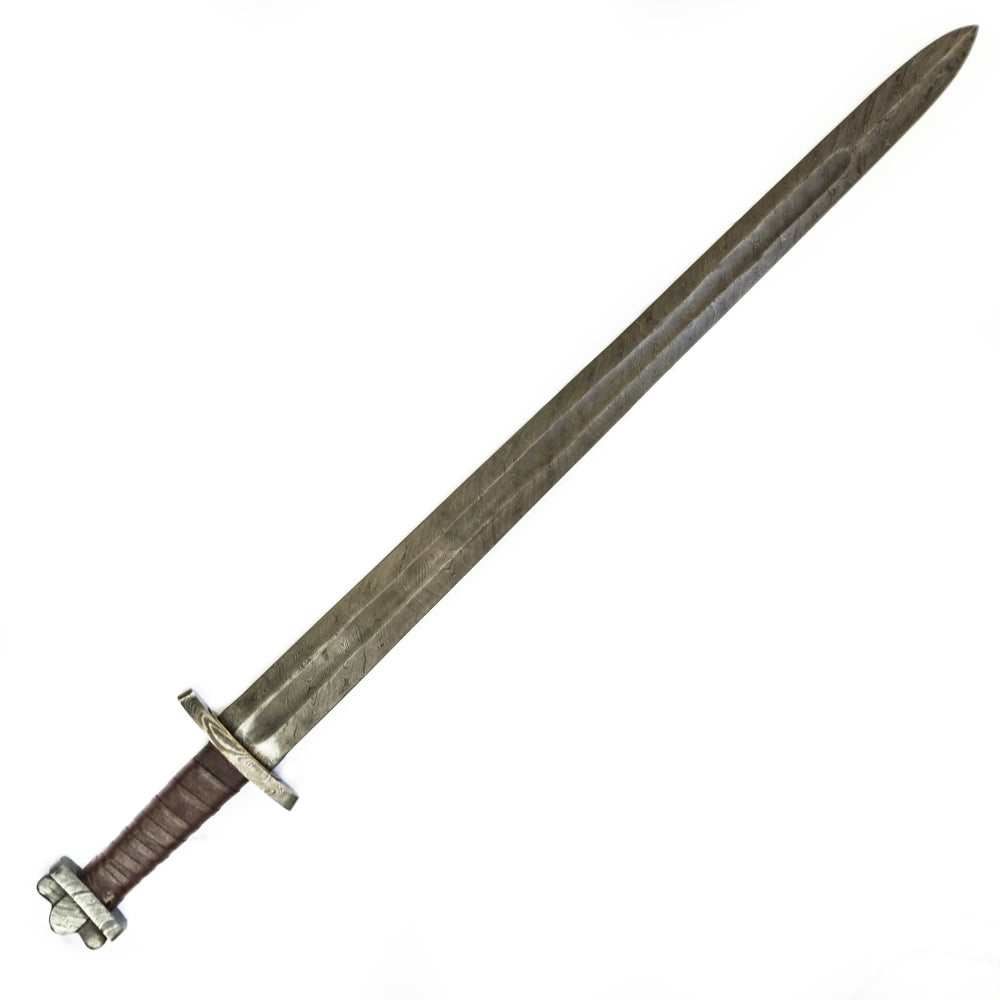
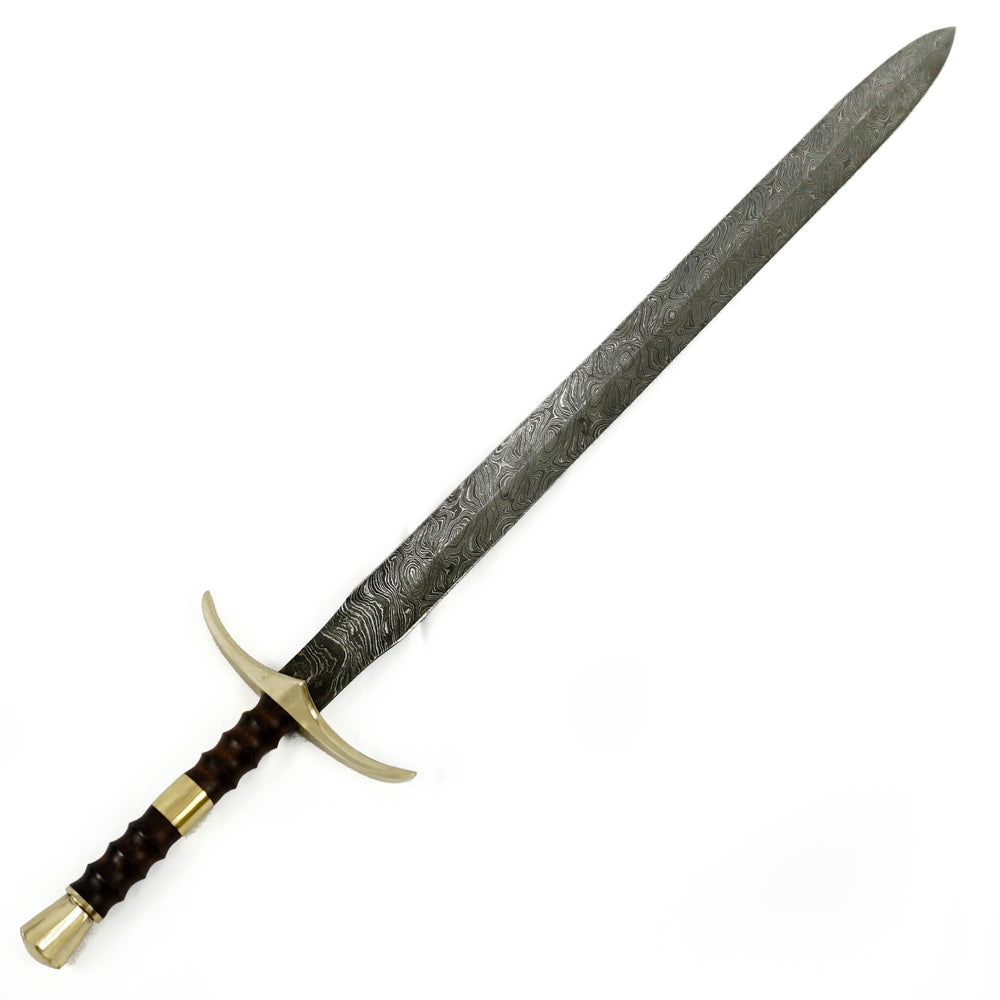
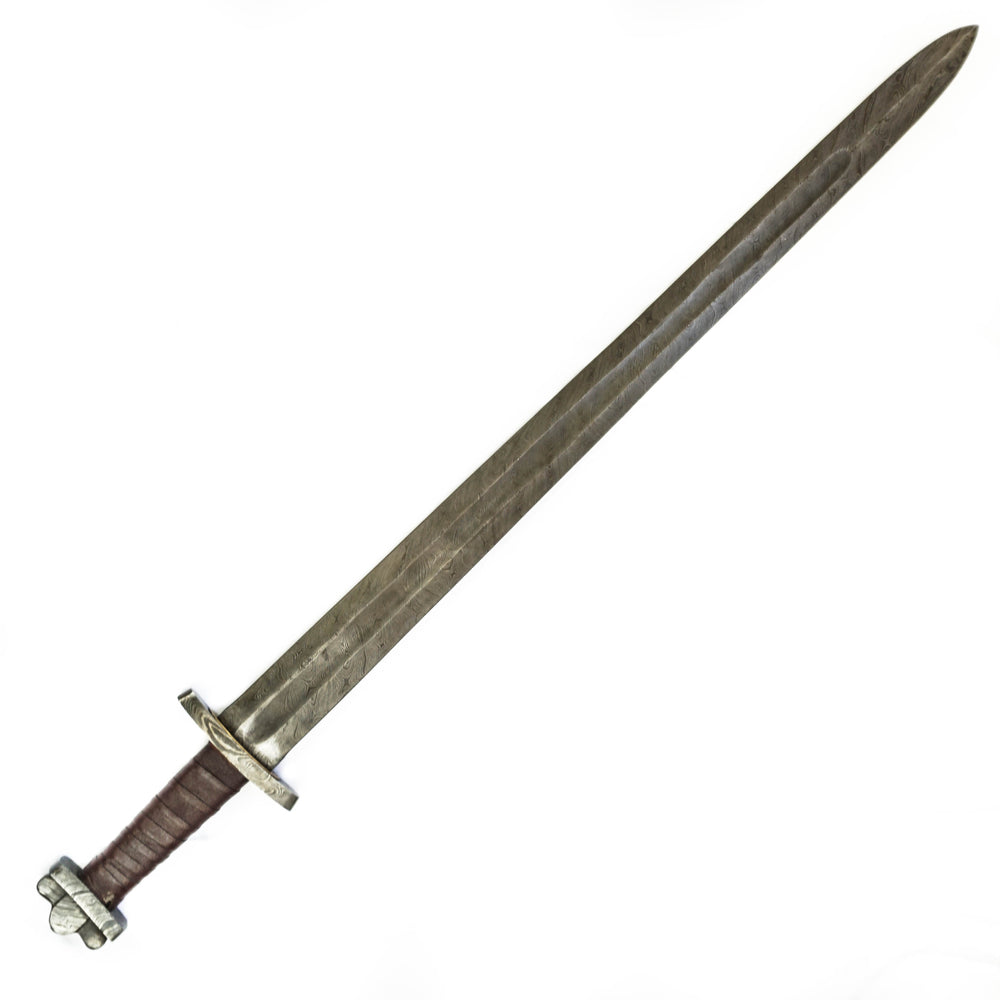
The broad, double-edged blade of the Viking Age, also called the Carolingian sword. Known for its short crossguard and distinctive lobed pommel, often associated with the famed Ulfberht inscription, the Viking sword is a centerpiece of early medieval and Norse history.
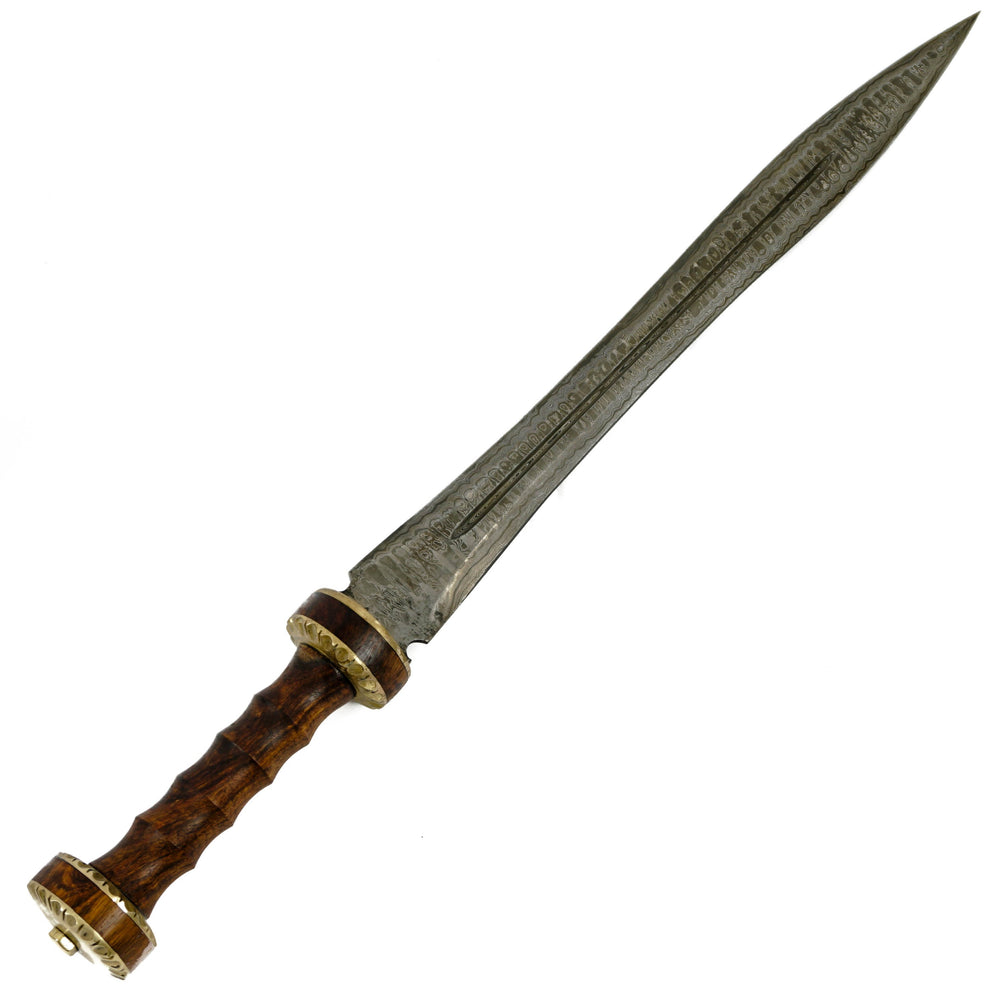
Gladius Swords
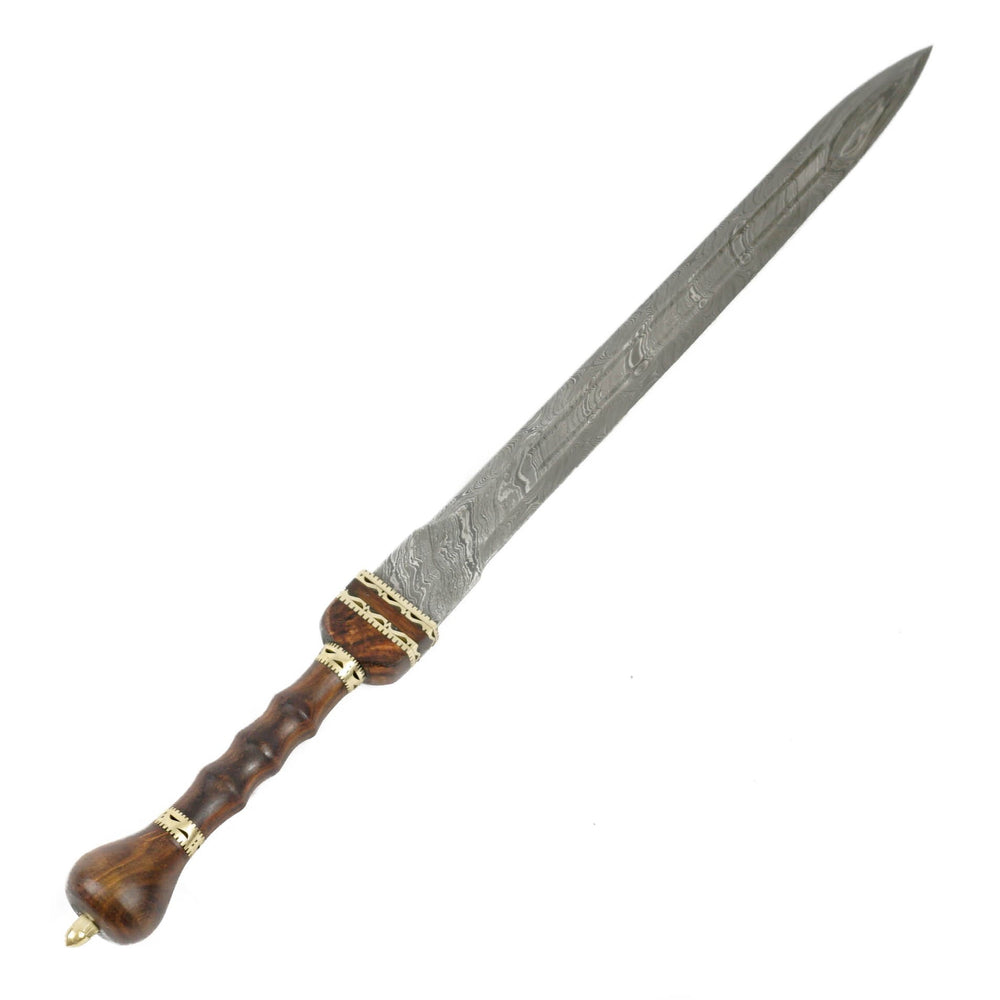
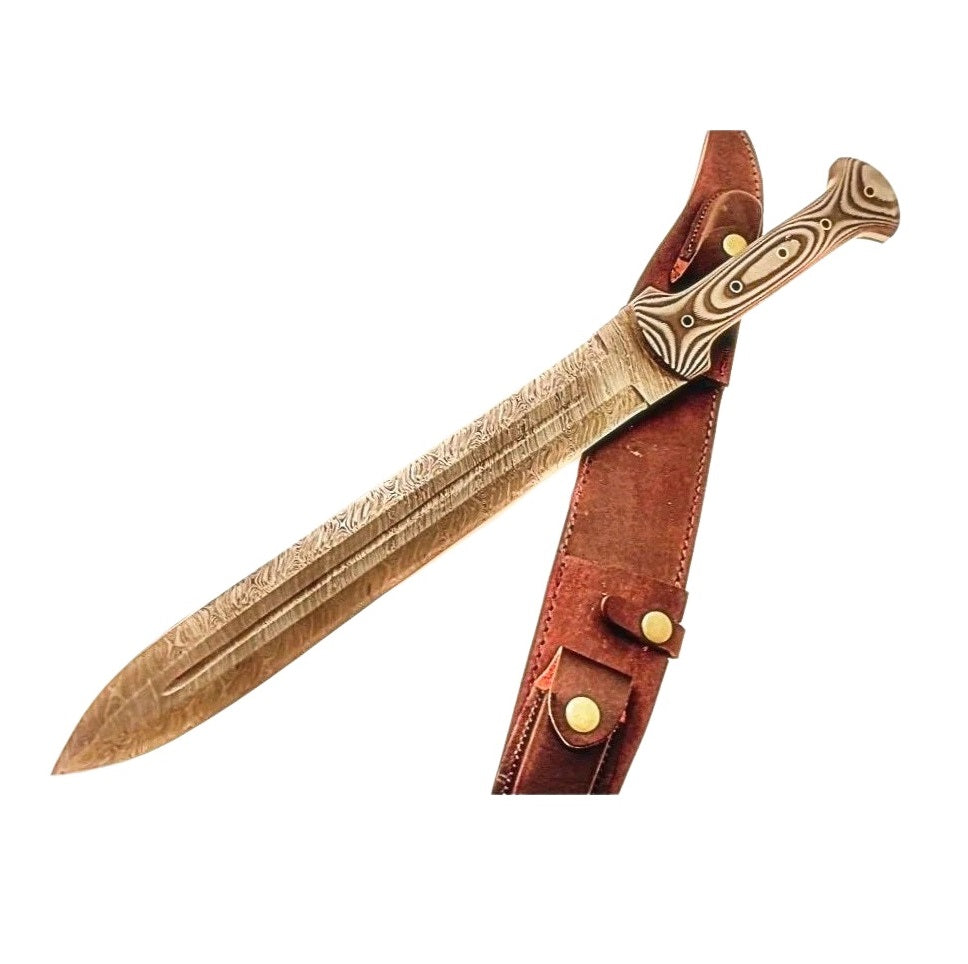
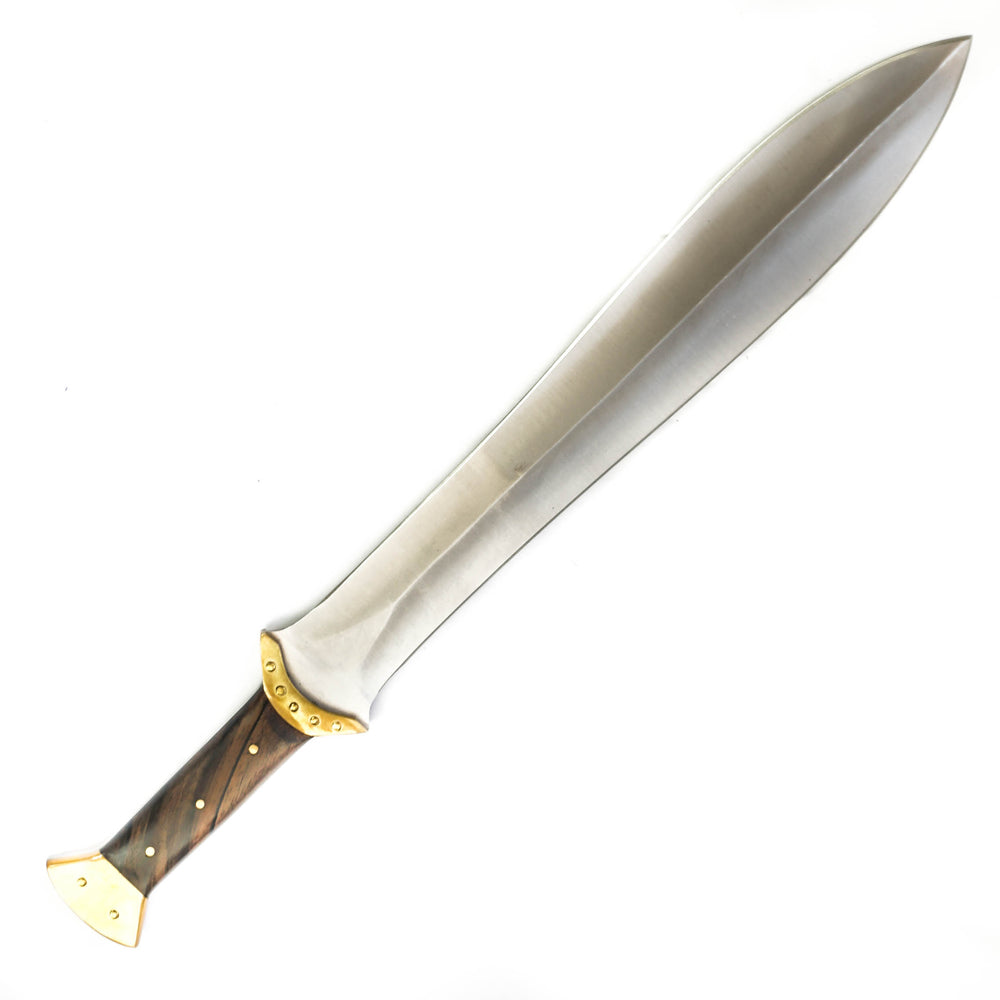
The short, straight sword of the Roman legions. Built for close-order ranks, the gladius is one of the most historically significant swords ever made, the blade that helped build an empire. Our gladius swords include the Hispaniensis and Pompeii forms.
Greek Swords
The swords of the ancient Greek world, including the leaf-shaped xiphos and the forward-curved kopis. These blades carry the legacy of the hoplite and the classical Mediterranean, including Spartan-style swords.
Rapier Swords
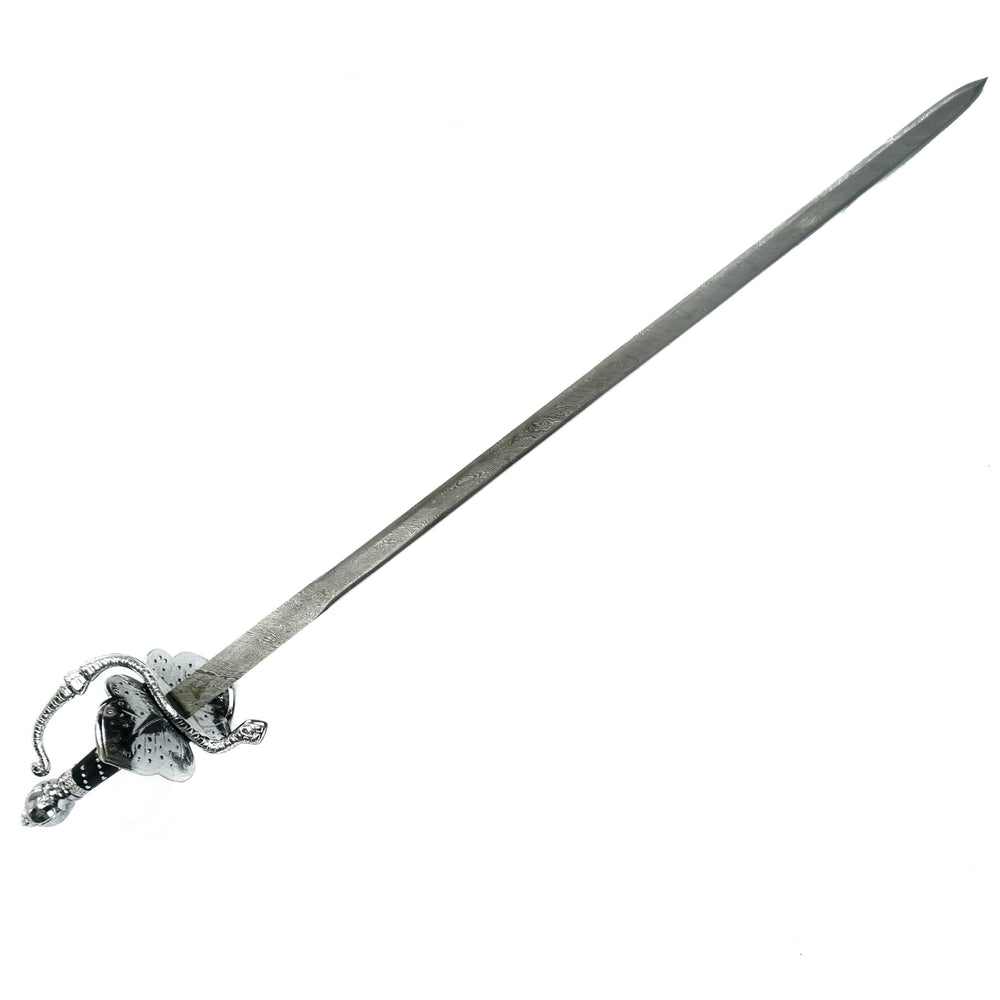
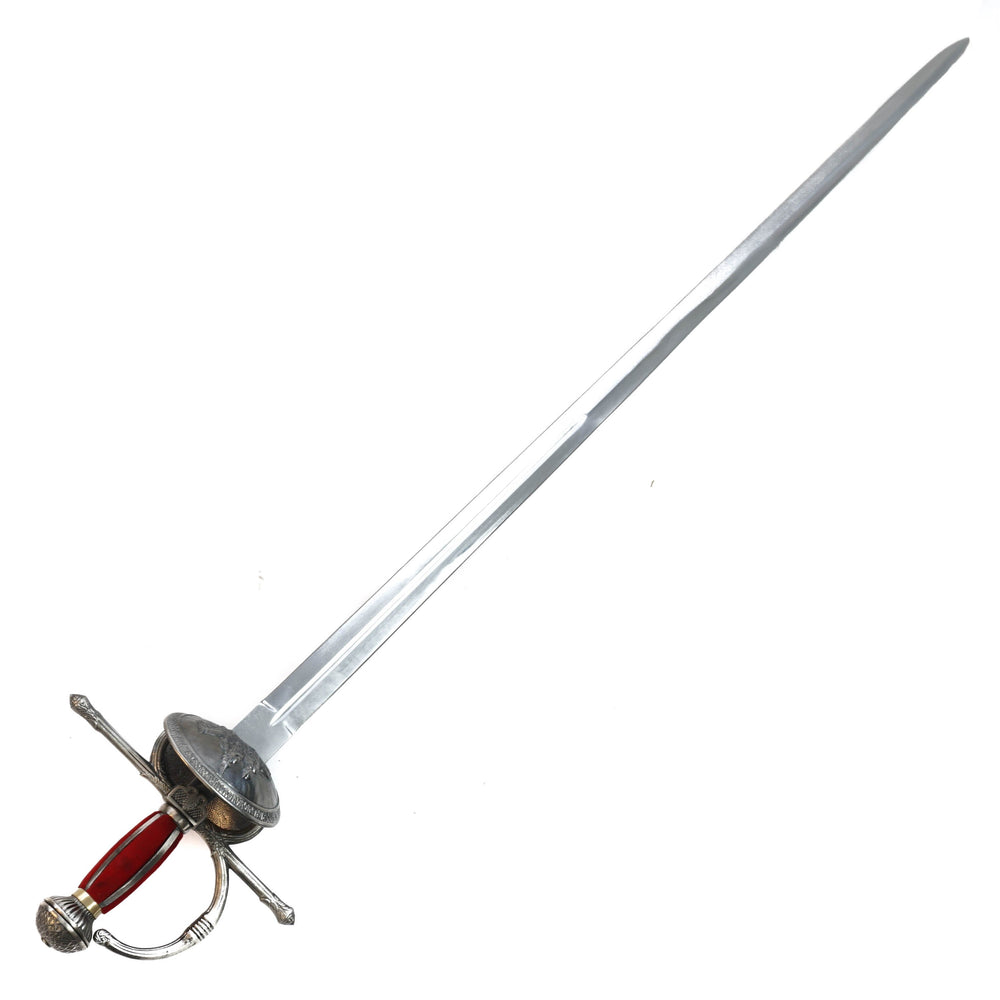
The slender, sharply pointed thrusting sword of Early Modern Europe, famous for its long narrow blade and elaborate protective hilt. The rapier became the mark of a refined gentleman in the 16th and 17th centuries.
Claymore Swords
The great two-handed sword of the Scottish Highlands, recognized by its forward-sloping crossguard. A symbol of Highland heritage and clan tradition.
Scimitar Swords
The curved, single-edged sword associated with the Middle East and North Africa. Its sweeping curve makes it one of the most visually distinctive of all sword forms.
Cutlass Swords
The short, broad, slightly curved sword of sailors and naval history, closely tied to the age of sail and maritime tradition.
Sabre Swords
The curved cavalry sword of the modern era, carried by horsemen across Europe and beyond and still used today in ceremonial military dress.
Chinese Swords
The swords of Chinese tradition, including the straight, double-edged jian (the "gentleman of weapons") and the single-edged dao.
Iberian Swords
The swords of the Iberian Peninsula, including the falcata, a forward-curved blade prized in the ancient world for its distinctive form.
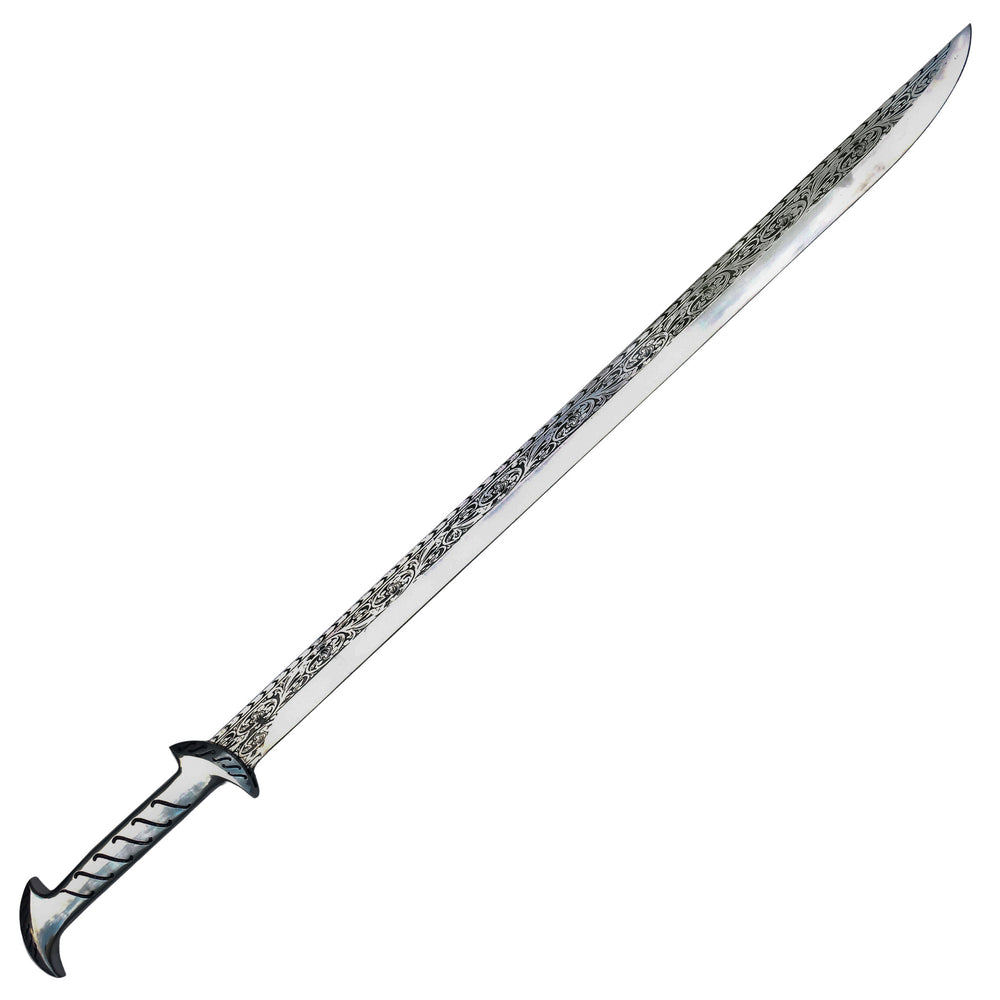
Fantasy Swords
Swords drawn from fantasy, anime, video games, and original designs, created for collectors and fans of imaginative worlds.
Beyond the major traditions above, our catalog includes a number of other distinctive sword types:
Greatswords are the largest European swords, true two-handed blades that exceed even the longsword in length and presence, associated with the late medieval and Renaissance period.
Arming swords are the classic one-handed, double-edged knightly swords of the High Middle Ages, the everyday sidearm of the medieval knight and the direct ancestor of the longsword.
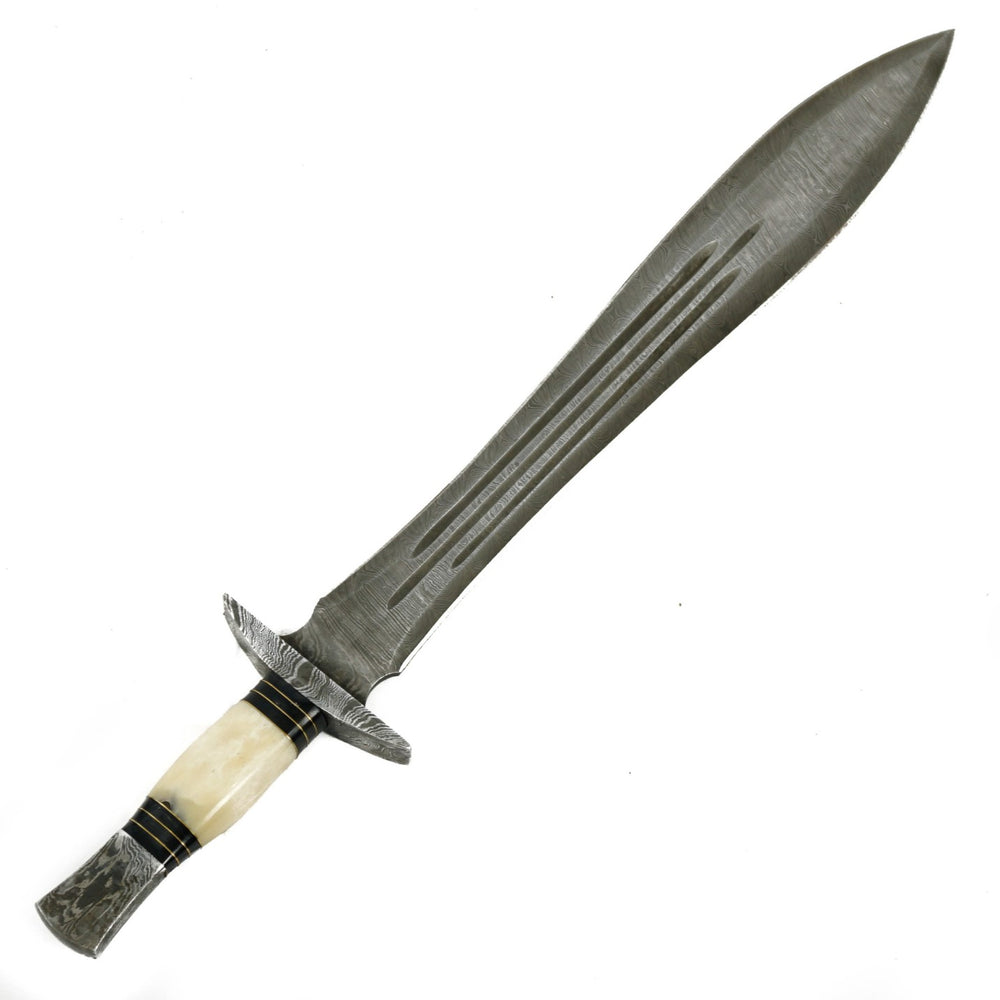
Falchions are single-edged, forward-weighted European swords with a broad cleaver-like blade, shaped by the influence of Turko-Mongol sabres on medieval European smiths in the 13th and 14th centuries.
Short swords cover the compact, versatile blades found across many cultures, from companion swords to ancient side-arms.
Wakizashi are the shorter Japanese companion swords traditionally paired with the katana, together forming the matched set known as the daishō.
Haladie are distinctive double-bladed weapons of the Middle East and South Asia, with a blade extending from each end of a central grip.
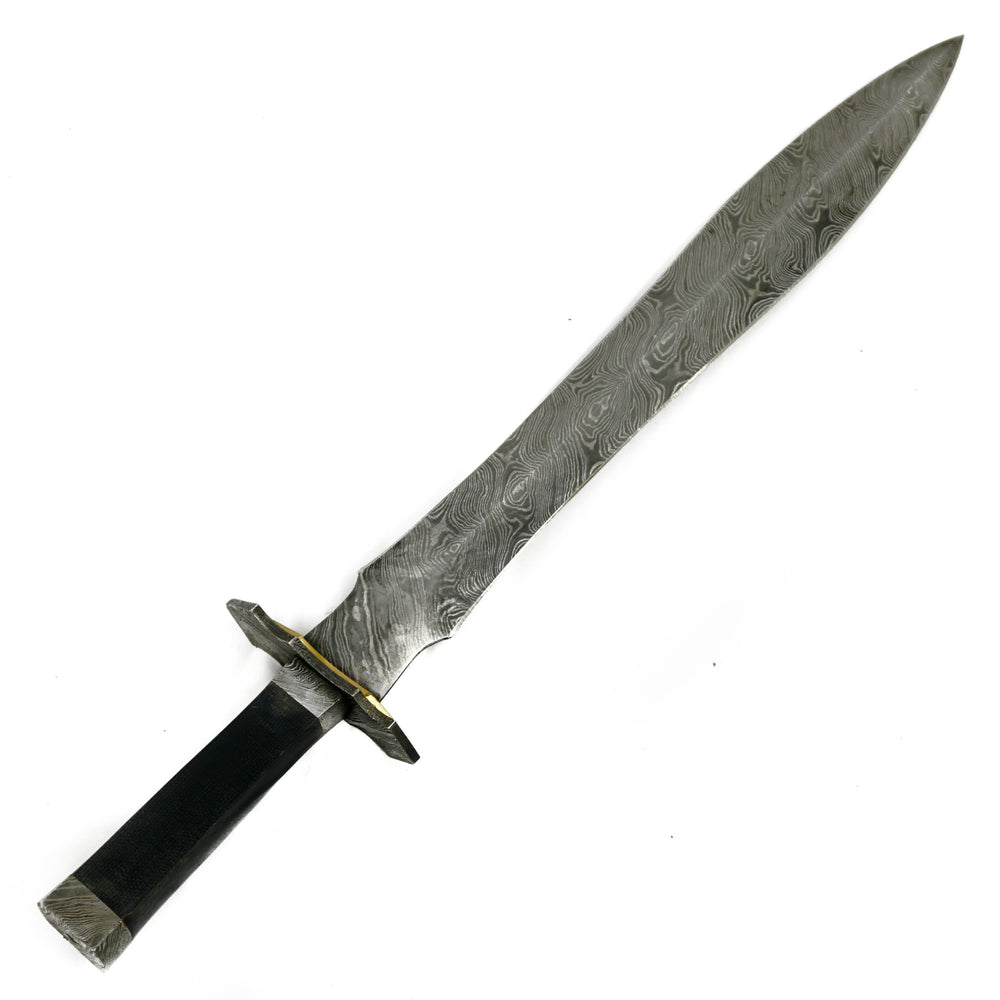
The swords in our catalog are made primarily from four steels, each with its own character. 1095 high carbon steel is a traditional blade steel valued for its hardness and edge retention. Folded Damascus steel is pattern-welded from layered high carbon steels, producing both strength and the flowing visual pattern Damascus is known for. D2 steel is a tool steel prized for wear resistance. Stainless steel is corrosion-resistant and low-maintenance, often chosen for decorative and detailed pieces. You can learn more in our sword steel guide.
Beyond the steel itself, construction matters: blade geometry, heat treatment, tang construction, and the fit of guard, handle, and pommel all shape the finished sword. Many of our swords are handmade or hand-finished, so small variations in pattern, finish, and detail are part of the character of each piece.
Ready to shop the full selection? Browse all our swords for sale. To see the pieces our customers choose most often, visit our best sellers, and for our finest pieces, with higher-end materials and craftsmanship, see the premium swords collection.
What types of swords are there?
The major sword traditions include Japanese katanas and wakizashi, European longswords, bastard swords, arming swords, and greatswords, Viking and Carolingian swords, Roman gladii, Greek xiphos and kopis, falchions, rapiers, Scottish claymores, scimitars, cutlasses, sabres, and Chinese jian and dao, among others. Each developed from a particular culture, era, and style of construction. We carry swords from every one of these traditions, and can also make a custom sword to your own design.
What is the most popular type of sword?
Among modern collectors, the katana is consistently the most popular sword type worldwide, driven by the cultural reach of Japanese swords through history, film, and anime. European longswords and Viking swords follow closely, along with gladius swords, fantasy pieces, and other historical forms.
What steel is best for a sword?
It depends on what you want. 1095 high carbon steel is a traditional choice valued for hardness and edge retention. Folded Damascus steel adds a distinctive layered pattern. D2 is a hard, wear-resistant tool steel. Stainless steel is corrosion-resistant and low-maintenance, often chosen for decorative pieces. High carbon steels need basic care to prevent rust, while stainless is more forgiving.
What is the difference between a sword and a longsword?
"Sword" is the general term for the whole family of long bladed weapons. A longsword is one specific type: a two-handed, double-edged European sword of the late medieval and Renaissance periods, also called a bastard or hand-and-a-half sword. Every longsword is a sword, but most swords are not longswords.
Can I order a custom sword?
Yes. As a custom sword maker, we build swords to order through our custom sword builder. You can choose the style, steel, length, fittings, and engraving, or submit your own design from a photo, drawing, or description.
How do I care for a steel sword?
High carbon and Damascus steel swords should be kept clean, dry, and lightly oiled, wiped down after handling, and stored away from humidity to prevent rust. Stainless steel is more corrosion-resistant and needs less maintenance. Full guidance is in our Quality, Materials & Real Sword Ownership guide.
Browse the full sword catalog above, or use the links throughout this page to explore any tradition in depth.