

 Fast & Free Shipping
 30 day Money Back
 Secure Checkout
 Fast & Free Shipping
30 day Money Back
Secure Checkout
Fast & Free Shipping
30 day Money Back
Secure Checkout
Explore The Warrior's Arsenal at Battling Blades — hand-forged swords and battle-ready blades built for cutting practice, martial arts training, serious reenactment, and the buyers who want functional combat weapons rather than decorative display pieces. This collection includes battle-ready katanas with proper differential clay tempering, hand-forged European longswords and bastard swords, true Damascus blades, full-tang Viking swords, fighting Bowies, combat-ready medieval and Renaissance swords, and HEMA-grade training pieces designed for martial artists, tameshigiri practitioners, HEMA students, serious reenactors, sword cutting enthusiasts, and anyone who wants a sword that can actually do what swords are supposed to do.
A battle-ready sword is fundamentally different from a decorative one. The difference shows up in steel chemistry, heat treatment, tang construction, and the dozens of small choices a bladesmith makes when building a sword meant to actually cut rather than just look impressive on a wall. Battle-ready swords use proper high-carbon and spring steels, are heat-treated through traditional techniques producing the right balance of hardness and flexibility, are constructed with full-tang nakago or proper European tangs that won't fail under load, and are finished to specifications that allow the sword to perform under real cutting conditions. These are the swords for buyers who want to slice tatami, train iaido with live blades, study HEMA cutting techniques, or participate in serious reenactment — buyers for whom a sword that can't actually function is a sword that misses the point.
Our Warrior's Arsenal includes designs with hand-forged construction by skilled bladesmiths and small workshops rather than automated production, premium battle-ready steels (high-carbon 1060, 1075, 1095; spring steels 5160 and 9260; tool steels including T10 and L6; true folded tamahagane on premium Japanese-tradition pieces), proper heat treatment including traditional differential clay tempering on katanas and appropriate hardening on European pieces, full-tang construction throughout — the blade extends through the entire handle and is secured with traditional joinery (mekugi pegs on katanas, peened or riveted construction on European swords), and the fit-and-finish detail that distinguishes a functional combat sword from a display piece dressed up to look the part.
"Battle-ready" is a specific technical designation, not marketing language. Several concrete factors separate true battle-ready swords from decorative pieces. Steel choice matters — battle-ready swords use high-carbon steels (1060, 1075, 1095), spring steels (5160, 9260), or premium tool steels (T10, L6 bainite) that are formulated for impact strength, edge retention, and the flexibility needed to absorb the shock of cutting and combat. Decorative stainless steels (420, 440A) chosen for appearance and corrosion resistance can't withstand the same stresses. Heat treatment matters — battle-ready swords are properly tempered to specific hardness levels (typically 56–62 HRC for cutting edges) through traditional techniques. Untreated or improperly heat-treated steel either holds no edge or shatters under impact.
Tang construction matters — battle-ready swords are full-tang, meaning the blade extends through the entire handle as a continuous piece of steel. The handle scales, wraps, or fittings attach to this full-tang structure rather than connecting to a partial or rat-tail tang. Full-tang construction is what prevents the blade from separating from the handle during hard cutting or impact — a partial tang can fail catastrophically and dangerously under load. Geometry matters — battle-ready swords have proper distal taper, balanced weight distribution, and edge geometry suited to actual cutting. Decorative swords often have edges that aren't sharpened, won't take a sharp edge if attempted, or are geometrically unsuited to cutting even if sharp. Construction quality matters — battle-ready swords are assembled to standards meant to survive thousands of cuts and decades of practice. Decorative swords are built to look impressive but not to hold up under use.
The Warrior's Arsenal covers battle-ready and hand-forged pieces from across our sword traditions. Battle-ready Japanese swords include hand-forged katanas with traditional clay tempering and visible hamon temper lines, full-tang nakago construction, traditional koshirae mountings, and blades suitable for tameshigiri cutting practice. Steel choices include T10 tool steel (the premium production katana standard), 9260 spring steel (exceptional flexibility for cutting practice), high-carbon 1095, and on premium pieces, true folded tamahagane. Battle-ready wakizashi, tanto, and matched daisho sets are also represented.
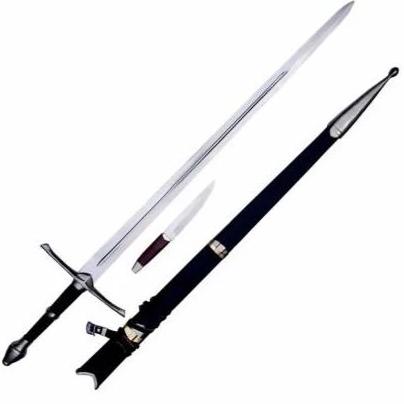
Battle-ready European swords include hand-forged longswords and bastard swords suitable for HEMA practice and study of Liechtenauer's tradition and Italian Fiore dei Liberi systems, arming swords for one-handed combat practice, broadswords for Scottish heritage and Highland reenactment, claymores for two-handed great sword practice, rapiers for serious historical fencing using La Verdadera Destreza and the Italian rapier masters, and sabers for cavalry martial arts and historical sword study. HEMA training pieces include blunted federschwert (feder) trainers, synthetic nylon wasters for safer sparring, and edge-blunted historical reproductions suitable for contact practice while maintaining proper feel and balance.
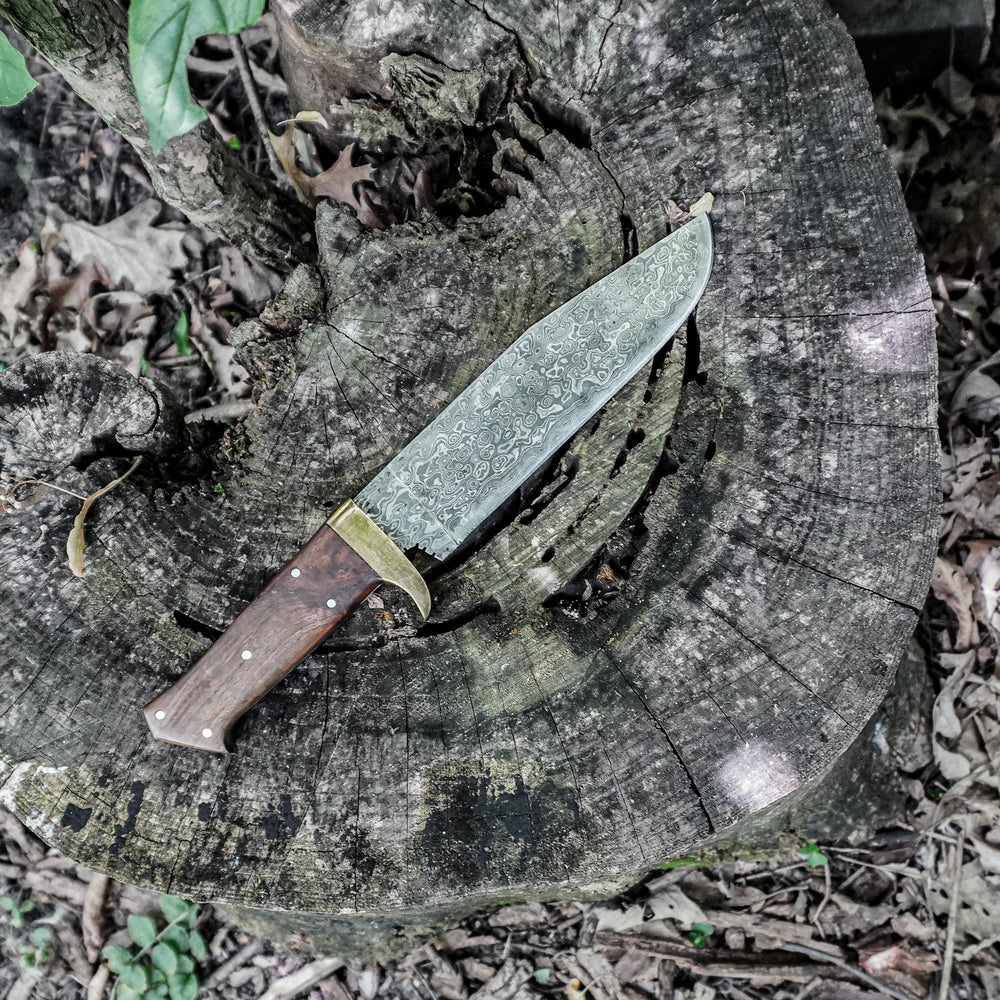
Viking and ancient swords in the Warrior's Arsenal include battle-ready pattern-welded Viking swords for serious reenactment combat and HEMA-adjacent Norse martial arts, hand-forged Ulfberht-style reproductions, ancient Greek xiphos and kopis blades, Roman gladius patterns built for reenactment use, and Iberian falcata pieces drawing on the original Spanish-influenced gladius lineage. Fighting Bowies and large combat knives include classical Sheffield-style Bowies, fighting-grade tactical Bowies, and other oversized combat knives suitable for serious use. Specialty combat pieces include battle-ready Chinese jian and dao for traditional Chinese martial arts, samurai-tradition great swords (nodachi, odachi) for serious practitioners, and themed combat pieces meeting battle-ready standards across various traditions.
Battle-ready swords serve specific functional needs that decorative swords can't. For tameshigiri — traditional Japanese test cutting on tatami mats, bamboo, and water bottles — only proper battle-ready katanas (preferably in T10, 9260, or properly heat-treated 1095) can survive the impact and deliver clean cuts. Decorative stainless swords used for cutting can bend, chip, or fail dangerously. For iaido and iaijutsu practice, students typically start with iaito (unsharpened practice swords) and transition to battle-ready shinken once their technique is developed enough to handle a live blade safely. For HEMA practice, battle-ready swords serve drilling and cutting practice while blunted feders and synthetic wasters handle contact sparring.
For serious reenactment combat — SCA, Belegarth, Dagorhir, Viking reenactment groups — battle-ready blunt-edged swords meet group construction standards for safe contact combat. Decorative swords aren't appropriate. For cutting practice and backyard tameshigiri, battle-ready swords let you actually develop cutting skills on appropriate targets without risking sword failure. For collectors who want to know their sword could function if needed — collectors who value the sword as a functional object rather than just visual art — battle-ready construction is the choice. The Warrior's Arsenal serves all of these needs, with the understanding that proper battle-ready construction at this level represents real investment compared to decorative alternatives.
Battle-ready swords require specific care to maintain their functional condition. Carbon steel blades need regular oiling with choji oil, mineral oil, or specialty blade protectant to prevent rust. Wipe blades thoroughly after every cutting session to remove sweat, blood from targets, and ambient moisture. Don't store carbon steel swords sheathed and damp — wood and leather scabbards trap moisture against the steel. For traditional Japanese sword care, apply uchiko powder with a soft cloth to lift old oil and surface contaminants, then reapply fresh oil. The patina that develops on actively used carbon steel is normal and protective.
Sharpening battle-ready swords requires skill — improper sharpening can damage the blade geometry permanently. For Japanese swords, sharpening should generally be done by a trained togishi rather than home stones, since traditional Japanese sword polishing involves multi-stage techniques that home sharpening can't replicate. For European battle-ready swords, careful home sharpening with proper bench stones (1000 grit followed by 3000–6000 for finishing) maintains the working edge — but heavy reshaping or major edge restoration should go to a professional. Inspection matters — after heavy cutting sessions, check the tang junction, the habaki collar on katanas, and any peened or riveted construction on European pieces for signs of stress or movement. A properly maintained battle-ready sword lasts decades of regular use; an ignored battle-ready sword can develop issues that compromise both performance and safety.
These battle-ready swords are popular for serious tameshigiri cutting practice, iaido and iaijutsu study with live blades, HEMA practice and cutting drills, SCA combat and historical reenactment groups requiring functional weapons, sword cutting enthusiasts and target-cutting practitioners, martial arts dojos and training schools, collectors who specifically value functional capability alongside craftsmanship, advanced students transitioning from training swords to live blades, ceremonial gifts for martial artists and sword practitioners where the recipient will actually use the sword, milestone gifts for hunters and outdoorsmen interested in serious functional weapons, military and law enforcement personnel interested in functional historical reproduction, and as anchor pieces for serious collectors who want their collection grounded in functional capability rather than purely decorative appeal.
Browse The Warrior's Arsenal to find battle-ready Japanese katanas, hand-forged European swords, Damascus combat blades, Viking battle swords, fighting Bowies, HEMA training pieces, and functional combat weapons that perform as swords are supposed to perform.
What does "battle-ready" actually mean? Battle-ready means the sword is constructed to perform under real cutting and combat conditions, not just look impressive. Concrete requirements include proper steel (high-carbon or spring steel, not decorative stainless), proper heat treatment (tempered to functional hardness levels, often through traditional differential techniques on katanas), full-tang construction (the blade extends through the entire handle as continuous steel, secured with traditional joinery), and proper geometry (distal taper, balance, and edge geometry suited to actual cutting). A sword missing any of these isn't truly battle-ready regardless of how it's marketed. The Warrior's Arsenal pieces meet these criteria; that's the line that defines what belongs in this collection.
Can I cut tatami mats with these swords? Yes — battle-ready swords in The Warrior's Arsenal are suitable for tameshigiri cutting practice on tatami mats, bamboo, and water-filled bottles. Specifically, properly constructed katanas in T10 tool steel, 9260 spring steel, properly heat-treated 1095 carbon steel, or true folded tamahagane handle tatami cutting cleanly when wielded with proper technique. Battle-ready European swords (longswords, sabers, broadswords) also handle cutting practice on appropriate targets. Sharpen the sword properly before cutting practice, develop your technique gradually, and ensure your cutting environment is safe (clear backstop, no bystanders, proper target stand).
Do battle-ready swords need to be sharpened? Battle-ready swords are typically sold either pre-sharpened or sharpenable depending on the specific piece. Pre-sharpened swords arrive ready for cutting practice. Sharpenable swords require sharpening before serious cutting use — usually done either by you (with appropriate stones and skill) or by a professional. Either way, battle-ready blade steel can take and hold a proper cutting edge — that's part of what distinguishes battle-ready from decorative construction. Check each sword's product page to confirm whether it ships pre-sharpened or requires sharpening.
Are battle-ready swords legal to own? Battle-ready swords are legal to own throughout the United States, with the same legal status as decorative swords for ownership purposes. Carry laws vary by state and locality, but ownership and home display of battle-ready swords is legal everywhere in the U.S. Battle-ready status refers to construction quality, not legal status — a battle-ready katana is no more legally restricted than a decorative one. Customers are responsible for checking local laws regarding carry and transport, but ownership doesn't change based on battle-ready designation.
Is the price difference between battle-ready and decorative swords worth it? It depends entirely on what you'll do with the sword. For display only, the answer is often no — a quality decorative sword serves wall display well at a fraction of the cost. For cutting practice, martial arts training, or serious reenactment, battle-ready is essential, not optional. Trying to cut with a decorative sword can damage the sword permanently and create real safety hazards. For collectors, battle-ready construction adds significant long-term value (proper construction lasts generations) and represents the craftsmanship tradition more authentically. The Warrior's Arsenal exists for buyers who specifically value functional capability — for whom a sword that can't actually cut isn't really a sword.
"Comp. Value" is a reference value for this item or a substantially similar item. It may be based on one or more of the following: prior Battling Blades pricing, comparable products, supplier or manufacturer pricing, marketplace pricing, or other retail reference data. It is provided for comparison only and is not a claim that this exact item was previously sold at the Comp. Value, that the Comp. Value is an MSRP, or that any specific retailer currently charges that amount. We make no representation that a purchaser will realize savings equal to the difference between the Comp. Value and our price.