

 Fast & Free Shipping
 30 day Money Back
 Secure Checkout
 Fast & Free Shipping
30 day Money Back
Secure Checkout
Fast & Free Shipping
30 day Money Back
Secure Checkout
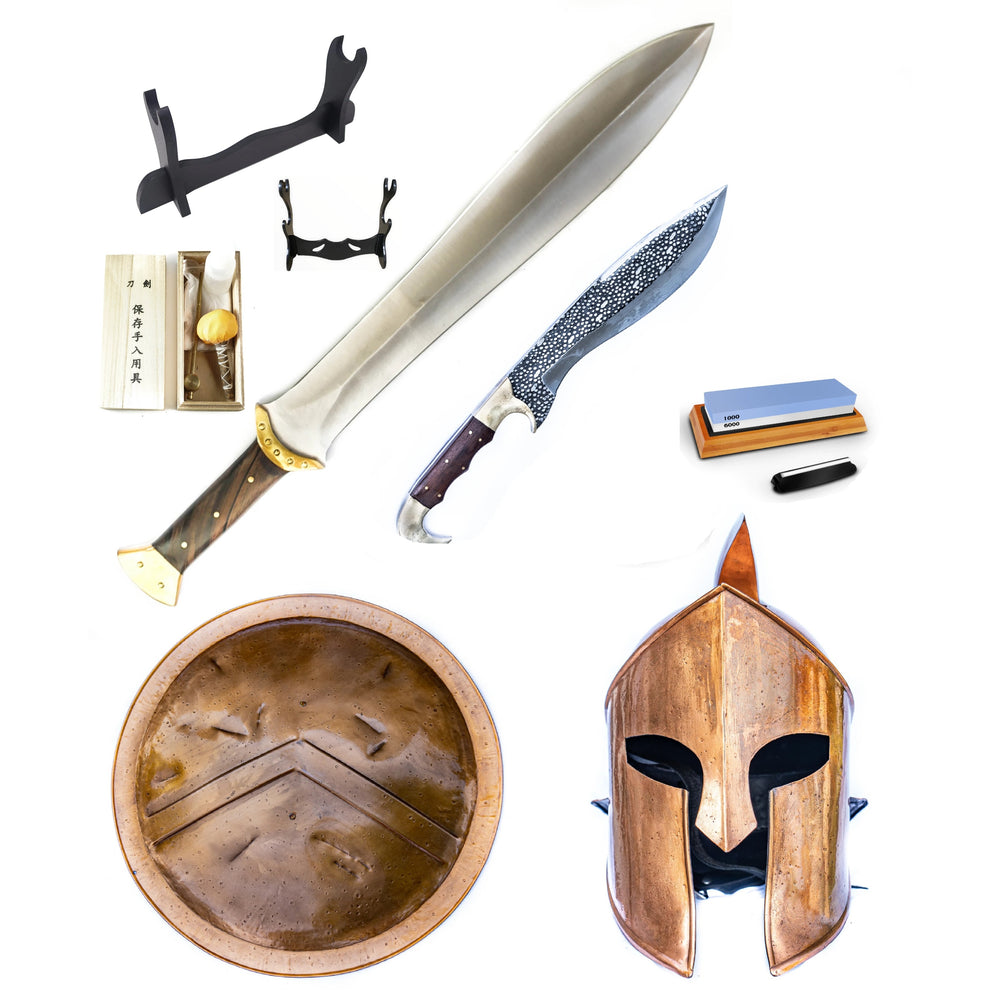
Explore Greek swords inspired by the bronze and iron blades carried by hoplites, Spartans, Macedonians, and the warriors of the ancient Hellenic world. This collection includes xiphos short swords, kopis curved blades, makhaira hacking swords, decorative wall pieces, and museum-style reproductions designed for collectors, reenactors, history enthusiasts, cosplayers, and anyone drawn to ancient Greek warfare and classical antiquity.
The Greek sword was the secondary weapon of the ancient world's most influential infantry tradition. In the dense phalanx formations that dominated battlefields from Marathon to Gaugamela, the long thrusting spear (dory) was the primary weapon — but when shafts broke, formations collapsed into close combat, or fighting moved into rough terrain, the Greek warrior drew his sword. From the citizen-hoplites of classical Athens and Sparta to the Macedonian companions of Alexander the Great, the Greek sword was the blade that finished what the spear started.
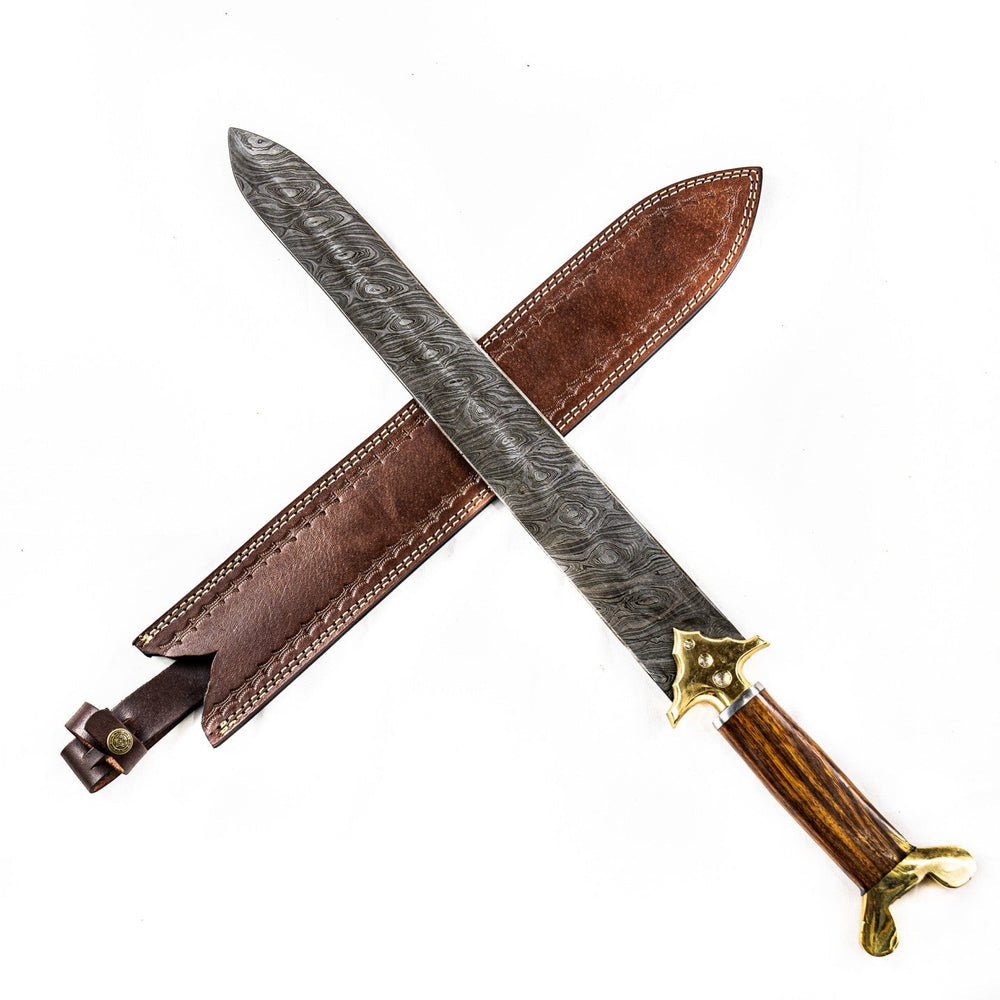
Our Greek sword collection includes designs with high-carbon steel blades reproducing both bronze-age and iron-age forms, bone, horn, and wood handles, brass and bronze fittings, distinctive Greek pommels, and authentic-style scabbards. Some are forged from 1060 or 1095 carbon steel for cutting and reenactment use, while decorative pieces feature stainless steel or bronze-finished blades for display, cosplay, and themed home decor. Many include hand-formed metalwork inspired by archaeological finds from across the Greek world.
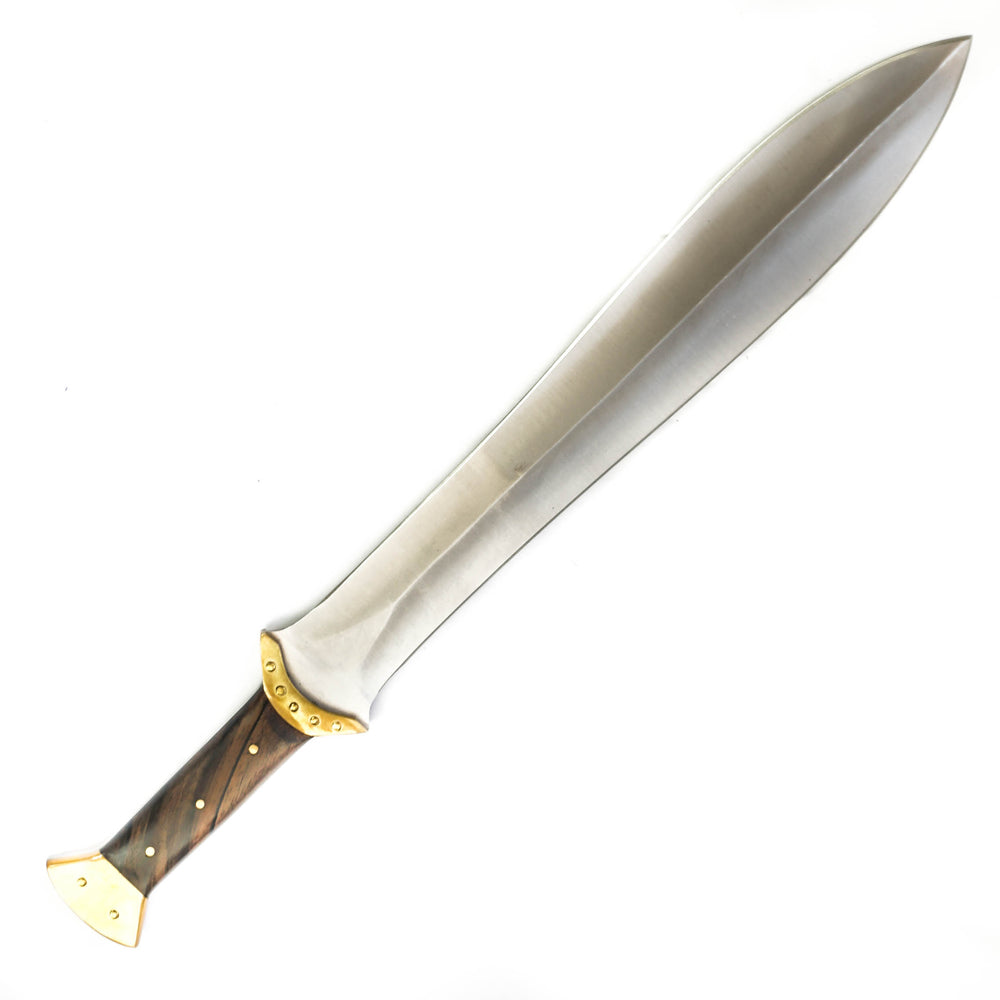
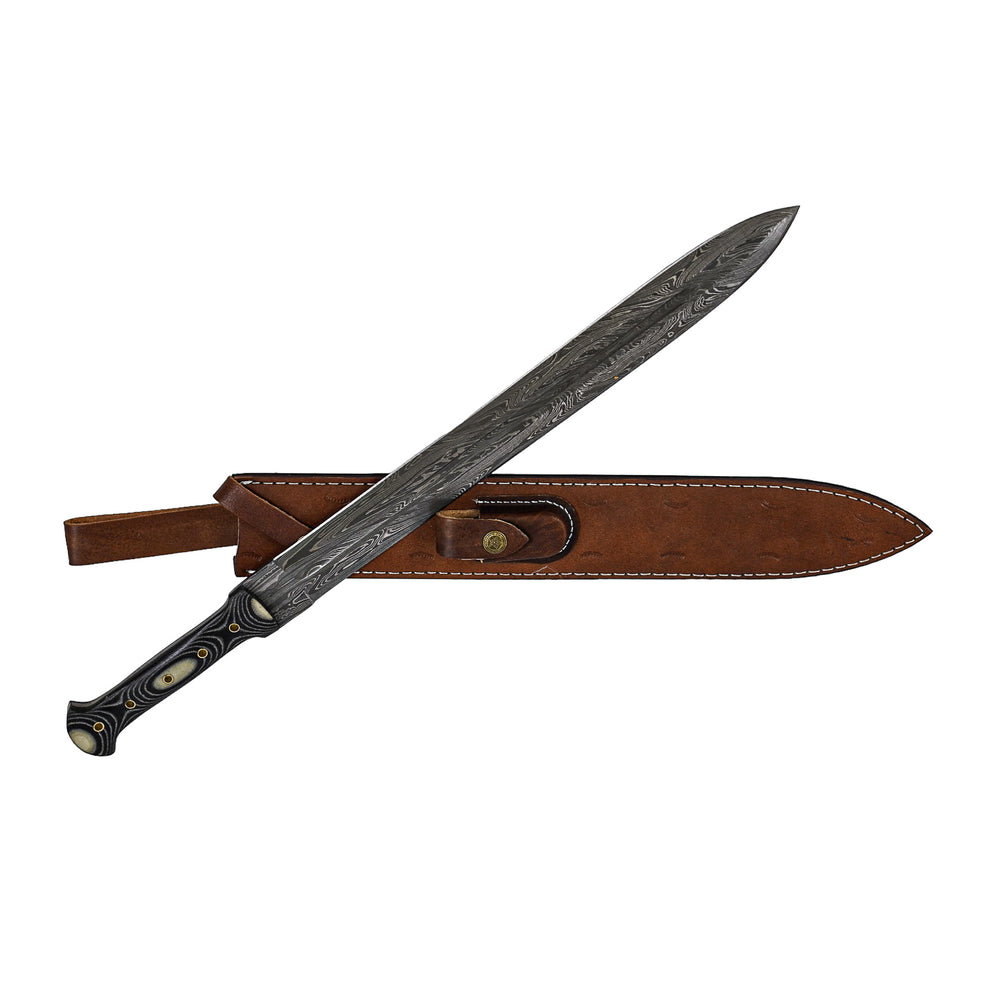
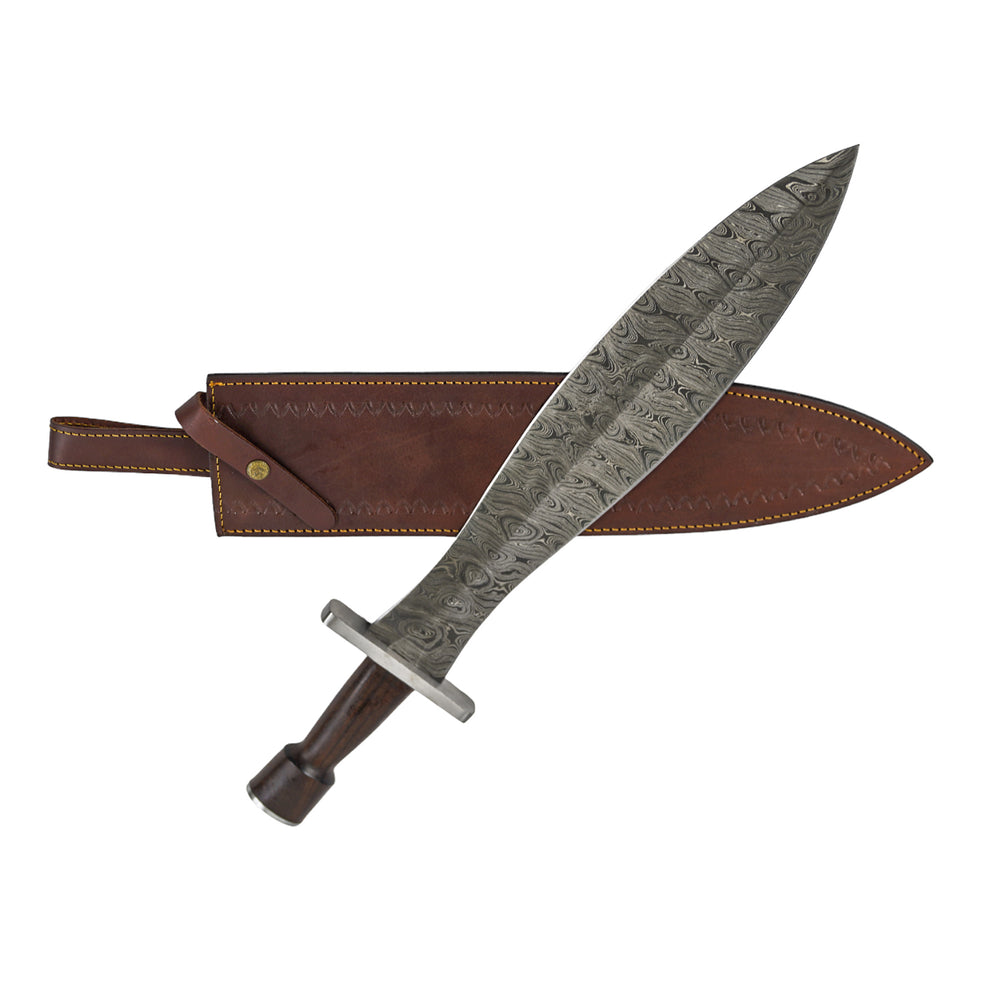
The ancient Greek sword family includes several distinct designs developed for different combat contexts. The xiphos is the iconic straight, double-edged short sword of the classical hoplite — a leaf-shaped blade roughly 50–60 cm long with a pronounced taper, designed for both cutting and thrusting in the chaos of broken phalanx combat. Worn slung from a baldric over the shoulder, the xiphos was the standard sidearm of Greek heavy infantry from the Archaic period through the Hellenistic era.
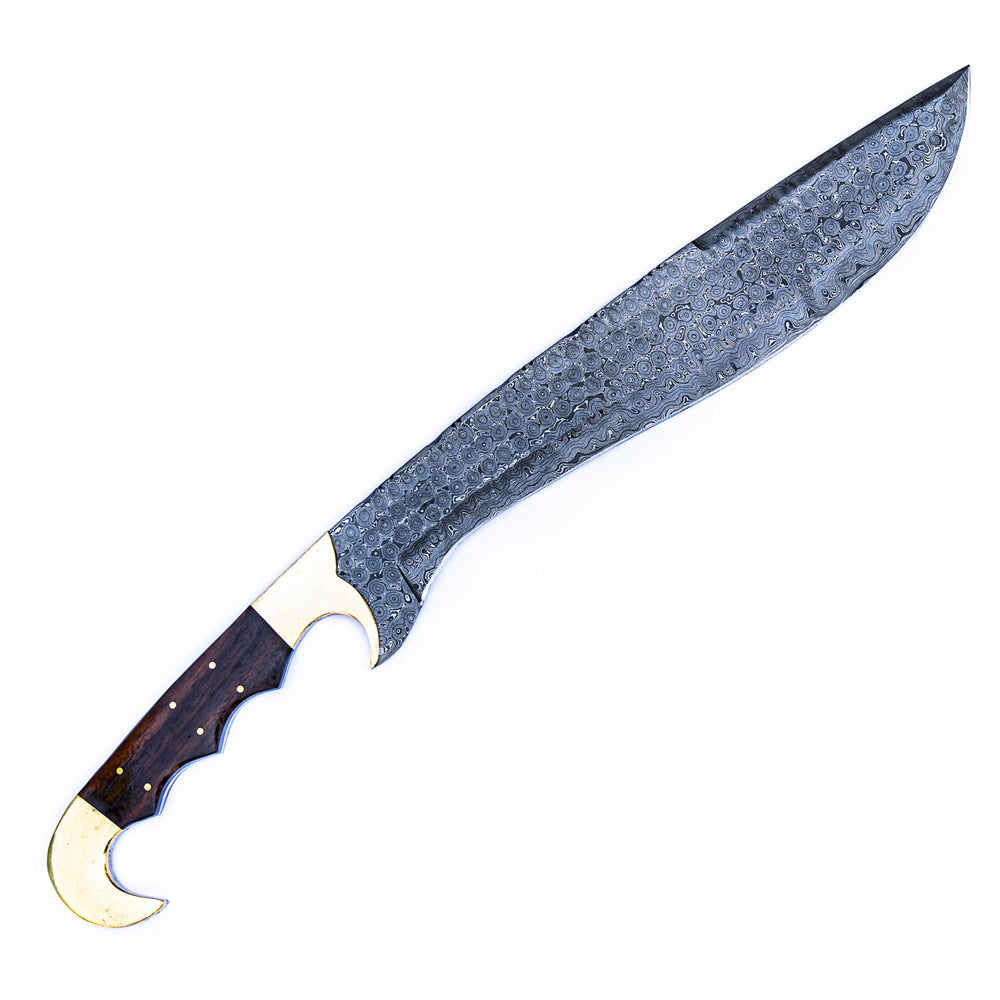
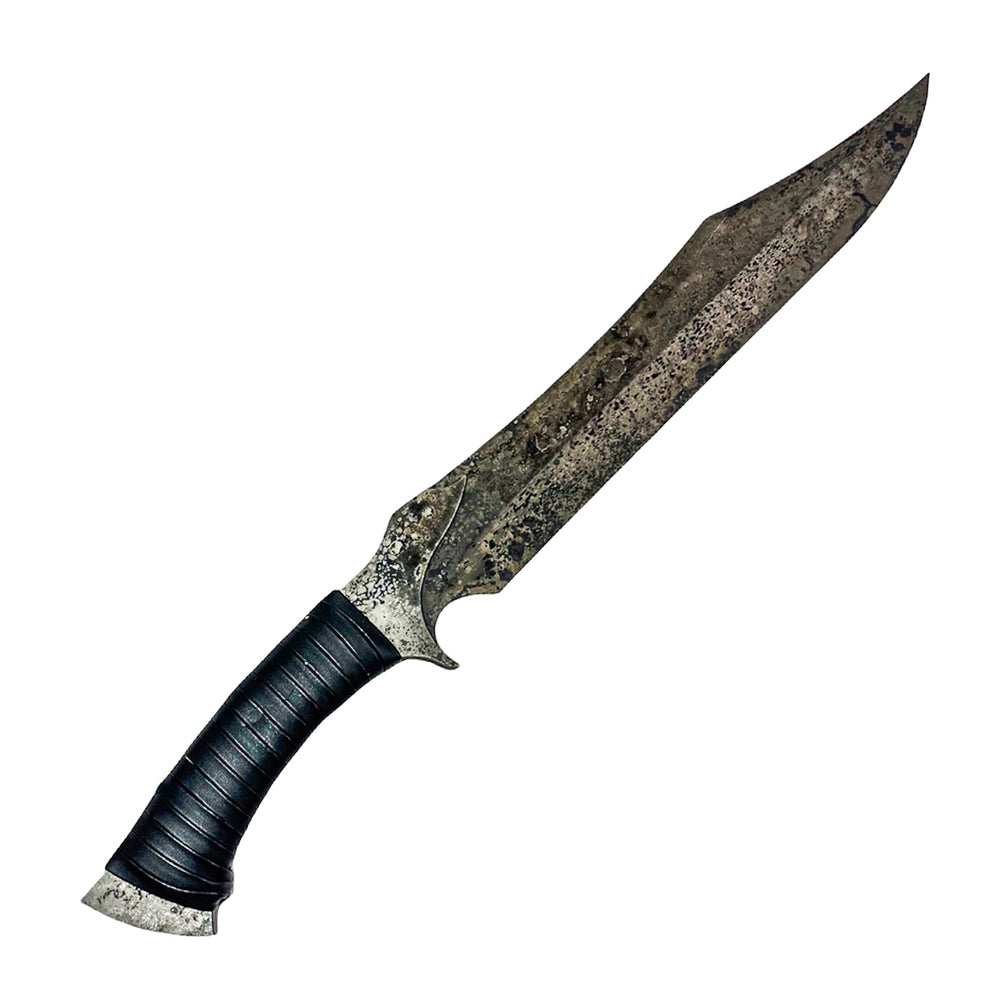
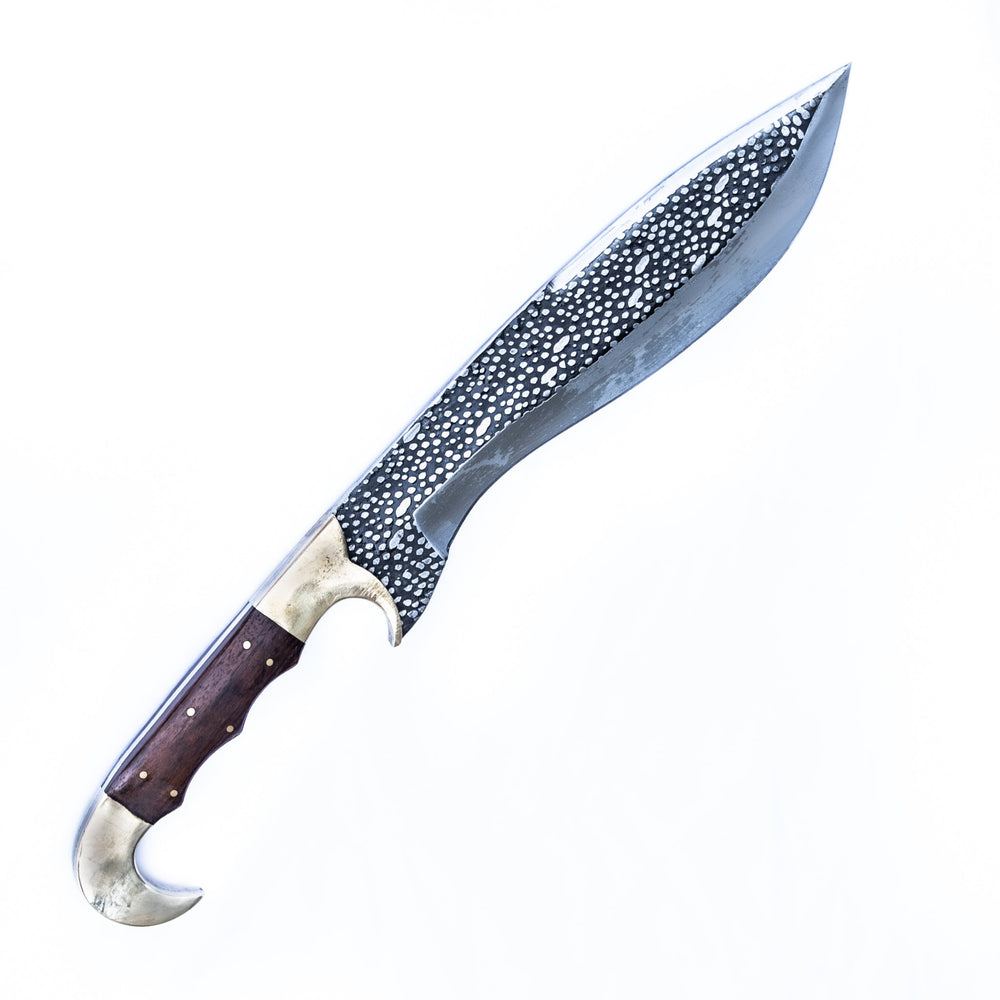
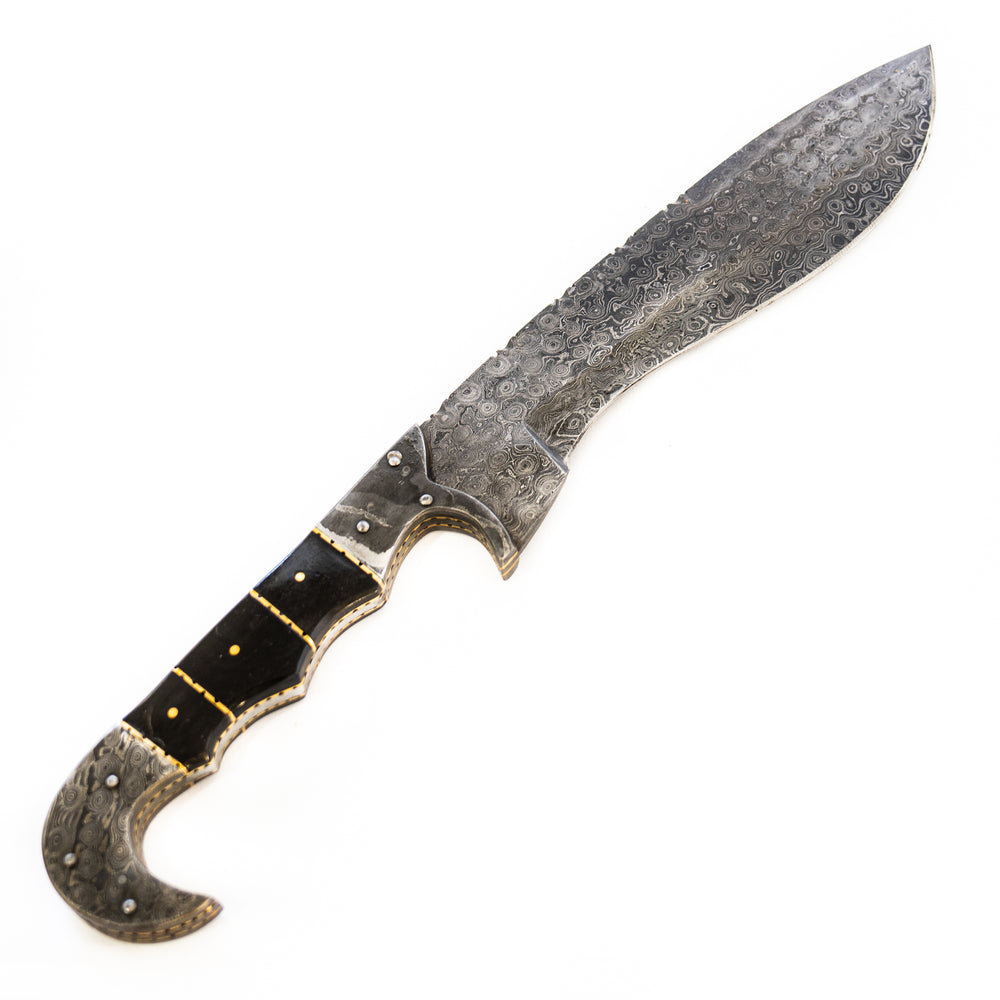
The kopis is the forward-curved single-edged Greek sword, with a heavy, recurved blade that concentrated chopping force at the belly of the edge — geometrically similar to the Nepalese kukri and ideal for delivering devastating downward cuts. The kopis was especially favored by Greek cavalry and Macedonian troops, where its slashing power suited mounted combat. The makhaira is a closely related curved hacking blade, sometimes used interchangeably with kopis in ancient sources, and often associated with cavalry use. The falcata — though Iberian in origin — is part of the same broader Mediterranean tradition of forward-curved swords and is often grouped with Greek-influenced designs. The sica, the curved Thracian sword adopted by gladiators, also belongs to this wider family of single-edged Mediterranean blades.
To understand the Greek sword, you have to understand the phalanx. The classical hoplite — the citizen-soldier of Greek city-states — fought in dense formations of overlapping shields and projecting spears, where the primary weapon was the eight-foot dory spear and the primary defense was the large round aspis shield. The sword was a backup, drawn only when the phalanx broke, when fighting moved into terrain unsuited to formation combat, or when the spear shaft snapped. This explains the xiphos's short, manageable length — it had to be drawable and usable in extreme close quarters, often pressed against an opponent at arm's length amid shouting men and crushing shields. The kopis, by contrast, emerged from cavalry traditions where its chopping power complemented the mobility of horseback combat. Both designs reflect the practical realities of ancient Greek warfare rather than any romantic notion of heroic duels.
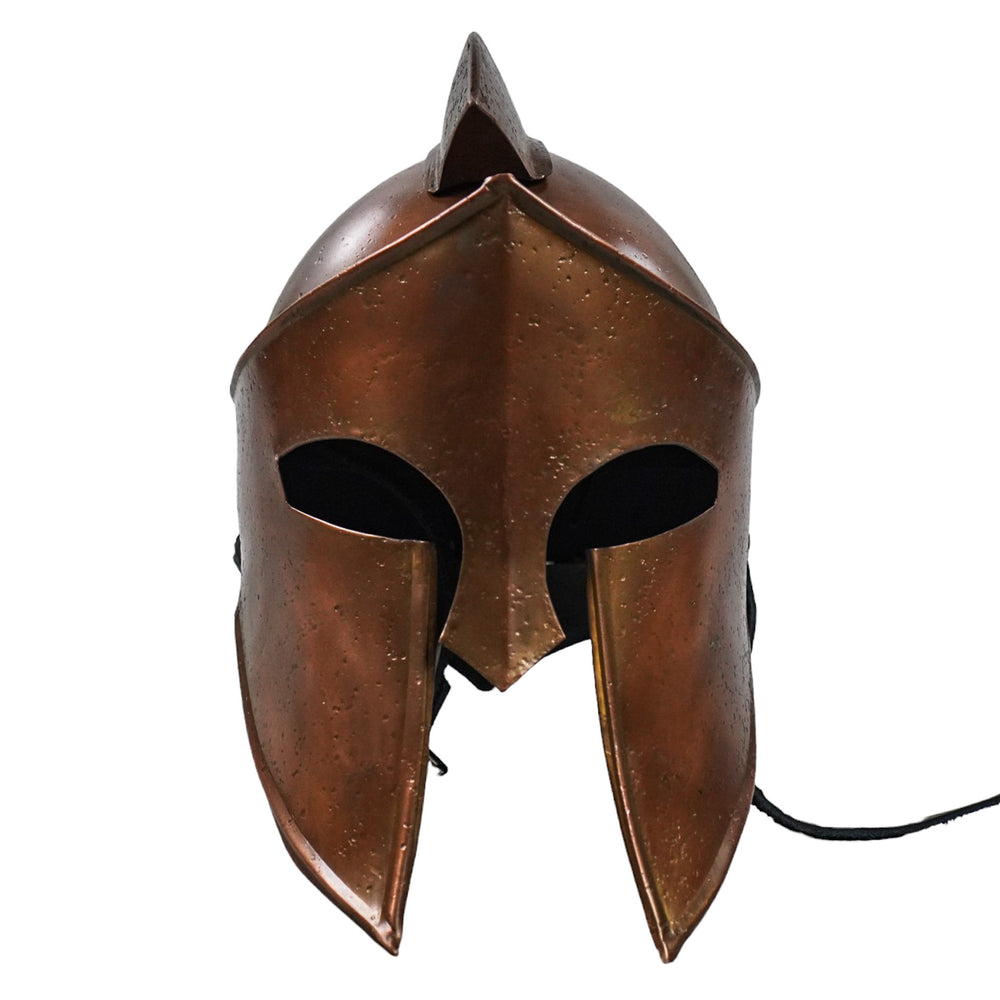
Battle-ready Greek swords feature full-tang construction, high-carbon or spring steel blades, and proper heat treatment suitable for cutting practice and serious reenactment use. Decorative Greek swords are typically made from stainless steel with partial tangs and are designed for wall display, costume use, cosplay (especially for productions set in ancient Greece, Sparta, and the world of Alexander the Great), and themed home decor. Bronze-finished decorative xiphos and kopis blades are particularly popular as display pieces given their archaic visual appeal and the cultural prestige of ancient Greek imagery.
These Greek swords are popular for ancient Greek reenactment, hoplite and Spartan-themed living history groups, classical history collecting, museum-style home displays, themed offices honoring classical antiquity and ancient warfare, cosplay for productions set in ancient Greece (Spartan films, classical mythology adaptations, sword-and-sandal aesthetics), Renaissance and historical fairs featuring ancient periods, classical literature and Greek mythology enthusiasts, ceremonial gifts for classics scholars and history students, and collector pieces honoring one of the foundational warrior traditions in Western history. Many customers choose Greek swords as meaningful gifts for fans of ancient history, Spartan culture, Alexander the Great, and classical Greek mythology.
Browse the collection to find xiphos short swords, kopis curved blades, makhaira hacking swords, and decorative ancient Greek-inspired weapons that fit your collection, reenactment kit, or display.
What sword did Spartans use? Spartan hoplites carried the xiphos, the standard straight, double-edged short sword of classical Greek infantry. Ancient sources also reference the Spartans using an unusually short xiphos — historians note Spartan swords were sometimes shorter than other Greek city-states' sidearms, reflecting Spartan emphasis on extreme close combat. The famous response of a Spartan mother telling her son to fight close enough that his short sword would reach the enemy may be apocryphal, but it reflects the genuine Spartan willingness to close the distance.
What's the difference between a xiphos and a kopis? The xiphos is straight, double-edged, and leaf-shaped — the standard hoplite infantry sidearm designed for both cutting and thrusting in close combat. The kopis is single-edged and forward-curved, with a recurved blade that concentrates chopping force — primarily a cavalry weapon and slashing-focused sword. The xiphos was carried by foot soldiers; the kopis was favored by mounted troops and those who wanted maximum cutting power over thrust capability.
What is a makhaira? The makhaira is a single-edged curved Greek sword closely related to the kopis, sometimes used interchangeably in ancient Greek sources. Modern scholarship often distinguishes the makhaira as the broader category of single-edged hacking blade and the kopis as a specific forward-curved variant, but the ancient terminology was inconsistent. Both were associated with cavalry use and powerful chopping cuts. The makhaira's name became the root of related sword terms across the ancient Mediterranean.
Were Greek swords bronze or iron? Both, depending on the period. The earliest Greek swords from the Bronze Age (Mycenaean period and earlier, roughly 1600–1100 BC) were forged from bronze. After the Bronze Age collapse and through the classical period (roughly 800 BC onward), Greek swords transitioned to iron and later carbon steel. Classical hoplite-era xiphos and kopis swords from the time of the Persian Wars, the Peloponnesian War, and Alexander the Great were iron or early steel blades. Modern reproductions are made from carbon steel for durability and historical authenticity, with bronze-finished decorative versions available for display.
Did Alexander the Great use a kopis? Macedonian forces under Alexander the Great used both the xiphos and the kopis, with the kopis particularly favored by cavalry — including the elite Companion Cavalry that formed Alexander's shock force. Ancient sources and surviving Macedonian-era artwork depict cavalry wielding curved kopis-style blades. Whether Alexander himself preferred a kopis is debated, but the curved single-edged sword was firmly established in Macedonian military tradition and contributed to the success of his cavalry-led conquests.