

 Fast & Free Shipping
 30 day Money Back
 Secure Checkout
 Fast & Free Shipping
30 day Money Back
Secure Checkout
Fast & Free Shipping
30 day Money Back
Secure Checkout
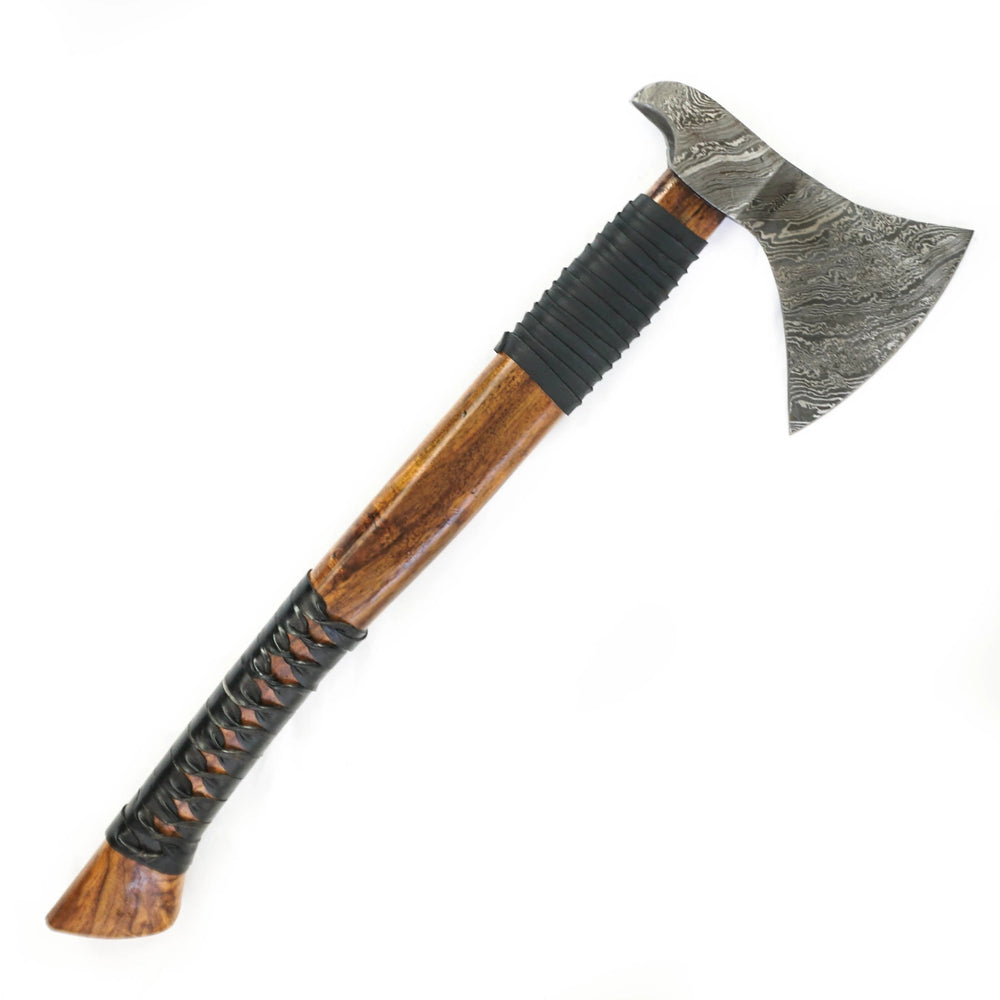
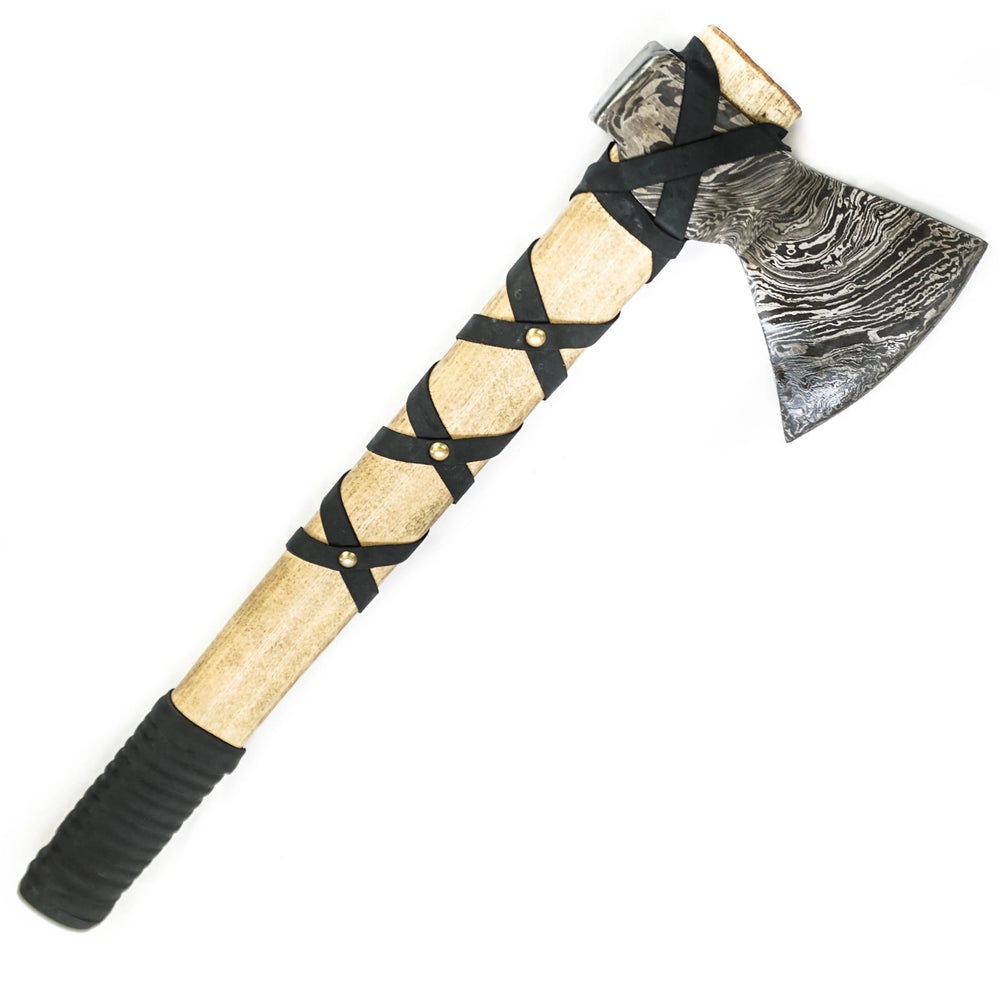
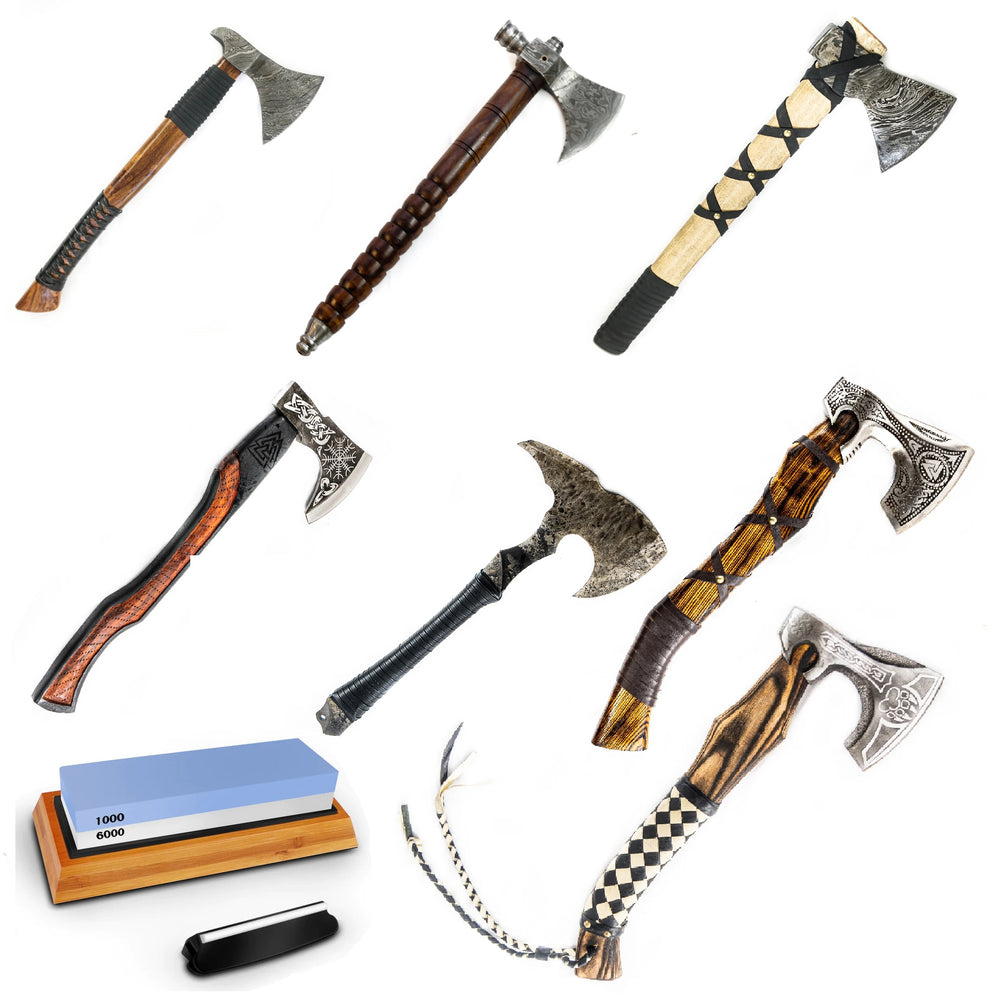
Explore axes built for combat, splitting wood, throwing competitions, bushcraft, and serious outdoor work. This collection includes Viking battle axes, medieval throwing axes, tomahawks, bearded axes, double-bit felling axes, hand axes, splitting mauls, camping hatchets, and decorative display axes designed for collectors, reenactors, throwers, woodsmen, bushcrafters, and anyone drawn to the world's oldest and most versatile edged tool.
The axe is humanity's oldest weapon and most enduring tool — used continuously from stone-age hand axes through Bronze Age war axes, Viking-era battle axes, frontier American felling axes, modern throwing axes, and today's tactical tomahawks. Where swords required wealth and training, axes were universal: every farmer, woodsman, and warrior owned one. Vikings carried them into battle and used them to build longships. Frontier settlers cleared continents with them. Tomahawk-throwing has gone from Native American warfare to one of the fastest-growing competitive sports in North America. Few tools cross so many cultures, eras, and purposes.
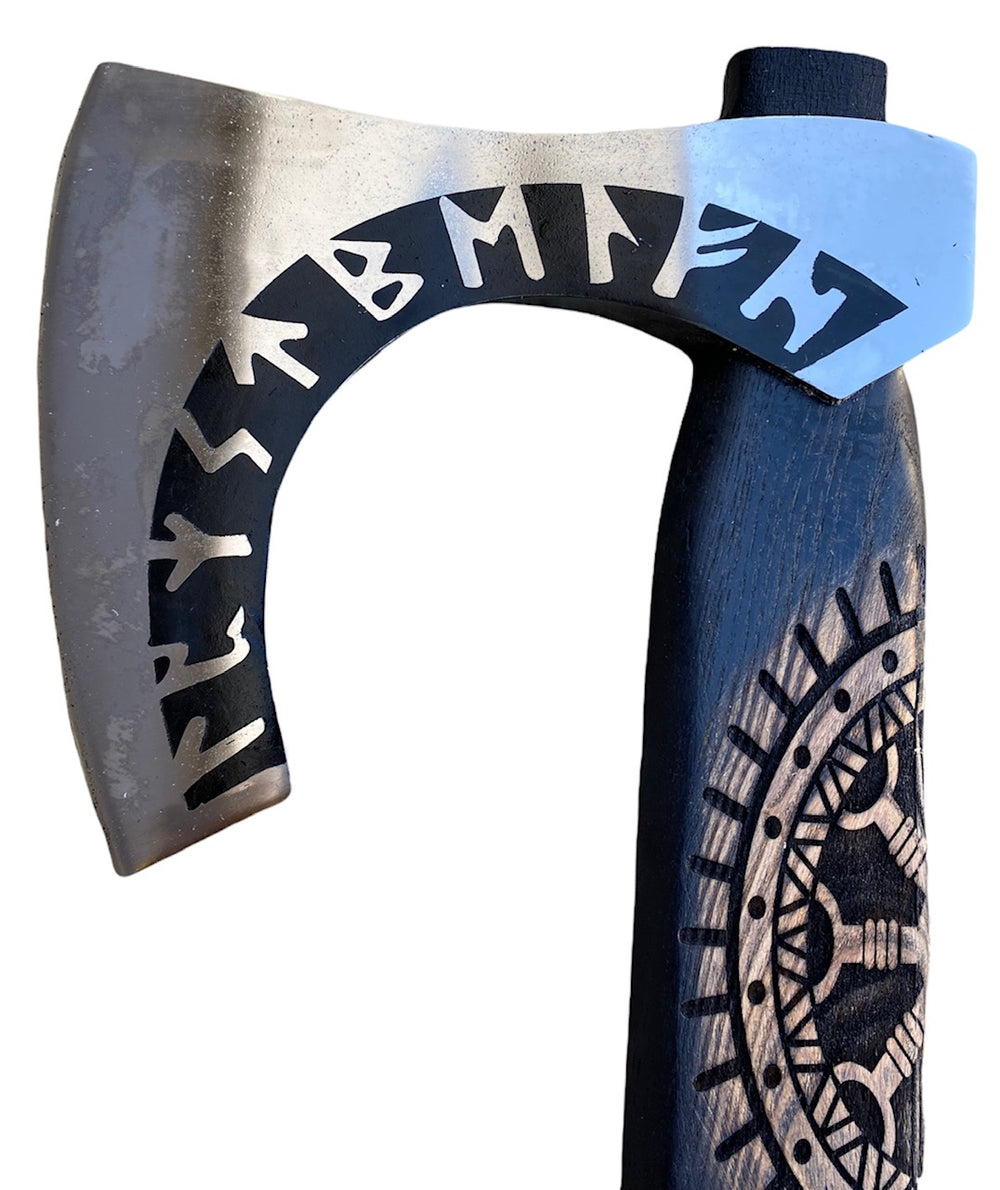
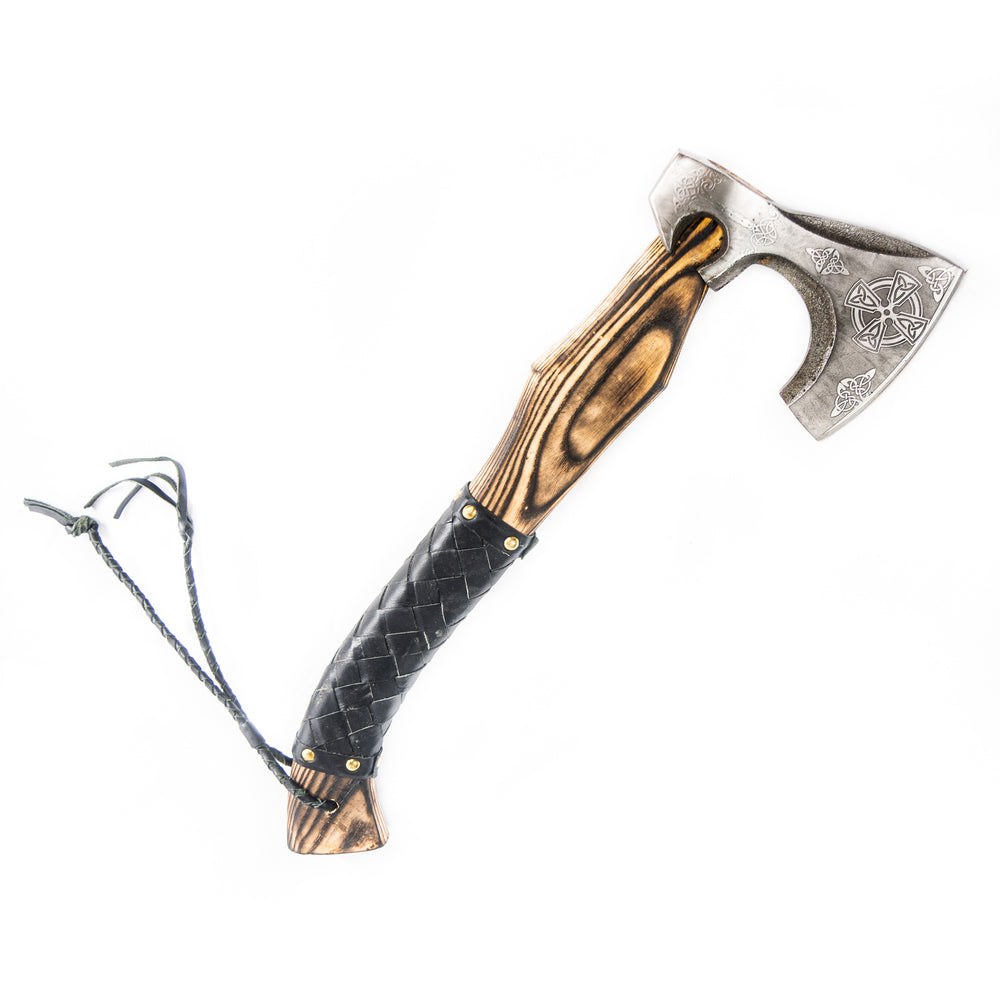
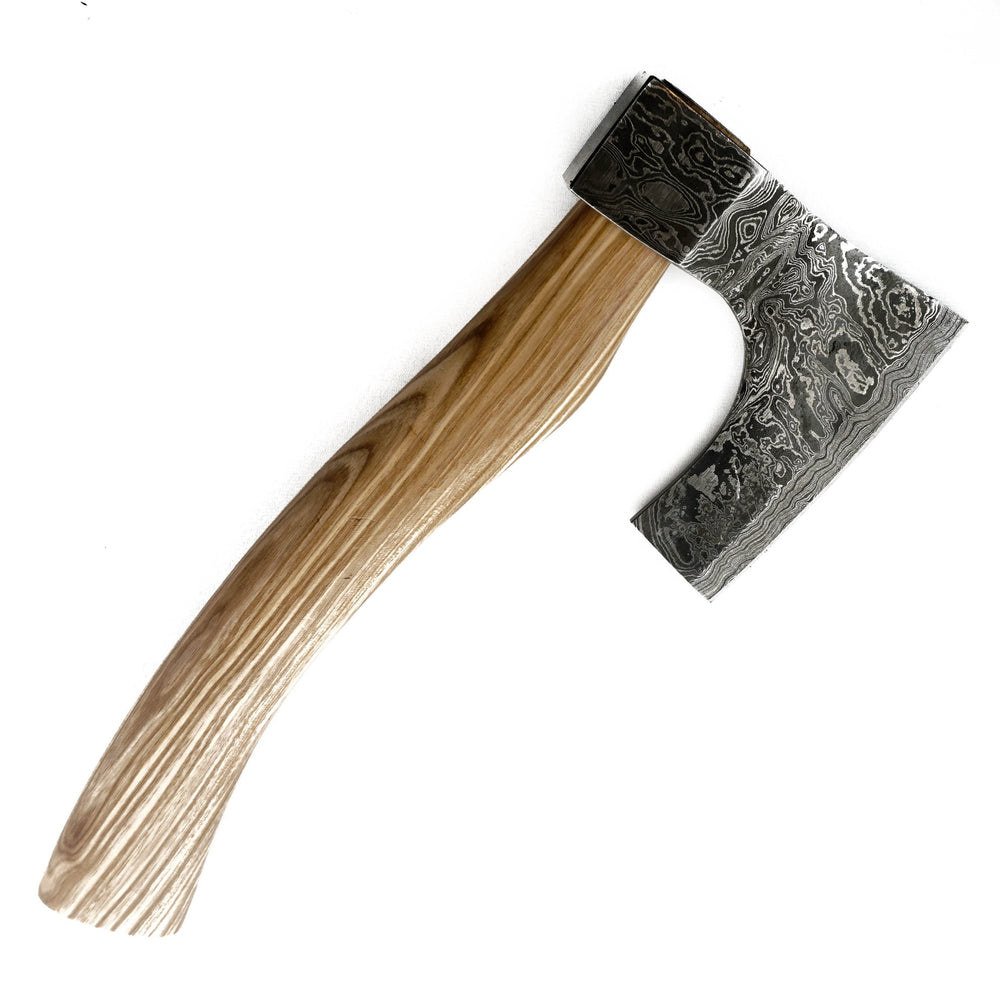
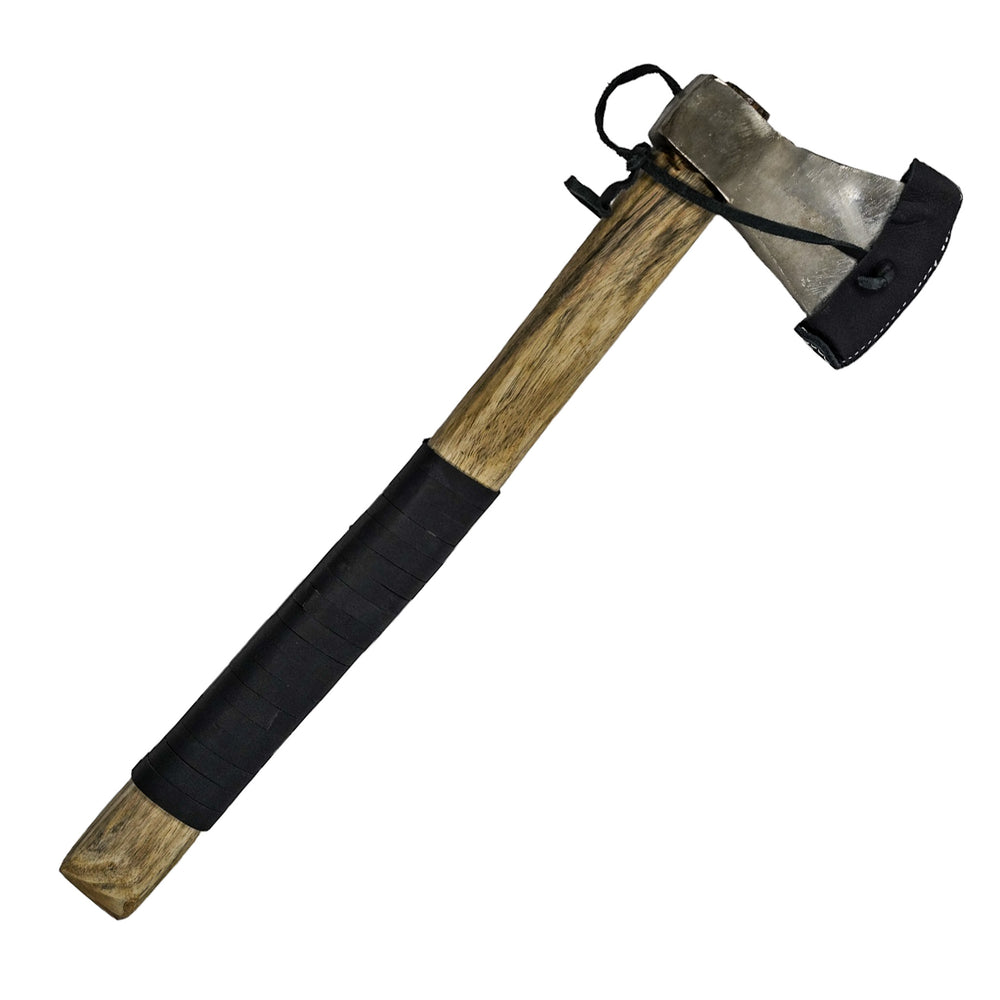
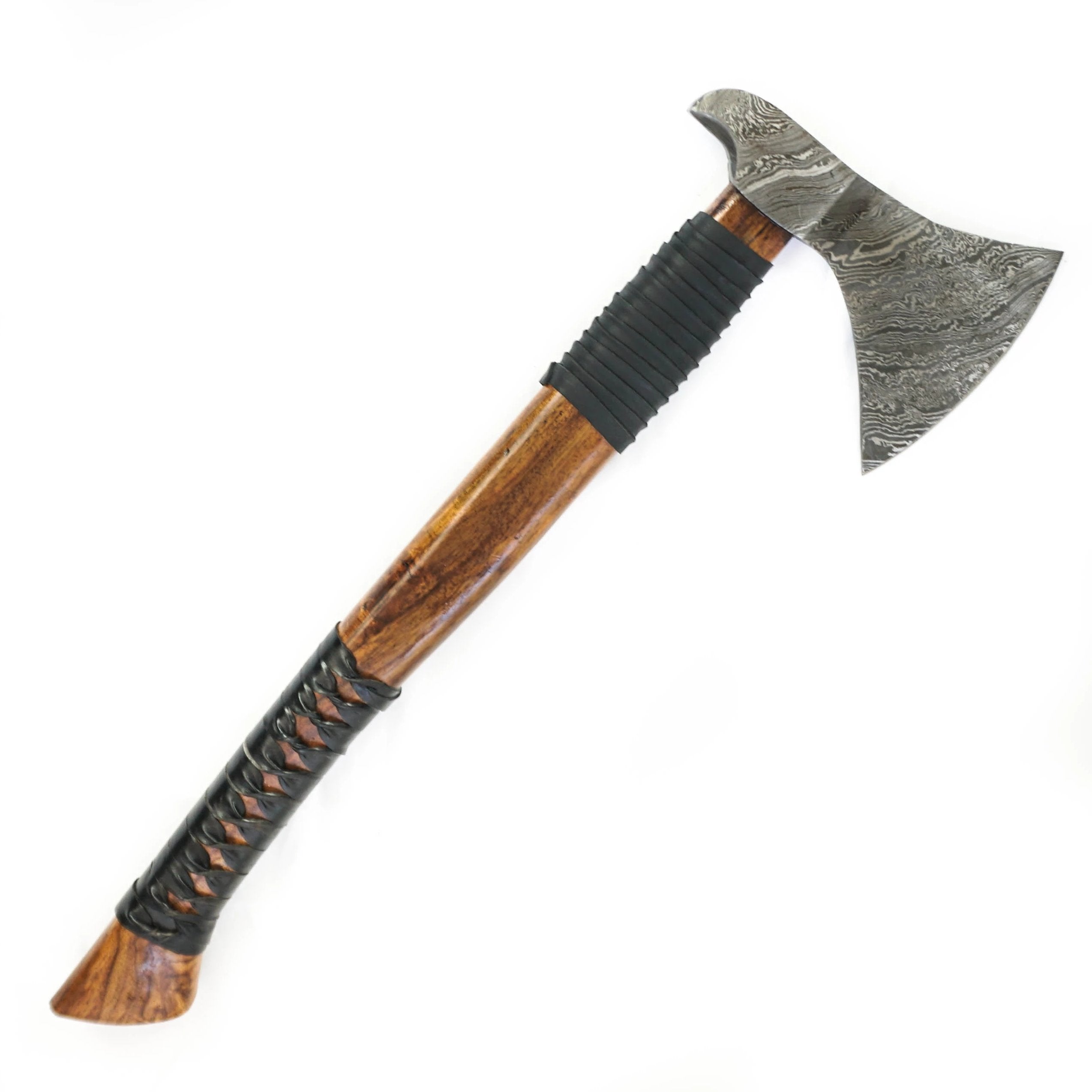
Our axe collection includes designs with high-carbon steel heads (1060, 1075, 1095, and 5160 spring steel), hand-forged finishes, hickory and ash wood handles, paracord-wrapped tactical handles, polished metalwork, and traditional leather sheaths or kydex blade guards. Designs range from compact throwing tomahawks to two-handed Dane axes, from working camp hatchets to ornate Viking-style display axes with engraved heads and pattern-welded steel. Many include leather belt loops and sheaths suitable for carrying in the field.
The axe family covers an enormous range of designs developed for specific purposes. The Viking battle axe is the iconic Norse weapon — including the smaller one-handed hand axe, the bearded skeggox (with its distinctive lower hook for catching shields or weapons), and the massive two-handed Dane axe (or breiðøx) carried by elite huscarls and Anglo-Saxon housecarls at battles like Hastings. The francisca is the throwing axe of the Frankish warriors and the Merovingian dynasty, designed to be thrown in volleys before melee contact.
The tomahawk is the lightweight throwing and combat axe with roots in Native American warfare, later adopted by colonial frontiersmen and modern military forces — today, tomahawks are issued to some U.S. military units and used widely in throwing sports. The throwing axe covers the broader competitive category, including WATL-spec (World Axe Throwing League) competition axes built to specific weight and size requirements. The bearded axe refers to any axe with the distinctive lower-blade hook, allowing for hooking, controlled cuts, and shortened grip near the head. The broadaxe is the wide-bladed hewing axe used historically for squaring timber into beams.
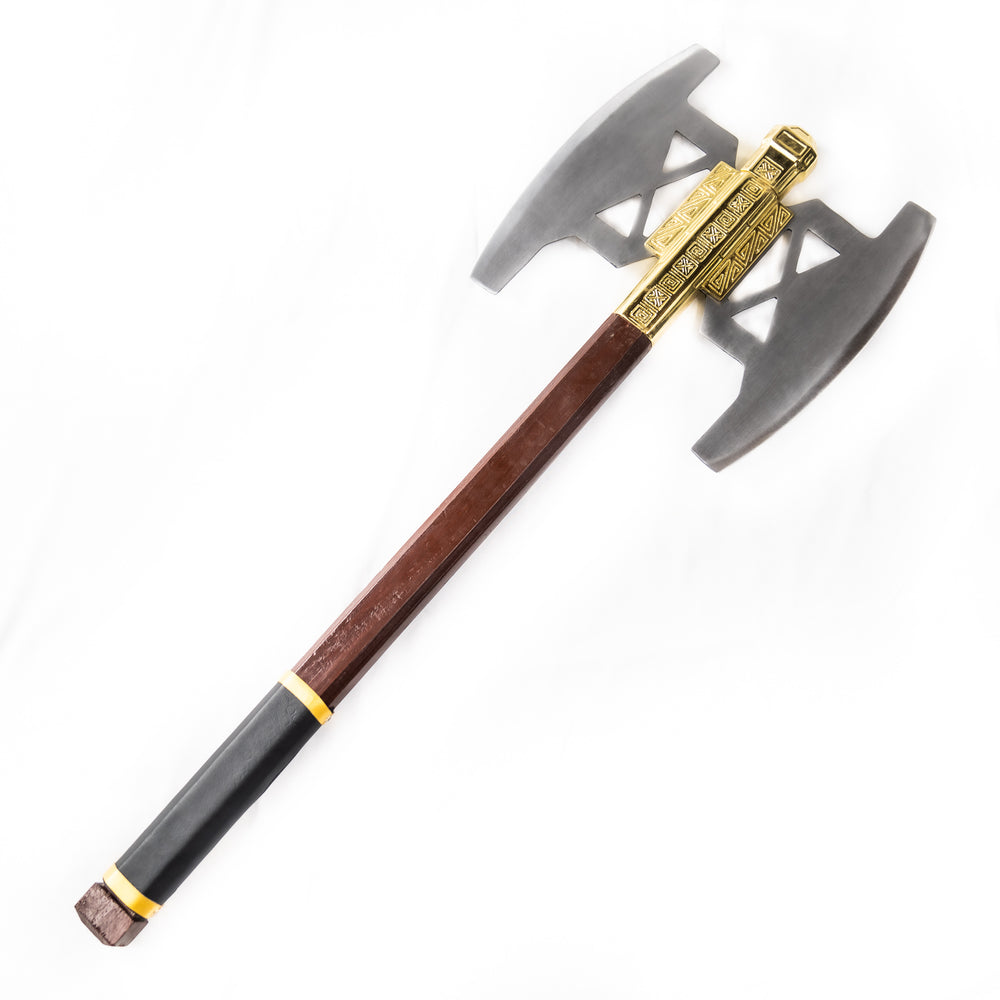
Working axes include the felling axe (designed for chopping down trees with a thinner profile and longer handle), the splitting axe and splitting maul (heavier and wedge-shaped for splitting logs along the grain), the hatchet (the compact one-handed axe for camp and bushcraft work), and the double-bit axe (with two opposing cutting edges, traditionally used by professional woodsmen). Fantasy and themed axes round out the collection with dragon-engraved Viking axes, skull-handled tactical tomahawks, and ornamental display axes built more for visual impact than working use.
The battle axe was the working warrior's weapon — devastating, accessible, and effective regardless of the user's training level. Where a sword required years to master, a battle axe in trained hands could split shields, cleave helmets, and end fights in single blows even when wielded by farmers turned soldiers. Vikings made the axe their signature weapon, with the two-handed Dane axe becoming the terror of Anglo-Saxon England and the chosen weapon of the elite huscarls who stood beside Harold Godwinson at Hastings in 1066. The francisca — the throwing axe of the Franks — gave its name to France itself, and Frankish armies reportedly opened battles by hurling volleys of franciscas before closing with swords and seaxes. Native American warriors used the tomahawk for both throwing and close combat, and frontier American militias adopted the design for use against British, French, and Native opponents. The axe's combat history spans every continent and nearly every era of human warfare.
Battle-ready axes feature properly heat-treated high-carbon steel heads, secure haft-to-head fit (typically wedged hickory or ash handles with steel or wood wedges), and balance suitable for cutting, throwing, or chopping work. Decorative axes feature stainless steel heads or unhardened display steel, often with elaborate engraving, etched motifs, and ornate handles — designed for wall display, cosplay, themed home decor, and ceremonial use rather than actual chopping or throwing. Competition throwing axes are a specific category built to WATL or IATF (International Axe Throwing Federation) specs, with regulated weight, blade dimensions, and handle length for league play and sanctioned tournaments.
These axes are popular for axe-throwing leagues and backyard target throwing, Viking and medieval reenactment (SCA combat, Norse encampments, living history events), bushcraft and camping (splitting kindling, processing firewood, shelter building), hunting and outdoor work, museum-style home displays of Viking and medieval weaponry, themed offices and man caves honoring Norse heritage and warrior culture, cosplay for Viking, medieval, and fantasy productions, ceremonial gifts for veterans, outdoorsmen, and Norse heritage enthusiasts, and serious collector pieces honoring one of humanity's most universal tools and weapons.
Browse the collection to find Viking battle axes, throwing tomahawks, working hatchets, two-handed Dane axes, and decorative display pieces that fit your collection, throwing setup, or outdoor kit.
What's the difference between a tomahawk and a hatchet? A tomahawk is a lightweight throwing and combat axe with a thinner profile, longer handle, and balance optimized for throwing — originally from Native American tradition, now widely used in throwing sports and tactical applications. A hatchet is a heavier-headed, shorter-handled working axe optimized for chopping, splitting kindling, and camp tasks rather than throwing. Both are one-handed compact axes, but a tomahawk emphasizes throwing balance and combat versatility while a hatchet emphasizes chopping power and utility work.
What is a Viking bearded axe? A bearded axe (or skeggox in Old Norse) is a Viking axe with a distinctive lower-blade hook that extends downward from the cutting edge. The "beard" served several functions: it allowed the wielder to hook an opponent's shield rim, weapon, or limb; it provided a place to grip the blade for controlled close-up cuts (called "choking up"); and it extended the cutting edge without significantly increasing the axe's weight. Bearded axes were common throughout the Viking world and remain one of the most recognizable Norse weapon designs.
What is a Dane axe? The Dane axe (or breiðøx, "broad axe") is the iconic two-handed Viking battle axe with a long handle (typically 4–5 feet) and a wide, thin cutting head. Wielded by elite warriors called huscarls, the Dane axe could split shields, helmets, and chainmail in single blows. Famously carried by Harold Godwinson's bodyguard at the Battle of Hastings in 1066, where Anglo-Saxon huscarls used Dane axes to devastating effect against Norman cavalry until the Saxon line eventually broke. The Dane axe remained in use throughout the early medieval period and influenced later European polearm designs.
Can you throw any axe, or do you need a special throwing axe? While almost any axe can technically be thrown, dedicated throwing axes and tomahawks are specifically balanced and weighted for accurate rotation in flight. Competition throwing leagues like WATL (World Axe Throwing League) and IATF (International Axe Throwing Federation) have specific rules about handle length, head weight, and overall dimensions. For casual backyard throwing, a basic throwing axe or tomahawk is the best starting point. Heavy working axes (like splitting mauls or full felling axes) are too unwieldy and unbalanced to throw safely or accurately.
What's the best wood for an axe handle? Hickory is the traditional and most popular choice for axe handles, prized for its exceptional strength, shock absorption, and resistance to splitting under impact. Ash is the historical European equivalent, used on Viking axes and most traditional European tools, offering similar shock-absorbing properties. Both are vastly superior to softer woods like pine. Modern tactical axes often use synthetic handles (fiberglass-reinforced polymer, G10, or paracord-wrapped steel), which never crack or warp but transmit more shock to the user's hand. For working and throwing axes, hickory remains the standard.
"Comp. Value" is a reference value for this item or a substantially similar item. It may be based on one or more of the following: prior Battling Blades pricing, comparable products, supplier or manufacturer pricing, marketplace pricing, or other retail reference data. It is provided for comparison only and is not a claim that this exact item was previously sold at the Comp. Value, that the Comp. Value is an MSRP, or that any specific retailer currently charges that amount. We make no representation that a purchaser will realize savings equal to the difference between the Comp. Value and our price.