

Are Replica Viking Swords Battle Ready? What Buyers Need to Know Before They Purchase
Are replica Viking swords battle-ready? Yes, but only if they are built the right way. A properly constructed replica Viking sword using quality steel, correct heat treatment, and full tang assembly can absolutely be battle-ready and suitable for cutting practice, HEMA training, and reenactments. A cheaply made replica using stainless steel and a rat-tail tang is nothing more than a display piece, no matter how it is marketed.
In this blog, we will discuss what separates a functional replica from a decorative one, the key construction features that determine battle readiness, and exactly what to look for before you buy.
What Does "Battle Ready" Mean for a Replica Viking Sword?
A battle-ready replica Viking sword is built to withstand actual use, cutting practice, HEMA sparring, reenactment combat, or serious long-term handling. A decorative replica is designed purely for display. It may look identical on a shelf, but the steel and assembly are not built to absorb real impact. Use it beyond wall display, and it becomes a safety risk.
Understanding the distinction can help prevent buyer disappointment.
|
Feature |
Battle Ready Viking Sword |
Decorative Viking Sword |
|
Tang Construction |
Full Tang |
Often Partial Tang |
|
Steel Type |
High-Carbon Steel |
Stainless Steel Common |
|
Heat Treatment |
Yes |
Usually No |
|
Durability |
Functional |
Display Focused |
|
Weight Balance |
Optimized |
Often Secondary |
|
Intended Purpose |
Functional Use & Collection |
Decoration |
Many collectors own both types. The right choice depends on your goals.
5 Key Features of a Functional Battle-Ready Viking Sword
1. Strong Steel Blade (Damascus or High-Carbon Steel)
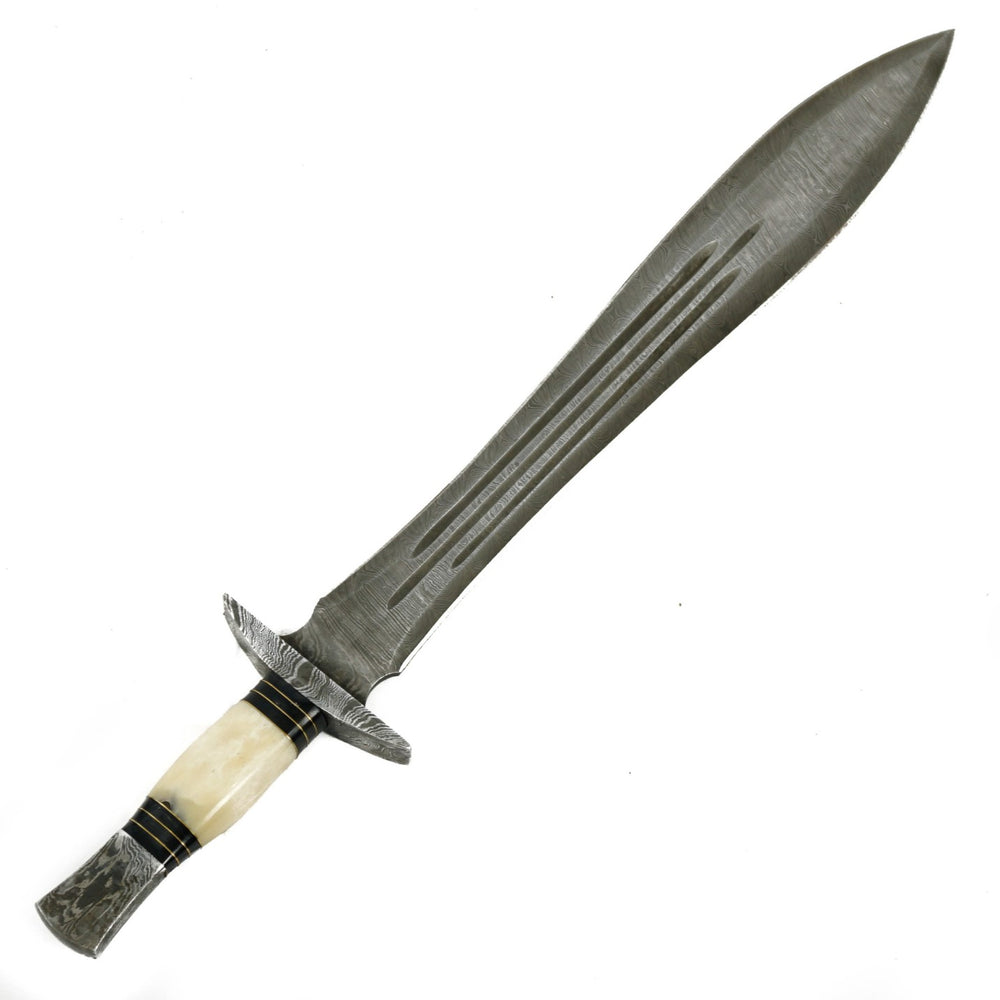
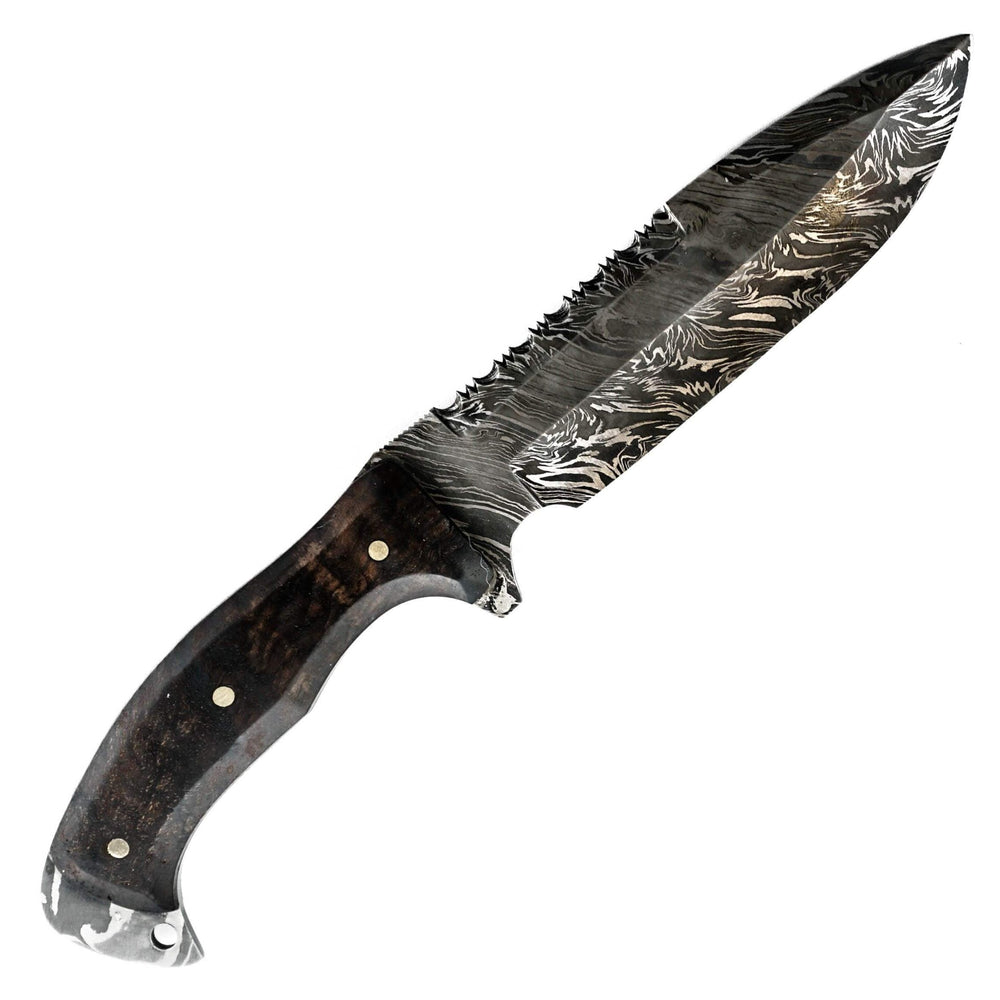
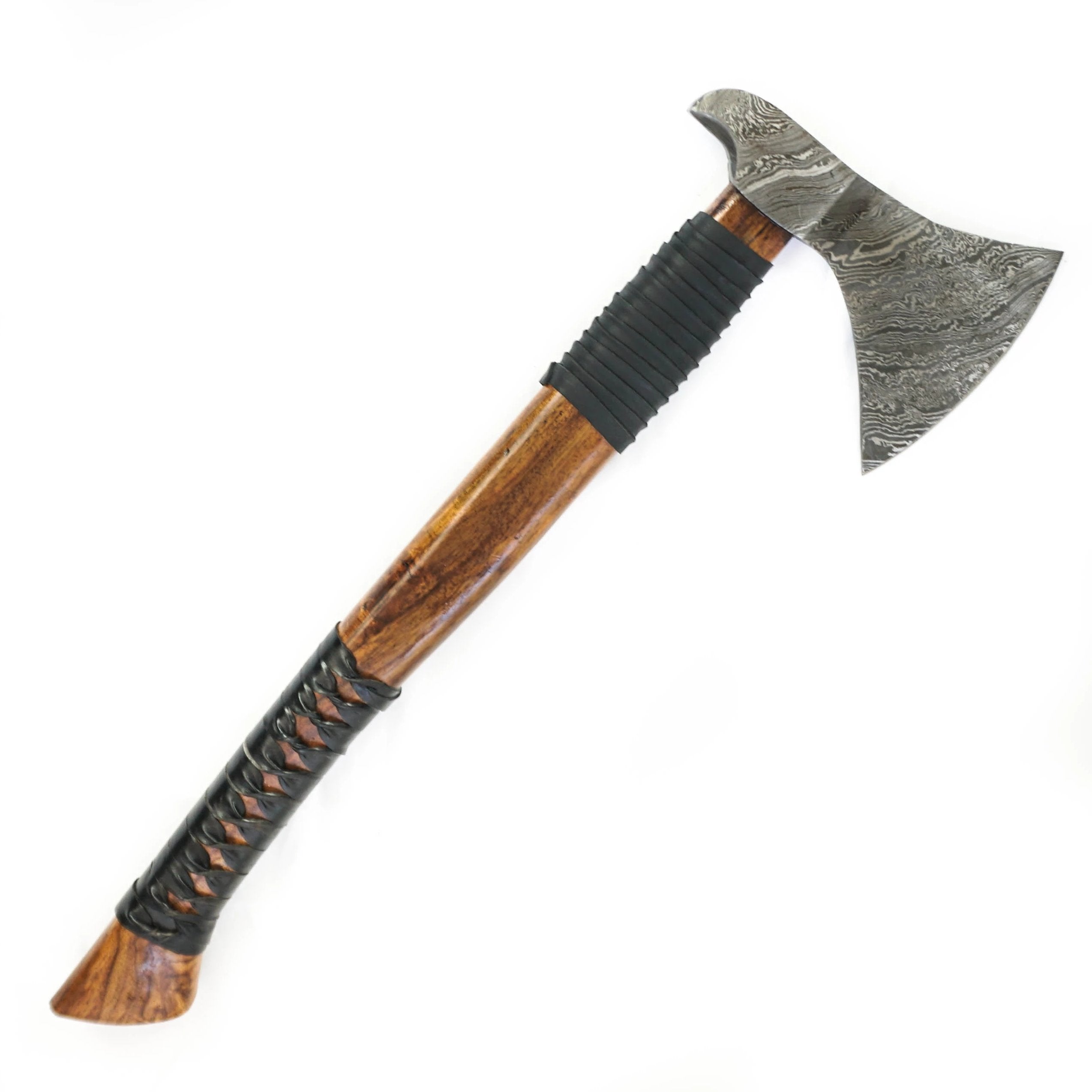
Damascus steel is created by forge-welding multiple layers of steel together, producing the distinctive patterns collectors appreciate. When forged and heat-treated correctly, Damascus blades can be highly durable and visually striking.
2. The Blade and Handle Are All One Piece (Full Tang)
The blade and handle of a functional sword must be made from the same piece of metal that extends the entire length of the grip. A full tang distributes the impact force throughout the entire handle instead of one weak point.
3. Proper Heat Treatment
Hardening provides edge retention, and tempering restores flexibility to the blade. High-carbon or Damascus steel will become too hard (making it brittle) or too soft if they have not had the proper heat treatment.
4. Secure Guard & Pommel Assembly
The guard and pommel fitting must both fit securely and should not have any wobble. If either the guard or pommel moves while using the sword, it is an indication that the sword has been poorly made and cannot be used for its intended purpose (combat).
5. Balanced Weight Distribution
A battle-ready Viking sword weighs anywhere from 2.2-2.8 lbs. While the actual weight of the sword does have some relevance, the importance of a sword’s balance is greater than its weight.
Choosing Between Damascus Steel and Carbon Steel – What Do You Need?
Both Damascus and Carbon Steels are capable of creating a great combat-ready Viking sword. The correct choice for you will be determined by what kind of sword you're looking for.
● Damascus Steel consists of several individual pieces that were forge welded together into one continuous piece, which gives each finished blade a unique flowing surface pattern. As a result of its extreme toughness and stunning visual appeal, it is the most desired material for sword collectors.
● 1095 High Carbon Steel is a simple, reliable material that holds its edge well and requires less long-term maintenance than Damascus Steel. HEMA practitioners and serious cutters desire a material based purely on cutting performance and do not care about its appearance, so they prefer High Carbon.
Is It Safe to Own and Use a Battle-Ready Replica Viking Sword?
Sword ownership laws vary by state and local jurisdiction. While owning a Viking sword is generally legal in many parts of the United States, restrictions may apply to carrying, transporting, displaying, or using bladed weapons in public. Always verify local laws before purchasing or carrying a sword.
Safe Storage and use of your sword include:
- Storing the sword only in its scabbard, or in a padded display mount, and away from children.
- Use a dedicated sword rack or have a locked display case for display and security.
- Wear properly fitted HEMA gloves, a HEMA mask, and body padding when training/sparring using your sword.
- Only use a specific cutting setup where you will have the appropriate distance from the object.
- After each use of your sword, wipe it down with a clean, dry, or mildly oiled cloth to prevent rust.
- Inspect your sword fittings periodically to check for movement before using the sword.
While battle-ready swords are designed for functional use, they are often safer than cheaply made decorative replicas because they are built to withstand impact without catastrophic failure. Stainless steel and rat-tail tang-type swords may break by sudden failure or breakage during use.
A "battle-ready" sword made using high-carbon steel with a full tang construction design allows the sword to bend during use and return to its original shape after use.
Why do Collectors Choose Battle-Ready Copies of Viking Swords?
For collectors who value authenticity and craftsmanship, a battle-ready replica generally offers higher quality materials and construction than a decorative display sword.
● Properly heat-treated steel is less likely to warp or develop structural issues when maintained correctly.
● The construction of the sword will not change after years of being handled.
● To function correctly, swords must be properly scaled; hence, the dimensions of a properly functioning sword are accurately recorded.
● Historical accuracy can improve long-term collectibility.
Collectors place more value on the combination of historical integrity and material quality than they do on traditional decorative swords.
Buy Your Battle-Ready Viking Swords at Battling Blades
Battling Blades offers Viking sword replicas made from high-carbon steel and Damascus steel with full tang construction and proper heat treatment. These swords are designed for collectors, reenactors, and HEMA practitioners who want both appearance and functionality.
The design of each sword uses historically accurate Viking sword typology and therefore has historically inspired dimensions and design elements, in addition to the best construction quality available for functional swords. Whether you are a HEMA practitioner, reenactor, or simply collecting to create an impressive collection, there is a Viking sword from Battling Blades that is constructed to the standards you are looking for.
Custom sword options are also available; all orders shipped within the United States are free to ship, and there is complete customer support available for every order. Explore the complete collection of Viking swords.
Conclusion
A replica Viking sword can be battle-ready, but only when built with the right materials and methods. Steel grade, tang construction, heat treatment, and fitting quality are what separate a sword you can actually use from one that belongs only to the walls. By understanding what makes a functional Viking sword truly battle-ready, you'll be better equipped to invest in a replica that performs as well as it looks.
Check the steel. Verify the tang. Buy from a seller who is transparent about how their swords are made. At Battling Blades, that standard is built into every sword in the collection.
FAQs
1. Are Replica Viking Swords Ready for Battle?
Yes. If it is made of high carbon or Damascus steel with full tang construction and is heat treated, then it would be considered battle-ready. If it uses stainless steel and decorative construction methods, it should be considered a display piece rather than a functional sword.
2. What kind of Steel is Best for making a battle-ready replica sword?
High carbon steel in either 1075 or 1095 varieties, or hand forged Damascus steel, are all great options. Do not use stainless steel regardless of what you might intend to do with your sword.
3. Can a Replica Viking Sword be Used in Historical European Martial Arts?
Yes, as long as they meet the following criteria: built to functional standards (eg: full tang, correctly heat treated), properly balanced and weighted.
4. Is a Damascus-style Viking Sword Stronger than a Carbon Steel Viking Sword?
Both types of swords are strong and reliable. The most notable difference between the two types is that Damascus steel has a unique appearance and very good strength. High carbon steel, like 1095, is not as difficult to maintain but has better performance when used for cutting.
5. What is the Average Weight of a replica battle-ready Viking Sword?
Most replica battle-ready Viking swords range from 2.2 to 2.8 pounds, generally reflecting the weights of real Viking swords found in archaeological digs in Scandinavia.
6. What are the Differences Between Decorative and battle-ready replicas?
The differences occur in the material used and the method of construction. Decorative replica Viking swords use stainless steel, and rat-tail tangs are made for appearance only. Battle-ready replica Viking swords use traditional materials (high-carbon or Damascus steel) and are engineered to survive actual combat.