

 Fast & Free Shipping
 30 day Money Back
 Secure Checkout
 Fast & Free Shipping
30 day Money Back
Secure Checkout
Fast & Free Shipping
30 day Money Back
Secure Checkout
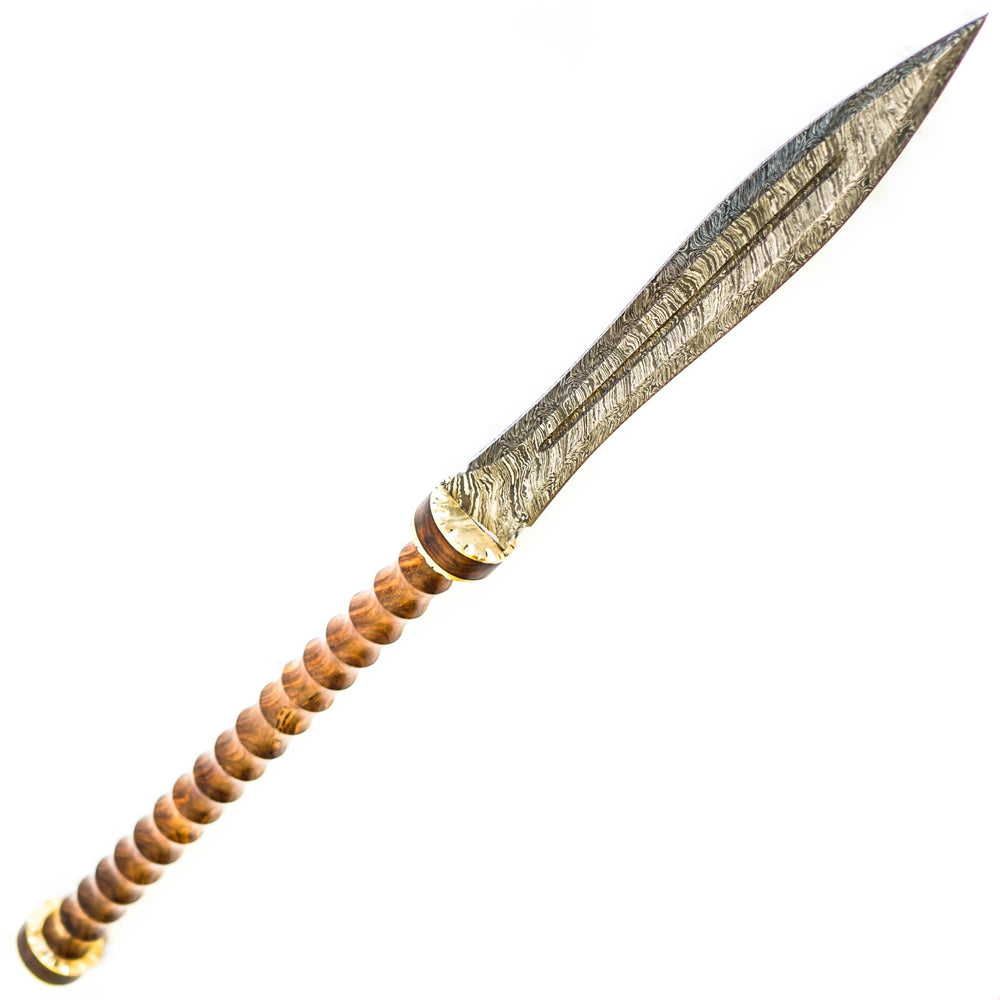
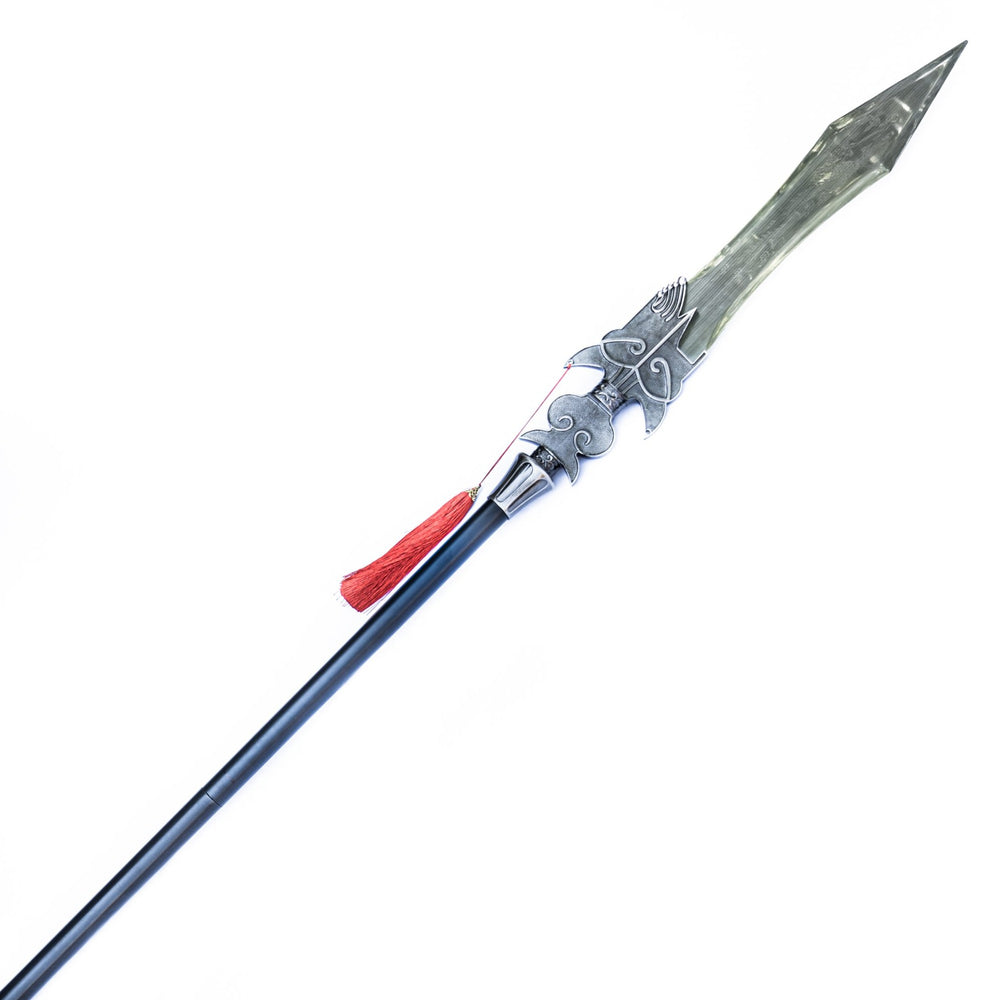
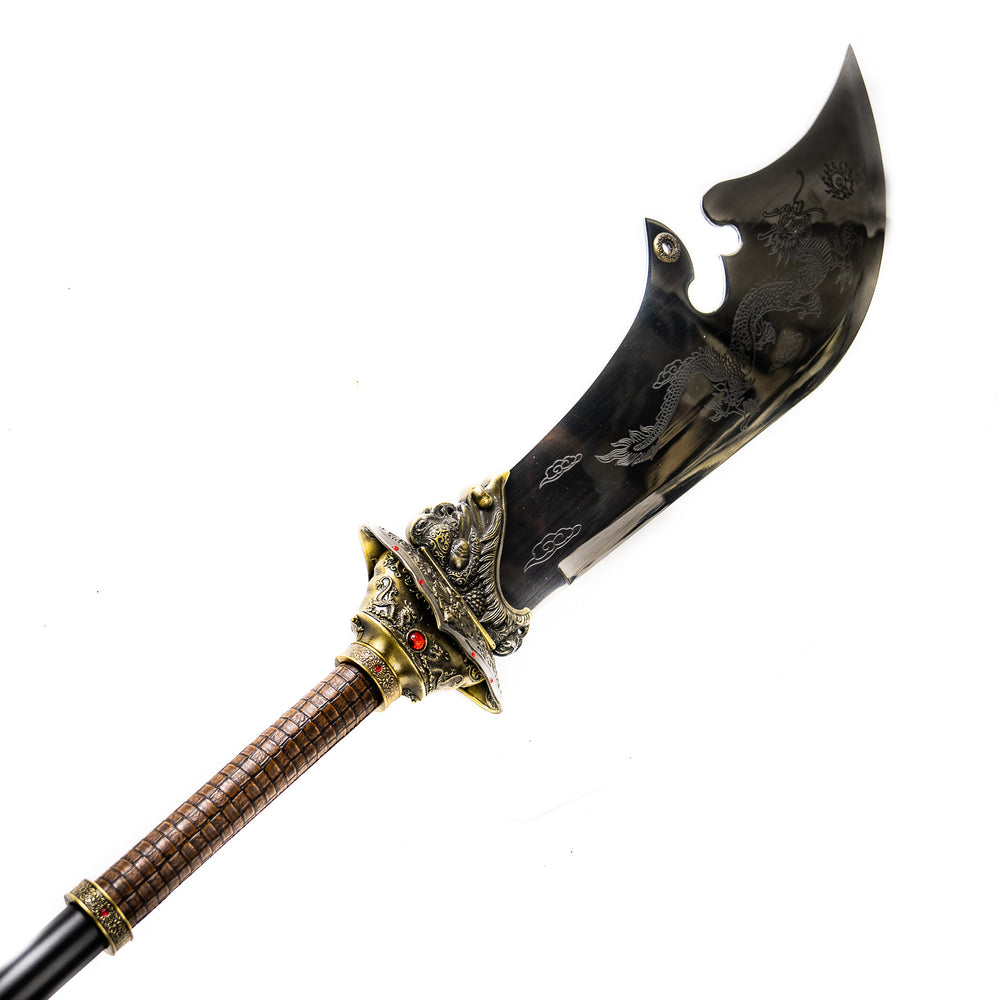
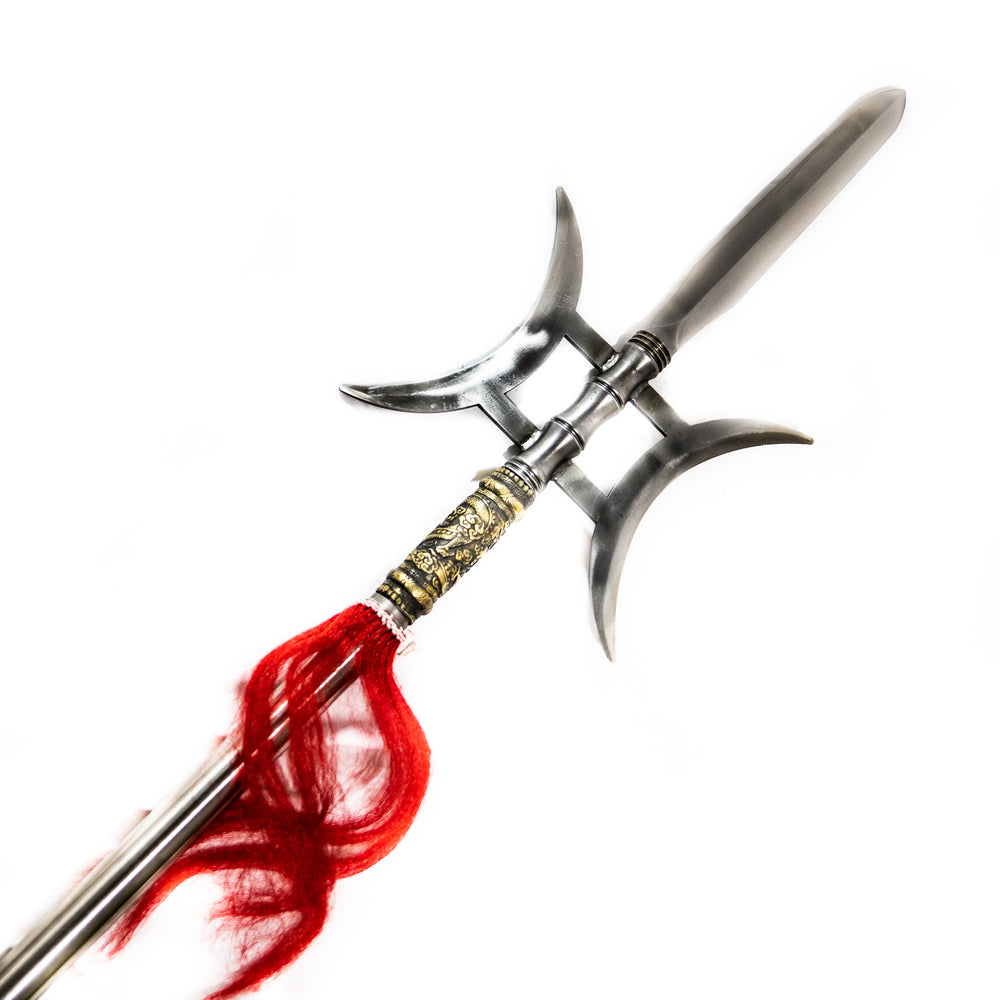
Explore spears built for combat, hunting, reenactment, and serious display — including Viking infantry spears, Roman pilum throwing spears, Greek dory hoplite spears, hunting boar spears, throwing javelins, ceremonial spears, and themed pole arms designed for reenactors, hunters, collectors, martial artists, museum-style home displays, cosplayers, and anyone drawn to humanity's oldest and most universal weapon.
The spear is the original weapon. Stone-tipped spears predate the bow, the sword, and the axe by tens of thousands of years — and while later weapons came and went across civilizations, the spear never left. Roman legionaries threw pila and braced contus lances. Viking warriors carried spears as their primary weapon, with swords and axes serving as backup. Greek hoplites built their entire battlefield identity around the long dory spear and the phalanx formation it enabled. Zulu warriors carried iklwa stabbing spears. Mongol cavalry wielded long lances. From prehistoric mammoth hunters through World War I trench raiders carrying makeshift spear-bayonets, the spear has been the most universal weapon in human history. For most of warfare, in most of the world, the spear has been what soldiers actually fought with — swords and axes were the exceptions.
Our spear collection includes designs with high-carbon steel spearheads (1060, 1075, 1095 carbon steel for battle-ready use, stainless options for decorative display), traditional ash and hickory hardwood shafts, hand-forged historically-accurate socket and tang constructions, leather-wrapped grip sections for combat use, and reinforced butt-spikes on European and Asian patterns. Shaft lengths range from short hunting spears around 5–6 feet to massive 8–10 foot infantry and cavalry pole arms suited to serious reenactment and museum-style display.
The spear family covers an enormous range of designs developed across cultures and eras. The Viking spear was the workhorse weapon of the Norse warrior — a 6–8 foot ash shaft topped with a broad leaf-shaped or lozenge-shaped iron spearhead. Vikings carried spears in dramatically larger numbers than swords or axes; archaeological finds and saga literature both confirm the spear as the actual primary Norse battlefield weapon. The Greek dory was the long thrusting spear of the classical hoplite — typically 7–9 feet, with an iron leaf-shaped spearhead at the front and a bronze butt-spike (the sauroter, "lizard killer") at the rear that served as both counterweight and secondary weapon. The Macedonian sarissa was the extreme version of the hoplite spear — 13–21 feet long, used by Alexander the Great's phalanx in formations that projected multiple ranks of spearpoints ahead of the front line.
The Roman pilum was the iconic throwing spear of the legions — a heavy javelin with a long thin iron shank designed to bend on impact, preventing the enemy from throwing it back and weighting down their shields. Pila were typically thrown in coordinated volleys before the legion closed with gladii. The Roman hasta was the older thrusting spear used before the legions adopted the pilum-and-gladius combination, and the contus was the long two-handed cavalry lance carried by Roman heavy cavalry. The boar spear is the medieval European hunting spear featuring a broad-bladed spearhead with a crossbar (or "lug") below the head to prevent the boar from running up the shaft after being impaled — a serious and practical safety feature for hunters facing animals weighing several hundred pounds.
The winged spear is the medieval European spear with cross-shaped "wings" below the head, similar in function to the boar spear's crossbar but designed for combat against armored opponents. The partisan and spontoon are Renaissance and early-modern European spears with broad ornamental blades, often carried as officer's polearms and ceremonial weapons. The halberd, glaive, bill, and other medieval polearms combine the spear's reach with axe blades, hooks, or cleaver-style heads for use against mounted opponents. Throwing spears and javelins include lighter spears designed for distance — Roman pila, Frankish angons, African assegais, and modern athletic javelins. Asian spears include the Chinese qiang (the "king of weapons" in Chinese martial arts), the Japanese yari (the samurai spear, often more important than the katana in actual battlefield use), and the Korean changchang.
The popular image of warriors armed primarily with swords is largely a modern romanticization. In actual historical warfare across most cultures, the spear was the dominant weapon. Why spears dominated battlefields comes down to several practical factors. Spears are cheap to produce — a workable spearhead requires far less iron than a sword, and the shaft is ordinary hardwood. A village blacksmith could equip a militia with spears; equipping the same force with swords would require resources only kingdoms could muster. Spears require far less training than swords to use effectively — basic spear technique can be taught in days, while sword mastery takes years.
Spears offer superior reach — a spearman engages opponents from 6–10 feet away, far outside the reach of swords or axes. Spears work brilliantly in formation combat — the phalanx, the shield wall, the schiltron, and dozens of other historical formations were built around massed spears. And spears work against cavalry in ways individual swords cannot — braced spears could stop charging horses and unhorse mounted opponents. The famous battles where swords played decisive roles (single combats, broken-formation melees, narrow-quarter fighting) were the exceptions. The standard battlefield experience — Greek phalanx warfare, Roman legion combat, Viking shield walls, medieval pike formations — was spearwork. Swords were the elite warrior's status symbol and backup; spears did the actual fighting.
These spears are popular for historical reenactment (Viking, Norse, Roman, Greek hoplite, medieval, Renaissance) where spears are central to authentic period kit, HEMA practice and study of historical spear and pole arm traditions, SCA combat and martial arts demonstrations, hunting reenactment and themed boar-spear displays, museum-style home displays anchored by long pole arms whose dramatic length creates visual impact, themed offices, dens, and themed bars honoring military and warrior heritage, cosplay for productions featuring Viking, Roman, Greek, Asian, or medieval warriors, theatrical productions requiring period-accurate weapons, ceremonial gifts for veterans, history enthusiasts, and martial artists, and serious collector pieces honoring the most universally important weapon in human history. Many customers buy spears specifically as anchor display pieces — a 7-foot Viking spear or Greek hoplite dory creates more dramatic wall presence than nearly any sword.
Browse the collection to find Viking spears, Roman pila, Greek hoplite dory spears, medieval boar spears, themed pole arms, and decorative ceremonial spears that fit your reenactment kit, themed display, or collection.
Was the spear really more important than the sword in historical warfare? Yes, by an enormous margin. Archaeological finds, military records, surviving saga and chronicle literature, and historical battle accounts all confirm that spears were the dominant weapon across most cultures and most of history. Vikings carried spears in far larger numbers than swords or axes — every warrior had a spear, but only wealthier warriors owned swords. Greek hoplites built their entire military tradition around the long dory spear; the xiphos sword was a secondary weapon drawn only when the spear was lost or formations broke. Roman legionaries threw pila before closing with gladii. Medieval pike formations dominated European warfare for centuries. The popular image of sword-as-primary-weapon is largely a modern romanticization driven by fiction, film, and gaming rather than historical reality.
What is a Roman pilum? The pilum was the iconic throwing spear of the Roman legions, used from roughly the 3rd century BC through the 3rd century AD. A pilum featured a heavy wooden shaft topped by a long thin iron shank (typically 2 feet of shank) ending in a small pyramidal point. Roman legionaries threw pila in coordinated volleys before closing with their gladii. The pilum's distinctive design served a brilliant tactical purpose — when it hit an enemy shield, the long iron shank would bend on impact, preventing the enemy from throwing it back and weighting down the shield so it had to be discarded. A volley of pila could neutralize an enemy's shield wall before the Romans even drew their swords.
What is the difference between a spear and a polearm? The terms overlap, but in modern usage spears typically refer to simple thrusting weapons consisting of a shaft with a pointed head, while polearms refer to the broader category of long-shafted weapons including spears, halberds, glaives, bills, partisans, and various cleaver-or-hook-headed designs. A halberd (axe head, spike, and hook on a 5–6 foot shaft) is technically a polearm but not really a spear. A simple Viking spear is both a spear and a polearm. Polearms developed during the late medieval period as countermeasures to heavily armored knights — the variety of axe heads, hooks, and spikes were designed to address specific problems that simple spears couldn't.
What is a boar spear, and why does it have a crossbar? The boar spear is a specialized medieval European hunting spear designed for hunting wild boar — animals weighing several hundred pounds with murderous tusks and a tendency to charge straight at hunters. The distinctive crossbar (also called a "lug") below the spearhead prevents the boar from running up the shaft after being impaled — a behavior boars actually exhibited that could otherwise kill the hunter even after the spear struck home. The crossbar stops the boar at safe distance from the hunter while the wound takes effect. Boar spears are one of the few hunting weapons designed around the real possibility that the prey will continue attacking after being mortally wounded — and the crossbar is a serious safety feature, not just decoration.
What is a sarissa? The sarissa was the extreme-length pike used by the Macedonian phalanx under Philip II and Alexander the Great in the 4th century BC. Sarissas typically measured 13–21 feet — far longer than any earlier Greek spear — and were used in formations called phalanxes where multiple ranks of pikemen projected sarissa points ahead of the front line. The reach advantage was enormous: a Macedonian phalanx could engage enemies five ranks deep before the enemy could close to attack. Sarissas required two hands to wield, eliminating shield use, but the formation's overwhelming reach more than compensated. Alexander's conquests from Greece through Persia to India were largely won by sarissa-armed phalanxes operating in combined-arms tactics with cavalry and lighter infantry.