

 Fast & Free Shipping
 30 day Money Back
 Secure Checkout
 Fast & Free Shipping
30 day Money Back
Secure Checkout
Fast & Free Shipping
30 day Money Back
Secure Checkout
Explore sword and knife accessories designed to display, sharpen, protect, carry, and maintain every blade in your collection. This collection includes sharpening stones and whetstones, knife and sword display stands, wall mounts, leather and kydex sheaths, sword belts and frogs, cleaning kits, blade oils and polishing supplies, replacement parts, and decorative accents for collectors, hunters, outdoorsmen, kitchen-knife enthusiasts, martial artists, reenactors, and anyone who owns a blade worth taking care of.
Owning a quality blade is only half the equation. A great hunting knife isn't worth much when it's dull on the trail, a beautiful katana loses something when it sits leaning in a closet, and a premium kitchen knife rusts and chips when stored loose in a drawer with a dozen other utensils. The accessories in this collection are the small details that turn a knife or sword from an object you own into a tool you actually use well, or a display that anchors a room. The same sharpening stone that maintains a kitchen chef's knife works on a bushcraft fixed blade. The same blade oil that protects a Viking sword protects a carbon-steel hunter. Most blade care is universal — the accessories cross categories naturally.
Our accessories collection includes designs in solid hardwood (rosewood, walnut, oak), leather, kydex, brass, steel, and modern composite materials. Sharpening tools cover diamond plates, ceramic rods, traditional Japanese water stones, Arkansas stones, and quick-touch field sharpeners. Display options range from tabletop stands and traditional katana kake to vertical and horizontal wall mounts, knife blocks, magnetic strips, and protective display cases. Cleaning and care supplies include choji oil, mineral oil, ballistol, microfiber cloths, leather conditioners, and rust erasers — products that work on any blade regardless of category.
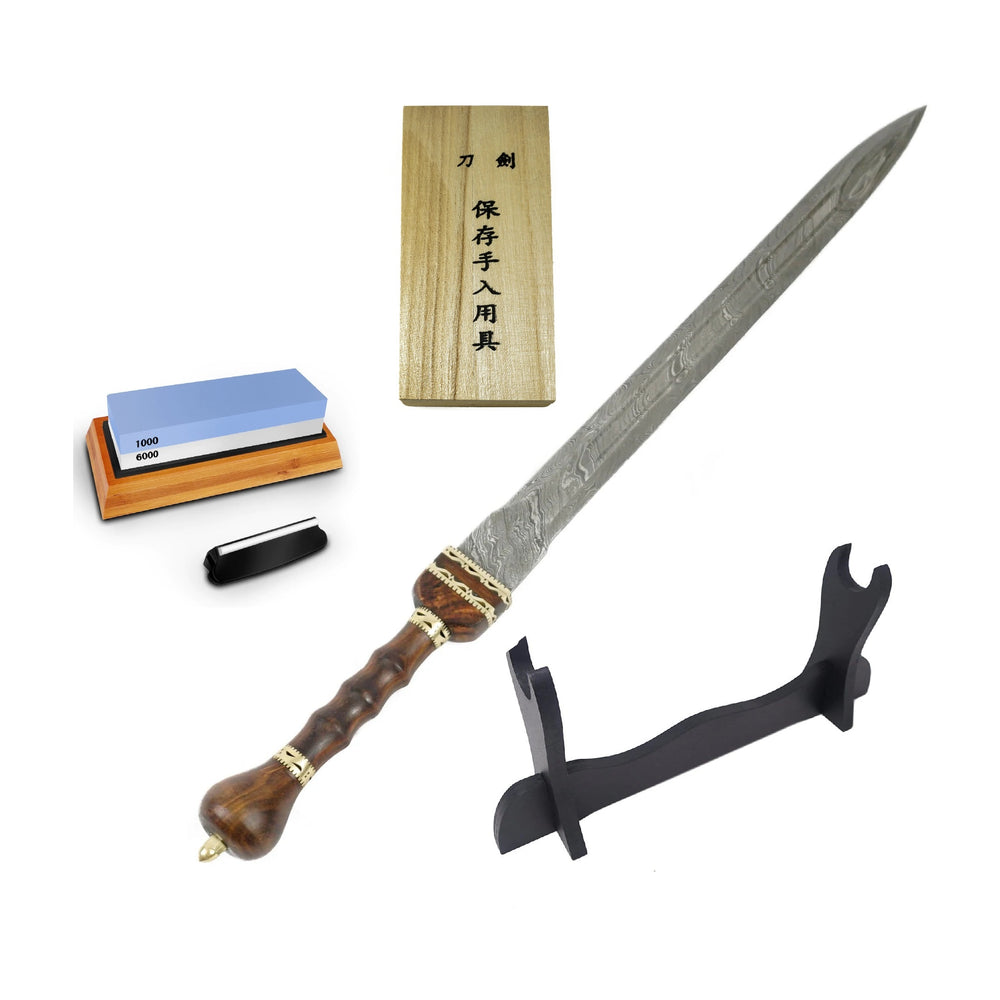
Accessories fall into several functional categories that span both swords and knives. Sharpening tools include traditional whetstones (Japanese water stones in 1000, 3000, and 6000-grit are the standard for kitchen and bushcraft work; Arkansas oil stones suit traditional hunting and outdoor blades), diamond sharpening plates (faster and lower-maintenance than stones, popular for working knives and field use), ceramic rods and steels (for honing and maintaining existing edges), pull-through sharpeners for basic maintenance, and strops with polishing compound for final edge refinement. Different blade types favor different tools — Japanese kitchen knives and katanas reward proper water-stone work, while a working bushcraft knife is fine with a diamond plate and ceramic rod.
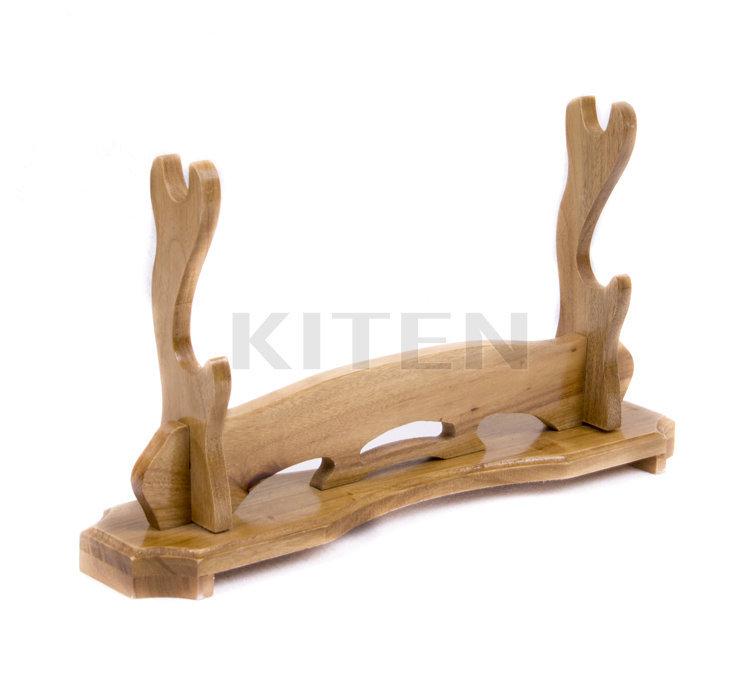
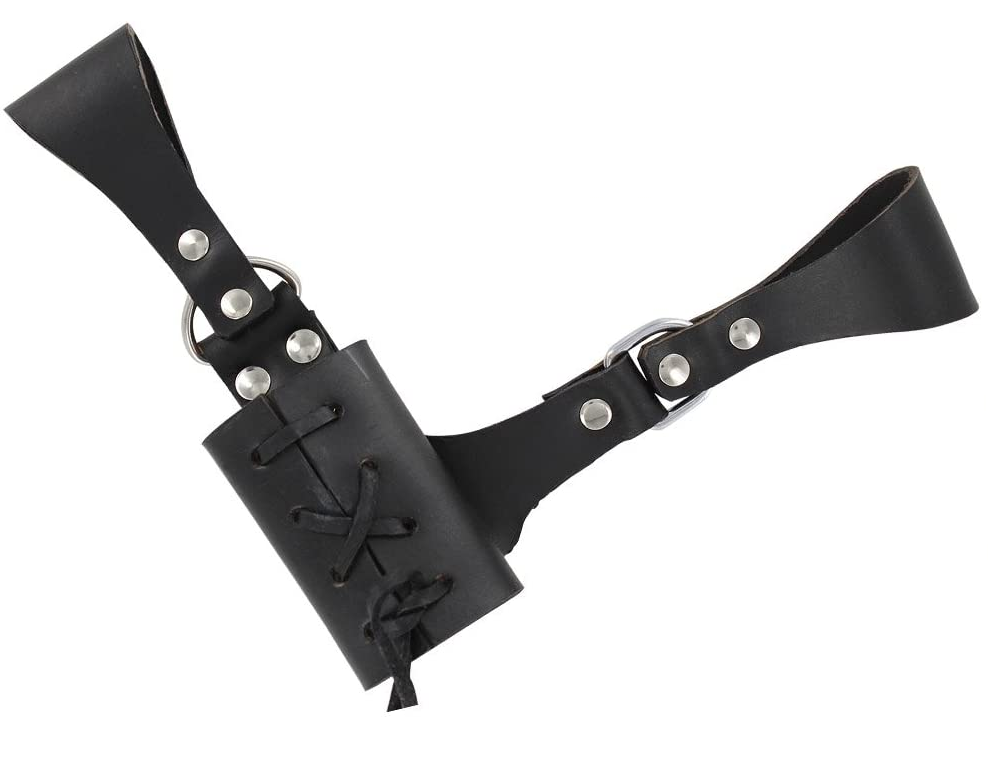
Display stands and mounts cover everything from tabletop pedestals and traditional Japanese katana kake to vertical and horizontal wall mounts, multi-blade racks, and hidden bracket systems. Knife blocks and storage include classic countertop blocks, magnetic knife strips, in-drawer organizers with slot inserts, and edge-protecting individual sheaths. Sheaths and carry gear include kydex and leather knife sheaths, sword scabbards, leather sword belts and frogs, baldrics, neck-knife cords, and MOLLE-compatible tactical sheaths. Cleaning and care supplies include choji oil (the traditional Japanese blade protectant), mineral oil, ballistol, microfiber polishing cloths, uchiko powder for traditional Japanese sword care, rust erasers, leather conditioners for sheaths and scabbards, and complete maintenance kits. Replacement parts and customization include tsuka wrap cord and ito, handle scales for fixed-blade knives, pocket clips, tsuba and habaki for katanas, and engraving services for personalization.
Choosing the right sharpener depends on the blade and your skill level. Japanese water stones — typically sold as combination stones with two grits (1000/3000 or 1000/6000 are the standard starter combinations) — are the gold standard for kitchen knives, Japanese blades, and any knife where edge quality matters. They cut fast, leave a clean polished edge, and reward practice. They do require soaking and produce a slurry, so they need a dedicated workspace. Diamond sharpening plates (DMT, Atoma, Trend) are faster, don't require soaking, and stay flat longer — the practical choice for working knives, outdoor blades, and anyone who doesn't want to commit to stone maintenance. Arkansas oil stones are the traditional American sharpening choice — slower than water stones but extremely durable, ideal for traditional hunting and outdoor knives.
For field sharpening, a compact diamond rod or pocket ceramic stone covers most needs without adding weight. For maintenance between sharpenings, a honing rod (steel for softer Western knives, ceramic for harder Japanese steels) realigns the edge without removing metal — use one regularly for kitchen and working knives. Avoid pull-through carbide sharpeners on quality knives; they remove too much metal and damage premium blades. For truly damaged edges, a coarse 220 or 400-grit stone reshapes the bevel before moving to finer grits for finishing.
Carbon steel blades — whether kitchen knives, bushcraft fixed blades, hunting knives, or hand-forged swords — share the same care needs. Wipe blades clean and dry immediately after use, especially after contact with food acids, blood, or sweat. Apply a thin film of choji oil, mineral oil, or ballistol before storage — a few drops on a cloth wiped along the blade is enough; too much oil attracts dust and can pool inside sheaths and scabbards. Store blades in a dry environment with stable humidity. Avoid leaving carbon steel knives or swords sheathed and wet for extended periods — leather and kydex can both trap moisture against the steel. For traditional Japanese sword care, uchiko powder applied with a cloth lifts old oil and surface contaminants before reapplying fresh oil. A darkening patina is normal on carbon steel — it's a protective oxide layer that actually helps prevent active rust, and many carbon steel enthusiasts encourage patina development.
Proper display protects blades from damage while showing them off. For kitchen knives, magnetic strips and dedicated knife blocks protect edges far better than loose drawer storage where blades clatter against other utensils. For outdoor and hunting knives, kydex or leather sheaths with retention systems keep blades secure for carry and storage. For display swords and decorative knives, tabletop stands and wall mounts turn blades into intentional design pieces rather than objects shoved in a closet. For katanas, the traditional katana kake stand displays the sword horizontally with edge up and handle to the left — the most authentic and visually striking presentation. Position displayed blades away from direct sunlight, heating vents, and high-humidity areas like bathrooms to protect finishes, handles, and steel.
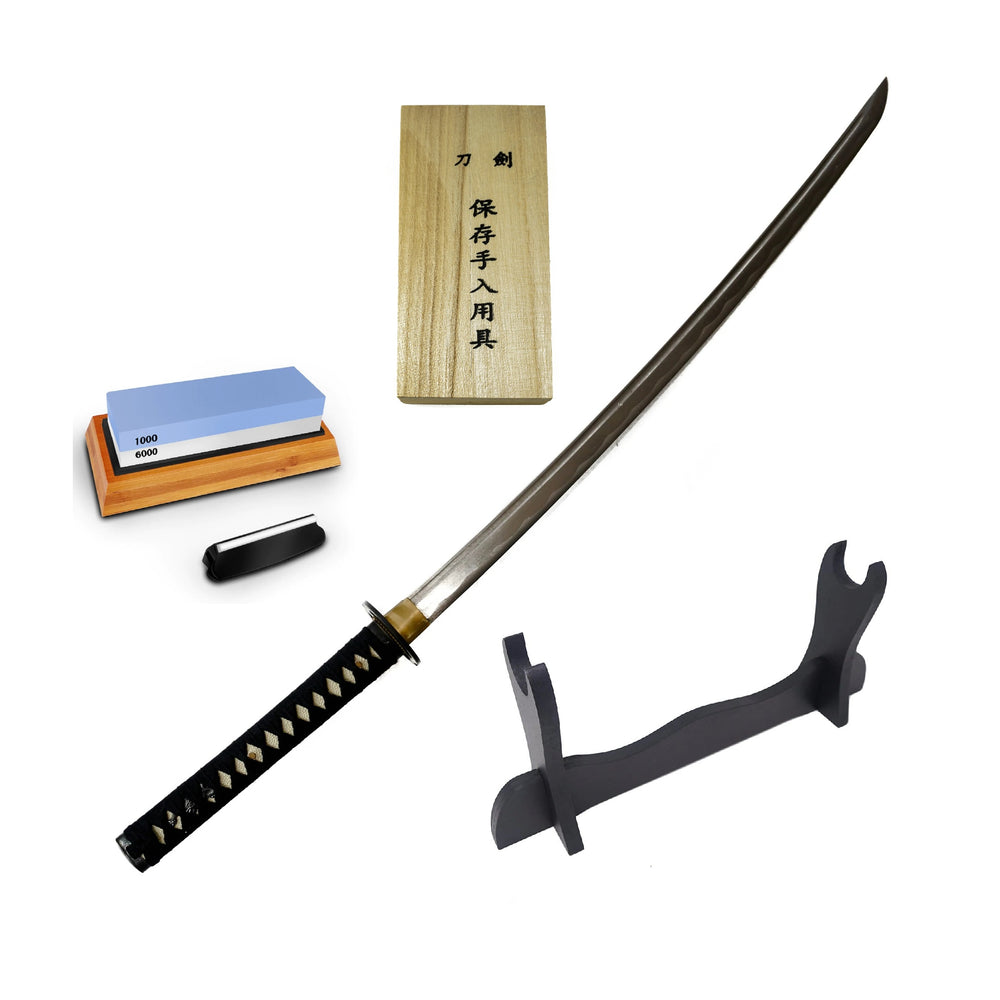
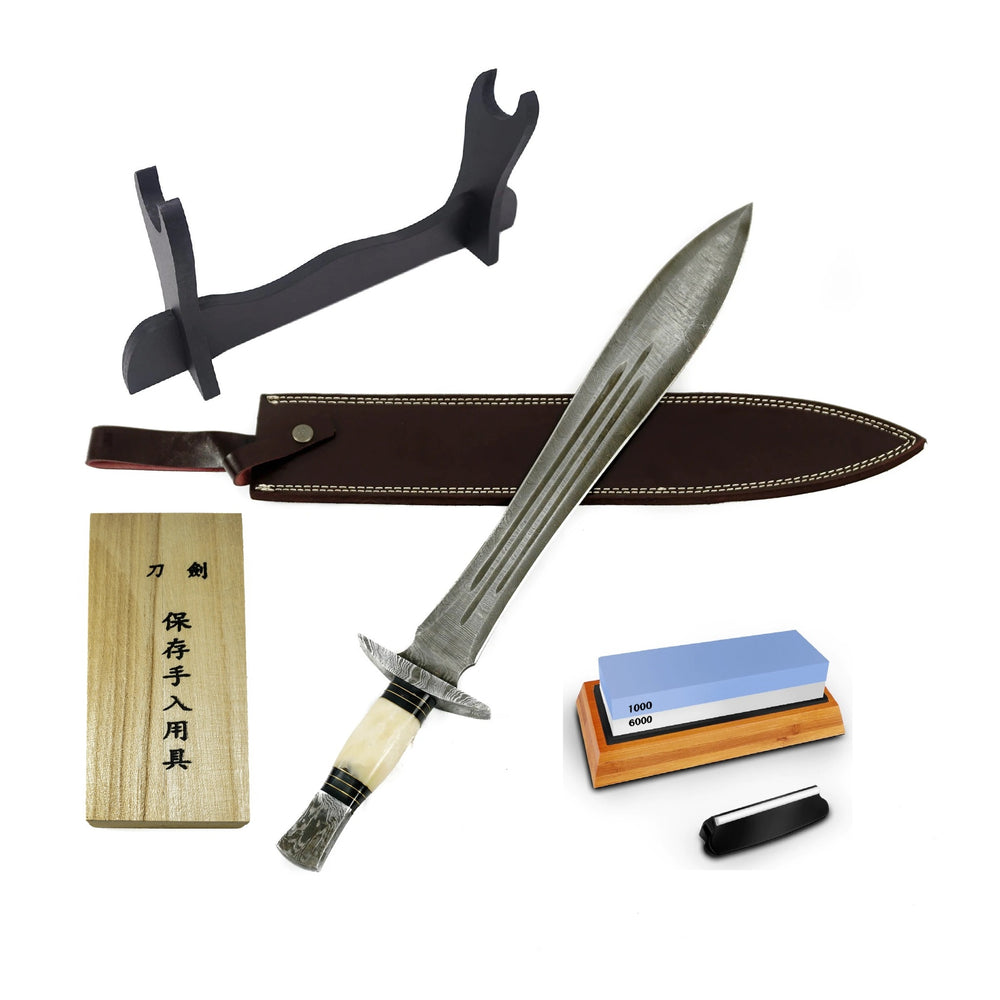
These accessories are popular for active blade maintenance routines, kitchen knife care for serious home cooks, hunter and outdoorsman field kits, sword collector display setups, martial artist dojo equipment, gift-giving alongside a blade purchase (a knife paired with a sharpening stone, or a sword paired with a stand and care kit, makes a complete ready-to-use gift), sword and knife repair and restoration projects, costume and theatrical use, and serious collector setups requiring proper preservation. Many customers combine sharpening tools, display gear, and care supplies when building out a complete blade care kit — particularly when starting out, when graduating to higher-end blades, or when teaching a child or younger family member to take care of their first quality knife.
Browse the collection to find sharpening stones, display stands, wall mounts, knife blocks, sheaths, blade oils, cleaning kits, and replacement parts that complete your blade collection or active use setup.
What's the best sharpening stone for a beginner? A combination Japanese water stone with 1000-grit on one side and 3000- or 6000-grit on the other is the standard recommendation for beginners — versatile enough to handle most kitchen knives, outdoor blades, and general-purpose work, and forgiving enough to learn proper technique without ruining knives. The 1000-grit side does the actual sharpening work; the finer side polishes and refines the edge. Soak the stone in water for 5–10 minutes before use, work in even strokes maintaining a consistent angle (15–20 degrees per side for most knives), and finish with the finer grit for a working edge. Diamond plates are an excellent alternative if you don't want to deal with stone soaking and maintenance.
What oil should I use on a knife or sword blade? For carbon steel knives and swords, choji oil (traditional Japanese mixture of mineral oil and clove oil), pure mineral oil, or ballistol are all excellent choices. Avoid food-grade oils like olive or vegetable oil, which can go rancid over time. Apply a thin even film with a soft cloth — too much oil attracts dust and can pool inside sheaths or scabbards. For kitchen knives in regular use, the constant washing-and-drying cycle generally provides enough protection without separate oiling; just keep them dry between uses. For carbon-steel blades stored long-term or used in humid environments, reapply oil every few months.
Can I use the same sharpening stone on a kitchen knife and a sword? Technically yes — sharpening stones work on any steel — but practical sword sharpening is rarely done by owners. Traditional Japanese swords should be polished by a professional togishi, not sharpened with home stones, since improper sharpening can permanently destroy a blade's geometry and value. European swords and decorative blades can be touched up with home stones if needed, but most display swords don't require sharpening at all. The same stones that work great for kitchen, hunting, and outdoor knives are generally not the right tool for serious sword maintenance — different problem entirely.
What's the difference between a knife block and a magnetic strip? A knife block stores knives in slotted wooden housing on the counter — convenient, traditional, and protective, but blocks can trap moisture if knives are stored wet and harbor bacteria over time. Magnetic knife strips mount knives on the wall via magnet — they save counter space, keep blades dry and visible, and don't trap moisture, but they require a clean wall surface and proper mounting into studs (the strip plus knives can be heavy). Both are dramatically better than loose drawer storage where blades clatter against utensils and chip edges. Choose based on counter space, wall space, and personal preference.
Do I need different sheaths and scabbards for different blade types? Yes — sheath fit matters significantly. A loose sheath lets the blade rattle and rub against the interior, gradually wearing the finish and creating noise during carry. A too-tight sheath can damage the edge during draw or trap moisture against the blade. Quality knives and swords come with properly fitted sheaths or scabbards; replacement sheaths should be matched to the specific blade dimensions. Custom kydex sheaths can be molded to specific knives for a precise fit. For swords, replacement saya or scabbards should be ordered matched to the specific blade.
"Comp. Value" is a reference value for this item or a substantially similar item. It may be based on one or more of the following: prior Battling Blades pricing, comparable products, supplier or manufacturer pricing, marketplace pricing, or other retail reference data. It is provided for comparison only and is not a claim that this exact item was previously sold at the Comp. Value, that the Comp. Value is an MSRP, or that any specific retailer currently charges that amount. We make no representation that a purchaser will realize savings equal to the difference between the Comp. Value and our price.