

 Fast & Free Shipping
 30 day Money Back
 Secure Checkout
 Fast & Free Shipping
30 day Money Back
Secure Checkout
Fast & Free Shipping
30 day Money Back
Secure Checkout
Explore outdoor knives built for hunting, bushcraft, camping, fishing, hiking, and serious time in the woods. This collection includes fixed-blade hunting knives, bushcraft and survival knives, skinning blades, drop-point and clip-point hunters, fillet knives, camp knives, neck knives, and rugged folding blades designed for outdoorsmen, hunters, fishermen, hikers, backpackers, preppers, and anyone whose knife has to actually work for a living.
An outdoor knife isn't a display piece or a collector's curiosity — it's a tool that has to perform when wet, cold, dirty, and tired. The right blade processes a deer at the end of a long day, splits kindling when the rain won't stop, opens a stuck zipper on a tent, cleans fish on a riverbank, and shaves curls off a fuzz stick for a fire that needs to start the first time. The wrong blade chips, dulls, rusts, or fails at the worst possible moment. The knives in this collection are chosen with that distinction in mind: real working tools rather than glossy gear-page filler.
Our outdoor knife collection includes designs with high-carbon steel blades (1095, SK-5, D2 tool steel, 5160 spring steel), corrosion-resistant stainless and semi-stainless options (440C, AUS-8, 14C28N) for wet-environment use, full-tang fixed-blade construction for serious work, durable lockback and liner-lock folders for everyday carry, and traditional Scandi-grind blades favored in bushcraft tradition. Handles range from textured G10 and Micarta to traditional wood scales, rubber overmolds, and paracord-wrapped grips. Most include kydex, leather, or nylon sheaths with secure retention systems and belt-loop or MOLLE compatibility.
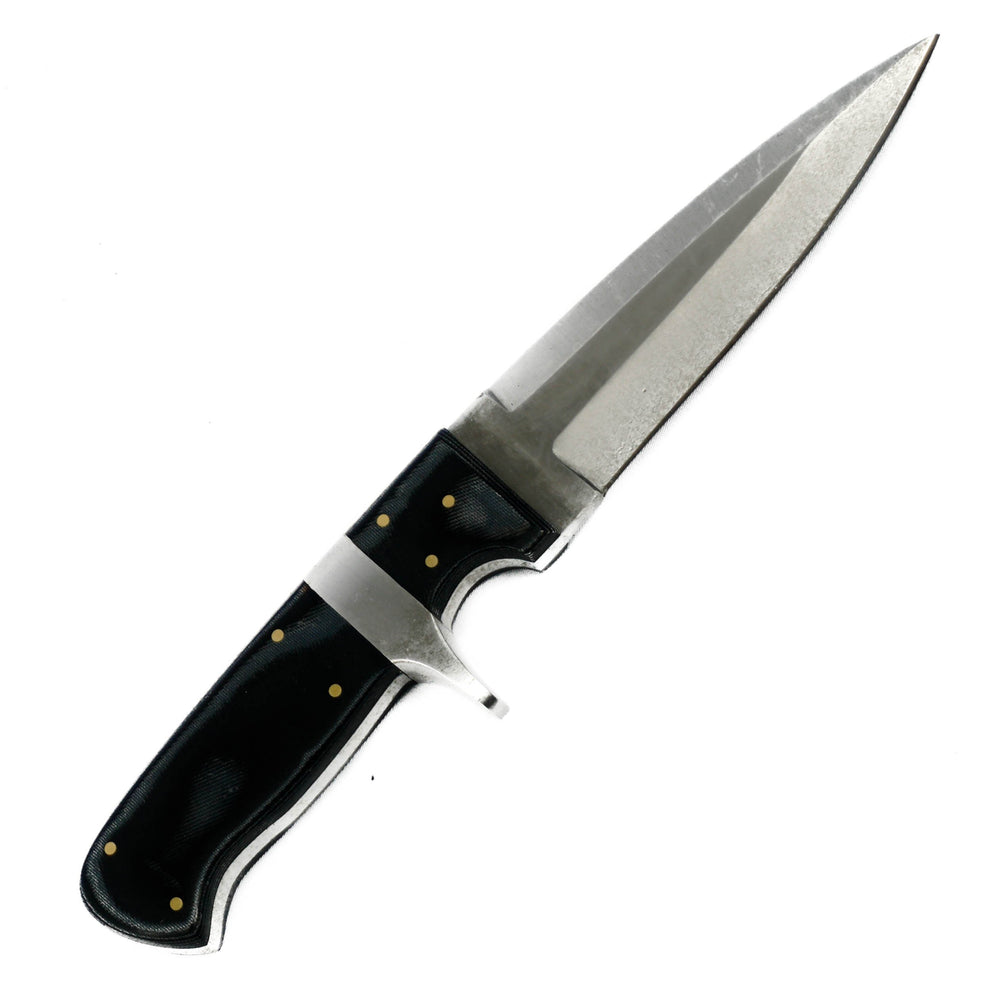
Outdoor knives split into several distinct functional categories. Hunting knives are the workhorses of game processing — typically fixed-blade designs with drop-point, clip-point, or trailing-point profiles. Drop-points (a gentle convex back curving down to the tip) are the most versatile, excellent for skinning, field dressing, and general cutting without risking puncture. Clip-points (a concave "clipped" back forming a sharper tip) excel at fine detail work and piercing. Trailing-points (an upswept back creating a long, curved belly) are skinning specialists, maximizing cutting edge for hide work.
Bushcraft knives are smaller fixed blades — typically 4–5 inches with a Scandi grind or flat grind — designed for carving, feather sticks, notching wood, and traditional woodcraft skills. The Scandi grind, with a single primary bevel running to the edge, is the bushcraft standard because it carves cleanly and sharpens easily in the field. Skinning knives feature wide, curved blades optimized purely for separating hide from carcass, often with a rounded or "gut-hook" tip to avoid puncturing the abdominal cavity. Fillet knives are thin, flexible, long-bladed knives for fish processing, designed to follow contours of bones and produce clean cuts through soft flesh.
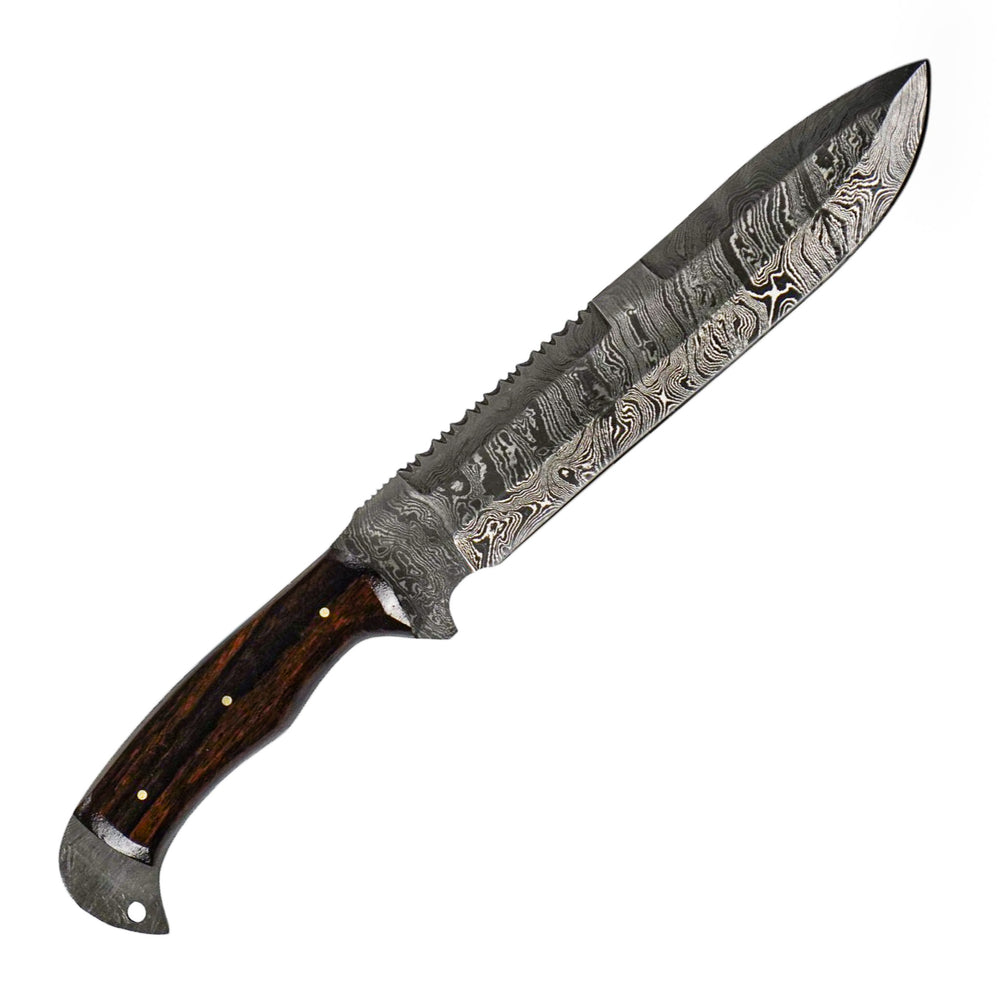
Camp knives are larger fixed blades (6–10 inches) for heavy outdoor work — splitting kindling via batoning, processing wood, light chopping, and general camp utility. Survival knives emphasize ruggedness and versatility, often with thicker spines, sawback features, hollow handles for storage, or integrated firesteel notches. EDC and folding outdoor knives include lockback and liner-lock folders sized for pocket carry, suited to hikers, backpackers, and anyone who wants outdoor capability without committing to a belt sheath. Neck knives are small fixed blades worn on a cord around the neck — minimal weight, instant access, popular as backup blades and ultralight backpacker tools.
The right outdoor knife depends entirely on what you'll actually use it for. For hunting, choose a fixed-blade drop-point or clip-point in 3.5–4.5 inches with a comfortable handle that works wet, in cold weather, and with gloves on — handle ergonomics matter more here than almost anywhere else. For bushcraft, a 4–5 inch Scandi-grind fixed blade with a full tang and a comfortable wooden or Micarta handle is the proven choice — carving is the primary task, so blade geometry matters most. For general camping, a medium fixed blade (4–6 inches) or a heavy-duty folder works for most users — versatile enough for cooking, light wood processing, and general utility without being excessive.
For backpacking and ultralight hiking, weight matters most — a small fixed blade, a quality folder, or a neck knife covers most needs while keeping pack weight down. For fishing, a dedicated fillet knife is the right tool, supplemented by a small folder for line cutting and tackle work. For survival and preparedness, prioritize a robust fixed blade with full-tang construction, comfortable handle, durable sheath, and steel suited to whatever climate you'll actually face. Don't overbuy capability you don't need — a 10-inch survival knife is overkill for weekend camping, and a tiny neck knife isn't enough for serious hunting.
Outdoor knife steel is one of the most consequential choices a buyer makes. High-carbon steels (1095, SK-5, 52100, A2, D2) hold an edge exceptionally well, sharpen easily in the field with basic stones, and develop a protective patina over time — but they require regular care to prevent rust in wet conditions. Wipe blades dry after use, apply a thin film of oil for storage, and avoid leaving carbon steel wet or in leather sheaths for extended periods. Stainless and semi-stainless steels (440C, AUS-8, 14C28N, S30V, S35VN) resist rust dramatically better, making them the practical choice for fishing, saltwater environments, humid climates, and anyone unwilling to commit to ongoing maintenance — at the cost of generally being slightly harder to sharpen and sometimes not holding an edge quite as long as premium carbon steels. For most working outdoor use, modern stainless steels offer the best balance of performance and practicality. Carbon steel remains the bushcraft and traditional knife purist's choice, and the right answer if you're willing to maintain it.
These outdoor knives are popular for big-game and small-game hunting, fishing and fly fishing, bushcraft and primitive skills practice, backpacking and thru-hiking, car camping and overlanding, hiking and day-trip outdoor use, survival training and wilderness skills courses, prepping and emergency kit building, foraging and outdoor cooking, ranch and farm utility work, and as gifts for hunters, fishermen, hikers, outdoorsmen and outdoorswomen, veterans, scouts, and anyone whose hobbies put them in the woods. Many customers buy outdoor knives as practical gifts that get used regularly rather than displayed — a quality knife with a comfortable handle becomes a lifetime companion in a way few other gifts can.
Browse the collection to find hunting knives, bushcraft fixed blades, fillet knives, camp knives, EDC folders, and outdoor knives that match your specific use case and outdoor environment.
What's the difference between a hunting knife and a bushcraft knife? A hunting knife is optimized for game processing — typically a drop-point or clip-point with a 3.5–4.5 inch blade, comfortable enough for the long, detailed work of skinning, gutting, and butchering animals. A bushcraft knife is optimized for woodcraft — typically a Scandi-grind fixed blade with a 4–5 inch blade, built for carving feather sticks, notching wood, batoning kindling, and traditional wilderness skills. They overlap, but hunting knives prioritize the hunt's specific cutting tasks while bushcraft knives prioritize woodcraft and general outdoor utility.
What's a Scandi grind, and why do bushcrafters love it? A Scandi grind (Scandinavian grind) is a blade grind with a single, wide primary bevel running directly from the spine to the cutting edge, with no secondary edge bevel. The geometry produces an exceptionally clean carving edge that bites into wood cleanly, makes controlled feather-stick work easy, and — critically — sharpens easily in the field because you can lay the entire bevel flat against a stone. Bushcrafters love it because carving is the central bushcraft skill and Scandi grinds carve better than any other common grind type.
What size knife is best for camping? For general camping use, a 4–6 inch fixed blade or a 3–4 inch heavy folder covers most realistic tasks: cutting cord, food prep, opening packages, light wood processing, and general utility. Larger 8–10 inch camp knives are useful for serious wood processing and batoning but become excessive for typical car camping. Smaller 2–3 inch blades work for everyday tasks but struggle with bigger jobs. The 4-inch fixed blade is the long-standing sweet spot for camp use because it handles almost everything without being more knife than you need.
Do I need a fixed blade, or will a folder work for outdoor use? Both work, with real tradeoffs. Fixed blades are stronger (no moving parts to fail), easier to clean (no joint to trap gunk), more suitable for heavy work like batoning, and faster to deploy — but they require a belt sheath and constant carry. Folders are more compact, easier to pocket-carry, more legal in more places, and adequate for most light outdoor work — but they have moving parts that can fail, joints that trap dirt and blood, and they're less suited to heavy work. For hunting and serious bushcraft, fixed blades are the standard. For hiking, EDC, and lighter outdoor use, a quality folder is often the more practical choice.
How do I sharpen an outdoor knife in the field? Pack a diamond sharpening rod, a small whetstone, or a ceramic sharpening rod in your kit — all three work in the field with minimal weight. For Scandi-grind bushcraft knives, lay the full bevel flat against the stone and stroke at the natural angle. For other grinds, maintain the existing edge angle (typically 15–20 degrees per side) using consistent strokes alternating sides. A leather strop with polishing compound finishes the edge to a working level. Practice sharpening at home before relying on field sharpening — the technique matters more than the equipment.