

 Fast & Free Shipping
 30 day Money Back
 Secure Checkout
 Fast & Free Shipping
30 day Money Back
Secure Checkout
Fast & Free Shipping
30 day Money Back
Secure Checkout
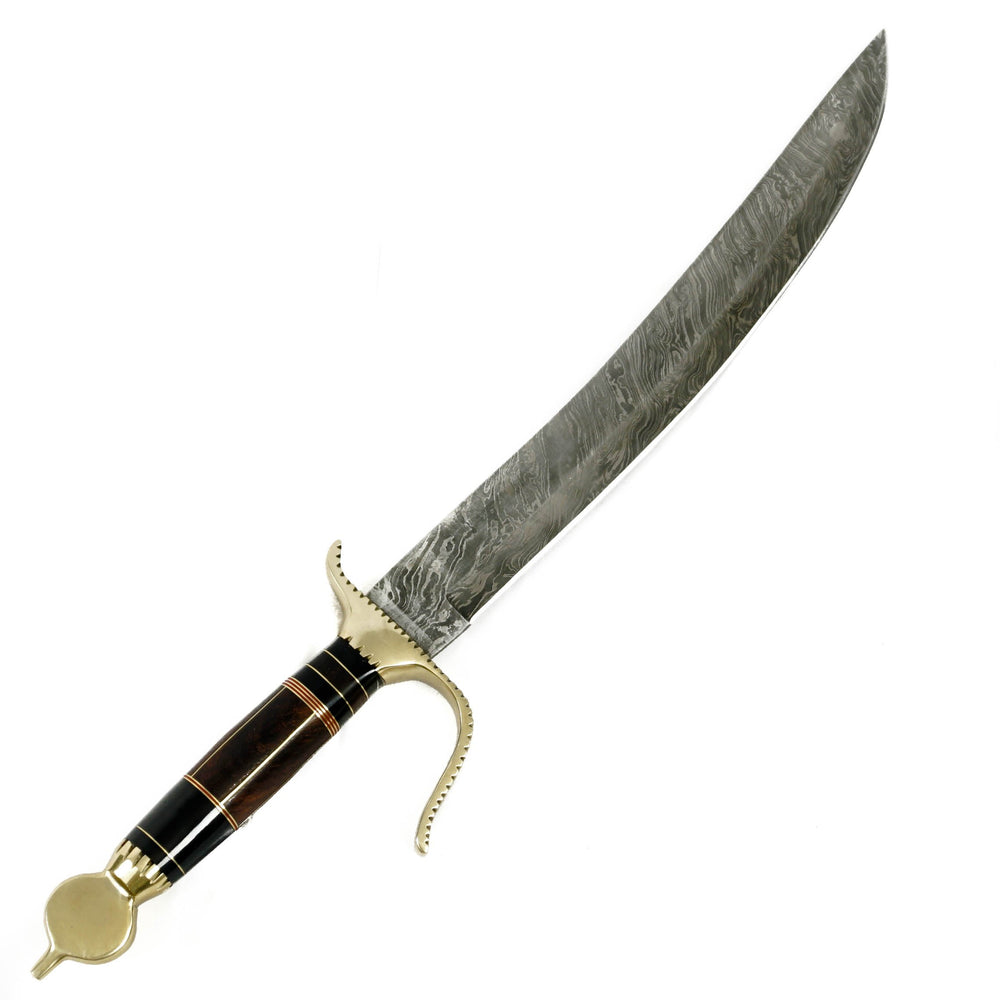
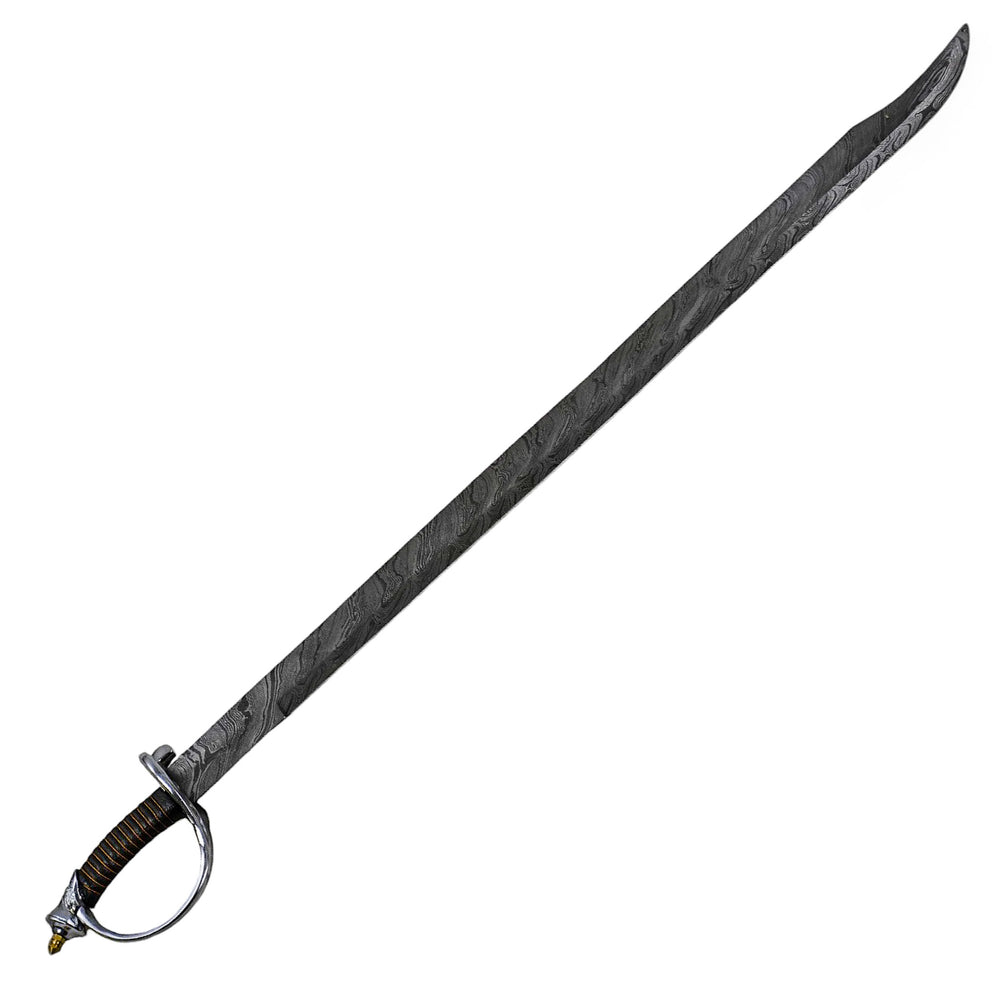
Explore saber swords inspired by the curved cavalry blades that defined mounted warfare from the late 17th century through the early 20th century. This collection includes Napoleonic hussar sabers, American Civil War cavalry sabers, light and heavy cavalry patterns, dress sabers, ceremonial officer's swords, and decorative wall pieces designed for collectors, reenactors, military veterans, cosplayers, and anyone drawn to the romance and history of cavalry combat.
The saber (also spelled sabre in British English) is the curved, single-edged sword carried by cavalrymen, military officers, and ceremonial guards across nearly every major army of the gunpowder era. Adopted from earlier Eastern curved swords through Hungarian and Polish hussar tradition, the saber became the universal cavalry weapon of Europe and the Americas — the sword of Napoleon's chasseurs, Wellington's dragoons, Union and Confederate horsemen at Gettysburg, and ceremonial honor guards from West Point to Sandhurst. Even after firearms made the cavalry charge obsolete, the saber survived as the definitive officer's dress sword and remains the ceremonial blade of many military traditions today.
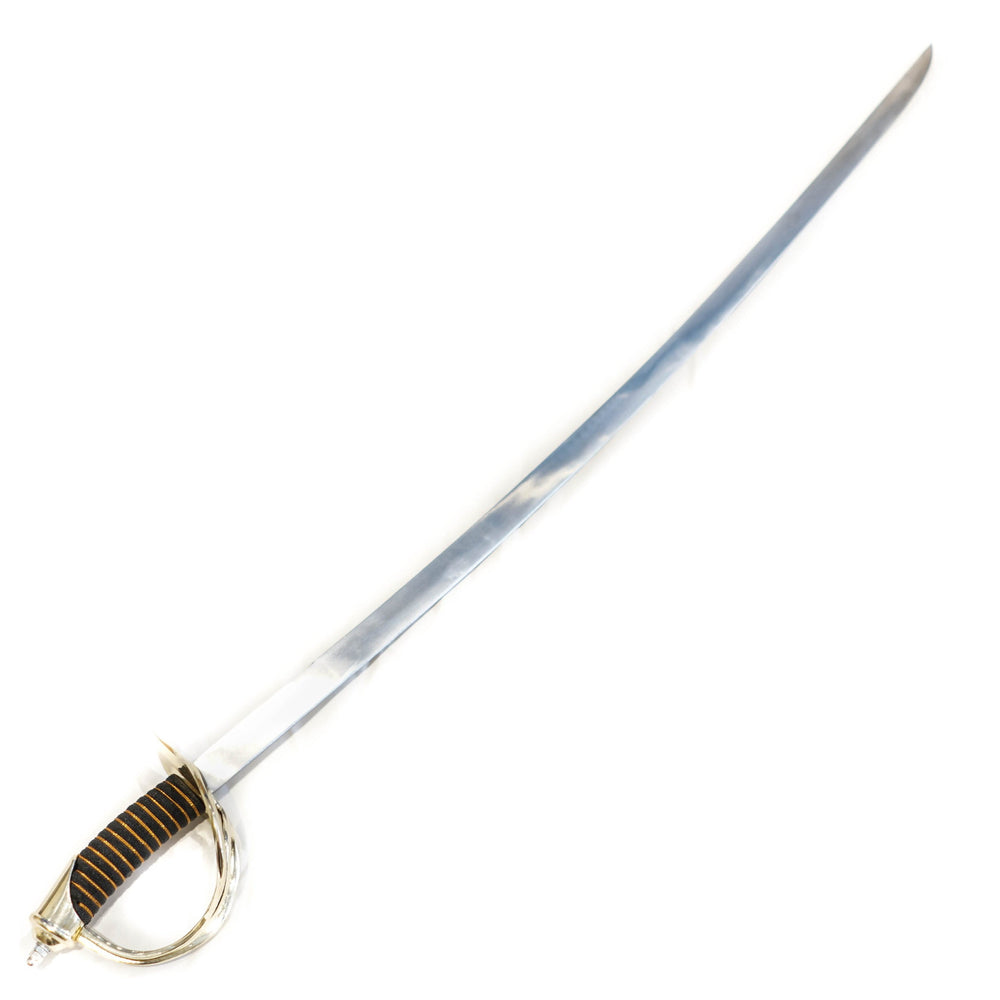
Our saber collection includes designs with curved high-carbon steel blades, brass three-bar guards and basket hilts, ribbed leather-wrapped grips, distinctive military pommels, and traditional steel or leather scabbards often featuring brass throat and chape fittings. Blades are forged from 1060 or 1095 carbon steel for cutting and reenactment use, spring steel for serious training, and stainless steel for decorative and ceremonial pieces. Many include authentic-style scabbards with rings for hanging from a sword belt and are suitable for both display and active reenactment.
The saber family evolved through distinct national and chronological patterns. The hussar saber is the original European cavalry saber, adopted from Polish and Hungarian light cavalry in the 17th century and spreading across Europe — a deeply curved, slashing blade carried by elite light horsemen. Napoleonic sabers include the iconic French An IX and An XI light cavalry sabers, the heavier cuirassier swords, and the British 1796 Light Cavalry Saber — a brutally effective slashing weapon credited with horrific battlefield wounds during the Napoleonic Wars.
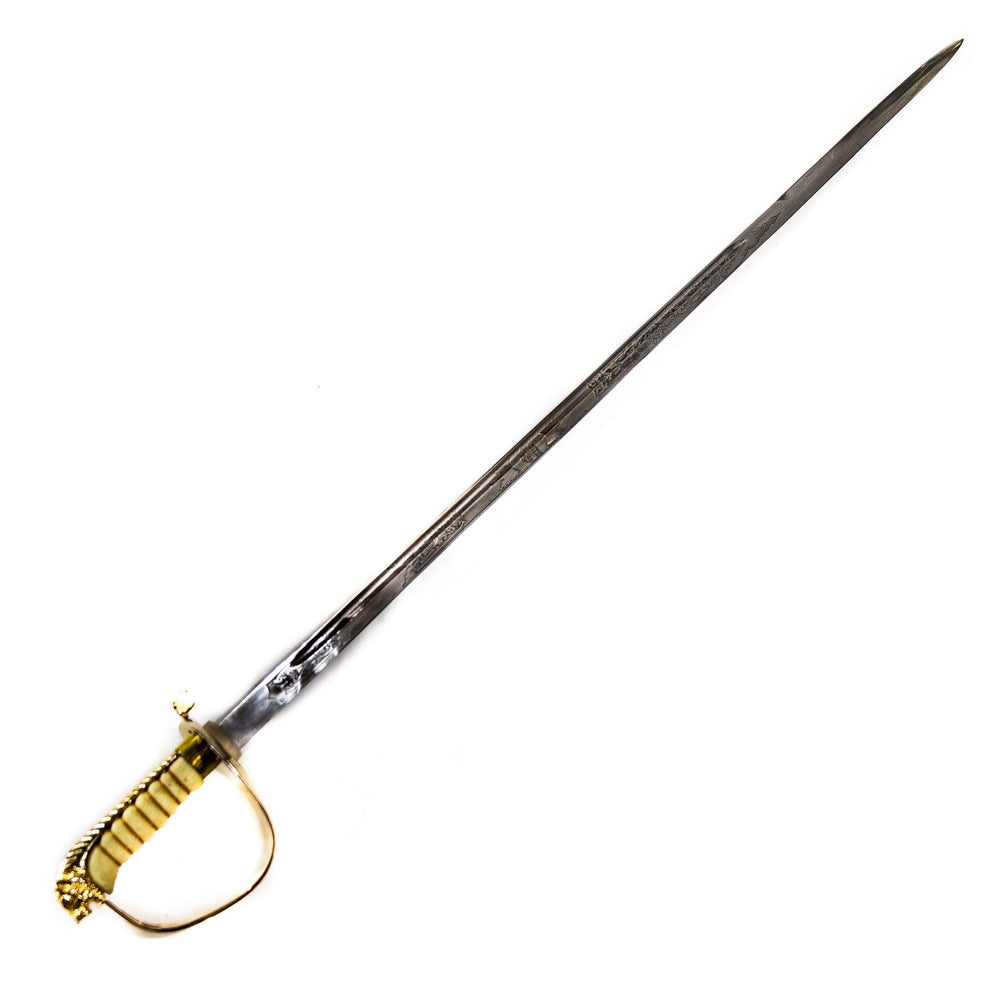
The American Civil War saber encompasses several U.S. patterns including the Model 1840 Heavy Cavalry Saber (the "Old Wristbreaker") and the lighter Model 1860 Light Cavalry Saber carried by both Union and Confederate horsemen. The British 1908 Cavalry Sword — the last true cavalry sword adopted by the British Army — represents the final evolution of the type, a straight thrusting blade designed for the lance-style charge. Dress sabers and ceremonial officer's swords continued the tradition into the modern era, including the U.S. Marine Corps Mameluke sword, the U.S. Army officer's saber, and the British infantry officer's pattern. The related cutlass is the shorter naval cousin, while the shashka is the Russian and Cossack curved sword sometimes classified within the broader saber family.
The saber dominated cavalry combat for nearly three centuries because it solved the problems of fighting from horseback better than any other sword design. The curved blade naturally pulled the edge across a target during a passing strike, producing devastating slicing wounds at the speed of a galloping horse. The single-edged geometry concentrated weight and steel where it was needed for cutting, while the protective basket or three-bar guard shielded the rider's hand against opposing blades and the inevitable knocks of mounted combat. British surgeons during the Napoleonic Wars wrote in horrified detail about the wounds inflicted by the 1796 Light Cavalry Saber, which gained such a fearsome reputation that French troops reportedly complained their British opponents were fighting "unfairly." The saber's effectiveness only declined when the machine gun and modern artillery made the cavalry charge itself impossible.
Battle-ready sabers feature full-tang construction, high-carbon or spring steel blades, and proper heat treatment suitable for cutting practice, mounted martial arts study, and serious reenactment use. Decorative sabers are typically made from stainless steel with partial tangs and are designed for wall display, ceremonial presentation, costume use, cosplay, and themed home decor. Ceremonial dress sabers occupy a middle ground — built primarily for parade and presentation rather than cutting, but often produced to high standards of fit and finish for military officer use and formal occasions.
These sabers are popular for Napoleonic and Civil War reenactment, cavalry living history groups, mounted martial arts study, ceremonial military events and officer commissioning gifts, military retirement presentations, museum-style home displays, themed offices honoring military service and military history, theatrical productions set in the 18th and 19th centuries, cosplay for period dramas and military-themed media, costume balls and historical dress events, and collector pieces honoring the golden age of cavalry. Many customers choose sabers as meaningful gifts for veterans, military academy graduates, equestrians, and history enthusiasts.
Browse the collection to find Napoleonic hussar sabers, Civil War cavalry sabers, dress and ceremonial sabers, and decorative wall blades that fit your collection, reenactment kit, or display.
Is it spelled "saber" or "sabre"? Both spellings are correct. "Saber" is the American English spelling, standard in U.S. military terminology — the U.S. Army and Marine Corps officially refer to "cavalry sabers" and "officer's sabers." "Sabre" is the British and Commonwealth spelling, also standard in fencing terminology worldwide. Both refer to the same curved military sword tradition.
What's the difference between a saber and a cutlass? Sabers are longer (typically 30–40 inches overall) cavalry swords designed for mounted use, emphasizing reach, draw cuts, and protective guards. Cutlasses are shorter (24–32 inches), heavier, broader naval swords purpose-built for the cramped fighting conditions aboard warships. A saber emphasizes elegance and reach from horseback; a cutlass emphasizes raw chopping power in close quarters at sea.
What is the 1796 Light Cavalry Saber? The British 1796 Light Cavalry Saber is one of the most famous and effective cavalry swords ever issued. With a deeply curved 33-inch blade and a simple stirrup hilt, it became infamous during the Napoleonic Wars for inflicting devastating slicing wounds. French troops reportedly considered its effects so gruesome they complained the wounds were excessive. The 1796 remains a favorite among collectors and Napoleonic reenactors today.
Are dress sabers real swords? Yes — ceremonial dress sabers are real, functional swords (or at minimum, properly constructed sword-shaped objects), though they're built primarily for parade, presentation, and formal occasions rather than combat. Military officer's dress sabers often have sharpened or sharpenable blades and are produced to exacting standards of fit and finish. A genuine ceremonial saber presented at a military commissioning or retirement carries real institutional and personal significance.
What makes a saber different from a longsword or rapier? Sabers are curved, single-edged, primarily one-handed cavalry and military swords from the gunpowder era (roughly 1700–1920). Longswords are straight, double-edged, two-handed medieval European battlefield swords. Rapiers are straight, very narrow, thrust-focused civilian dueling swords of the Renaissance. They represent three completely different eras, fighting traditions, and design philosophies despite all being European straight-or-curved bladed swords.