

 Fast & Free Shipping
 30 day Money Back
 Secure Checkout
 Fast & Free Shipping
30 day Money Back
Secure Checkout
Fast & Free Shipping
30 day Money Back
Secure Checkout
Explore rapier swords inspired by the elegant thrusting blades that defined civilian combat, dueling culture, and personal honor across Renaissance and early modern Europe. This collection includes Italian rapiers, Spanish cup-hilt rapiers, swept-hilt rapiers, side swords, smallswords, and decorative wall pieces designed for collectors, HEMA practitioners, classical fencing students, reenactors, cosplayers, and anyone drawn to the artistry of Renaissance sword culture.
The rapier is the slender, sharply pointed thrusting sword that emerged in late 15th-century Spain and Italy and reigned as the gentleman's civilian sword across Europe for nearly two centuries. Where battlefield swords were built for armored war, the rapier was designed for a different kind of fighting: the duel, the street confrontation, and the formal art of esgrima and Italian scherma. Worn daily as part of upper-class dress, the rapier defined an entire culture of personal honor, fencing schools, and treatise-based martial arts that shaped how Europeans understood combat from roughly 1500 to 1700.
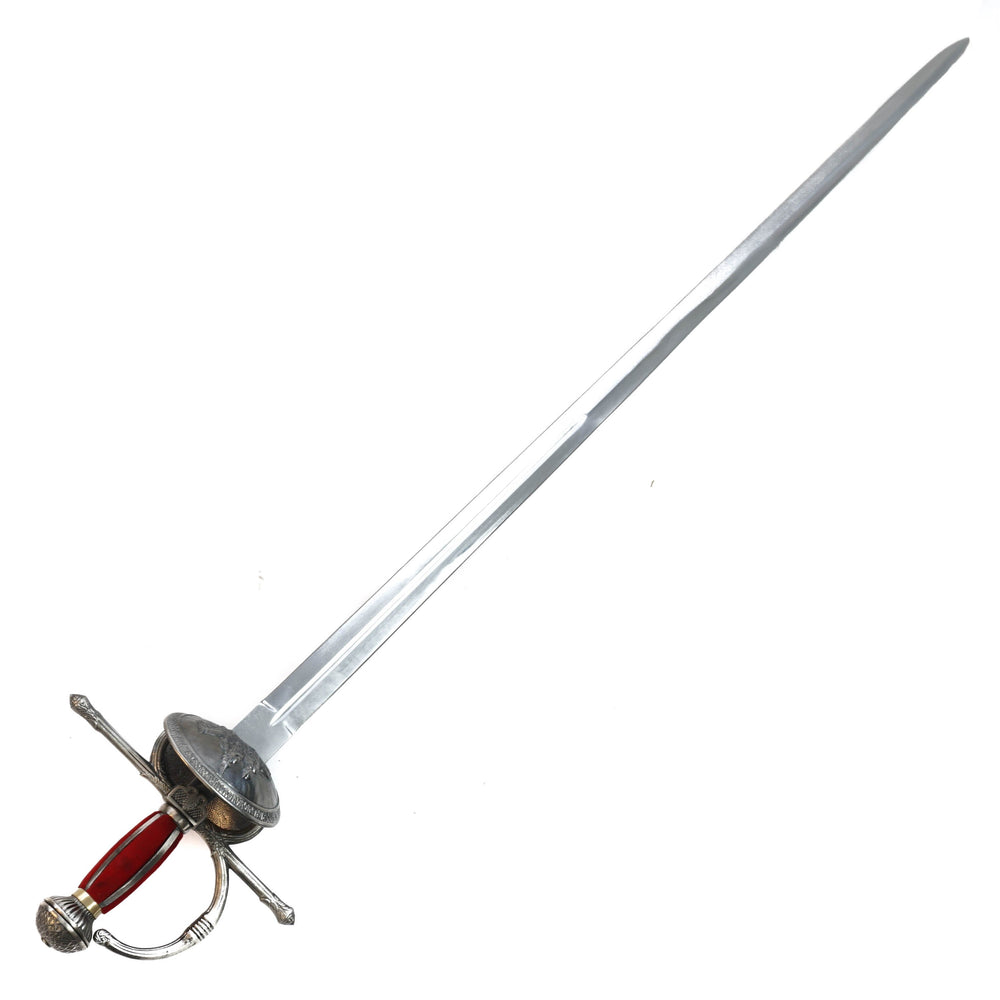
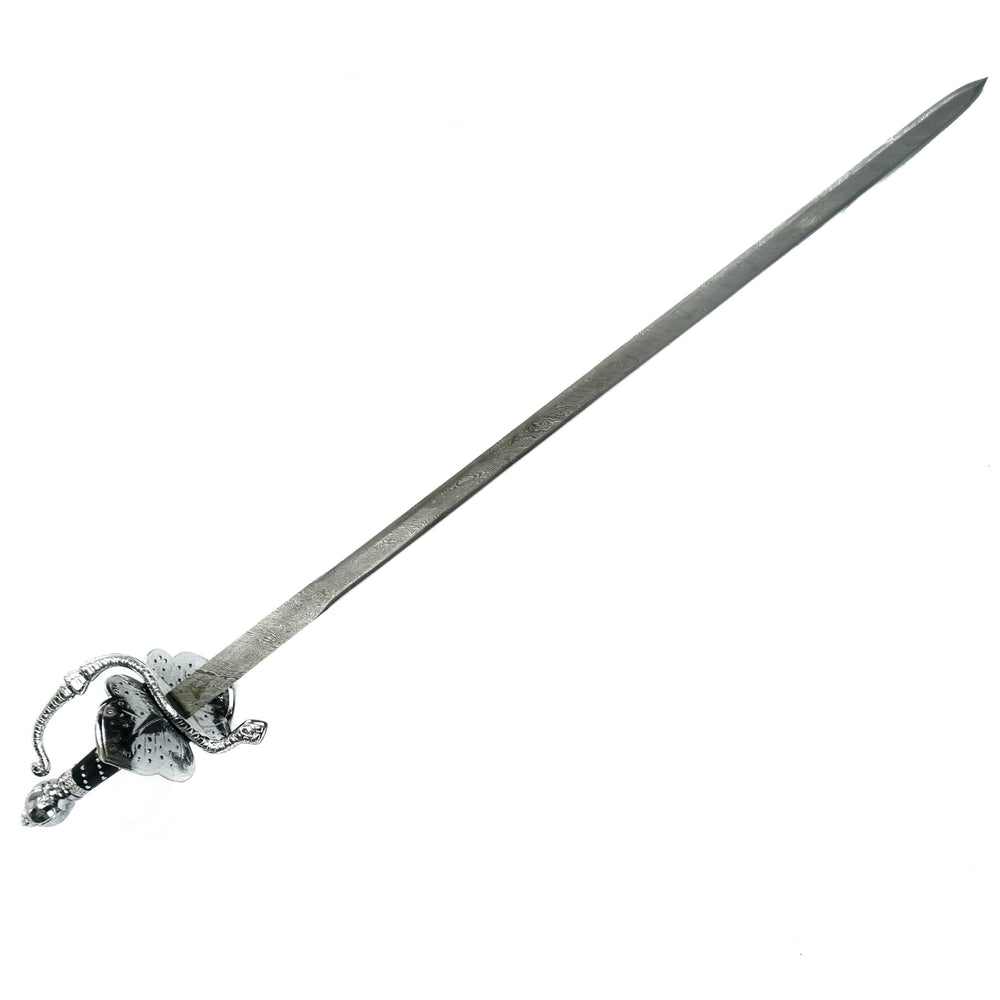
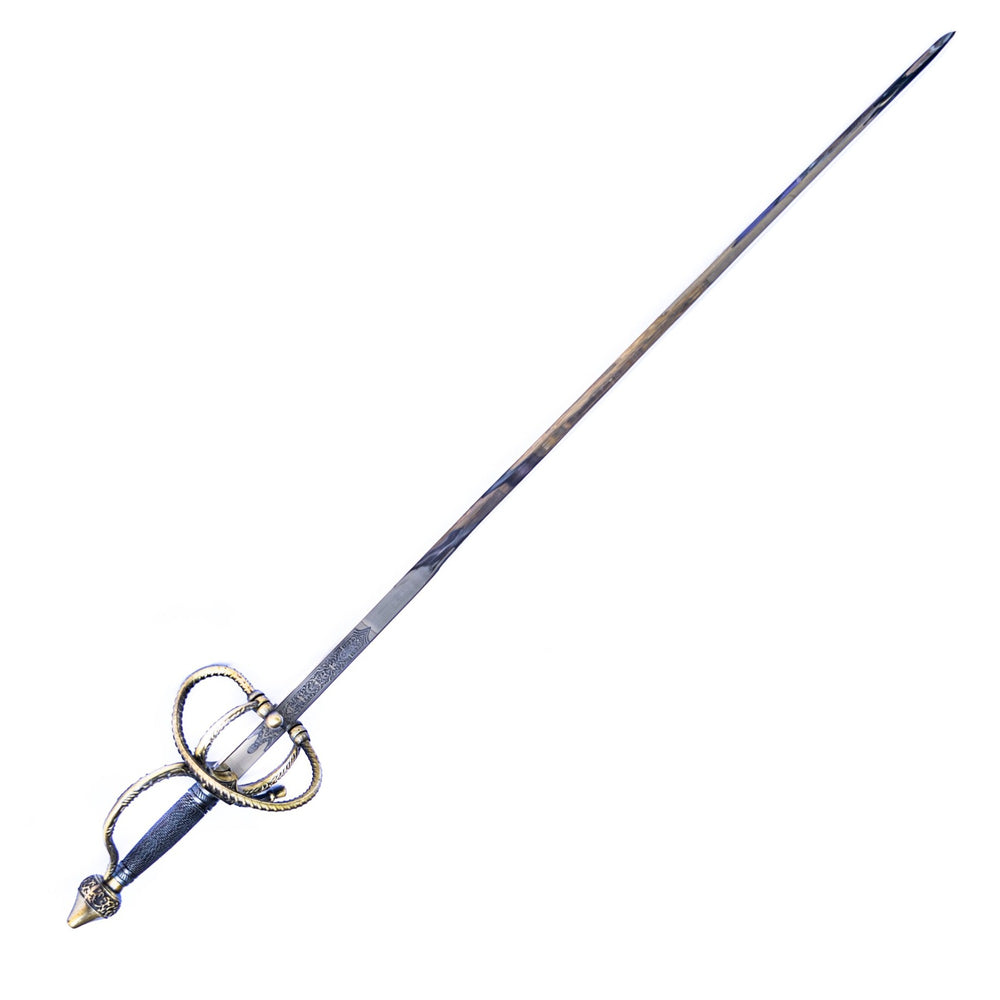
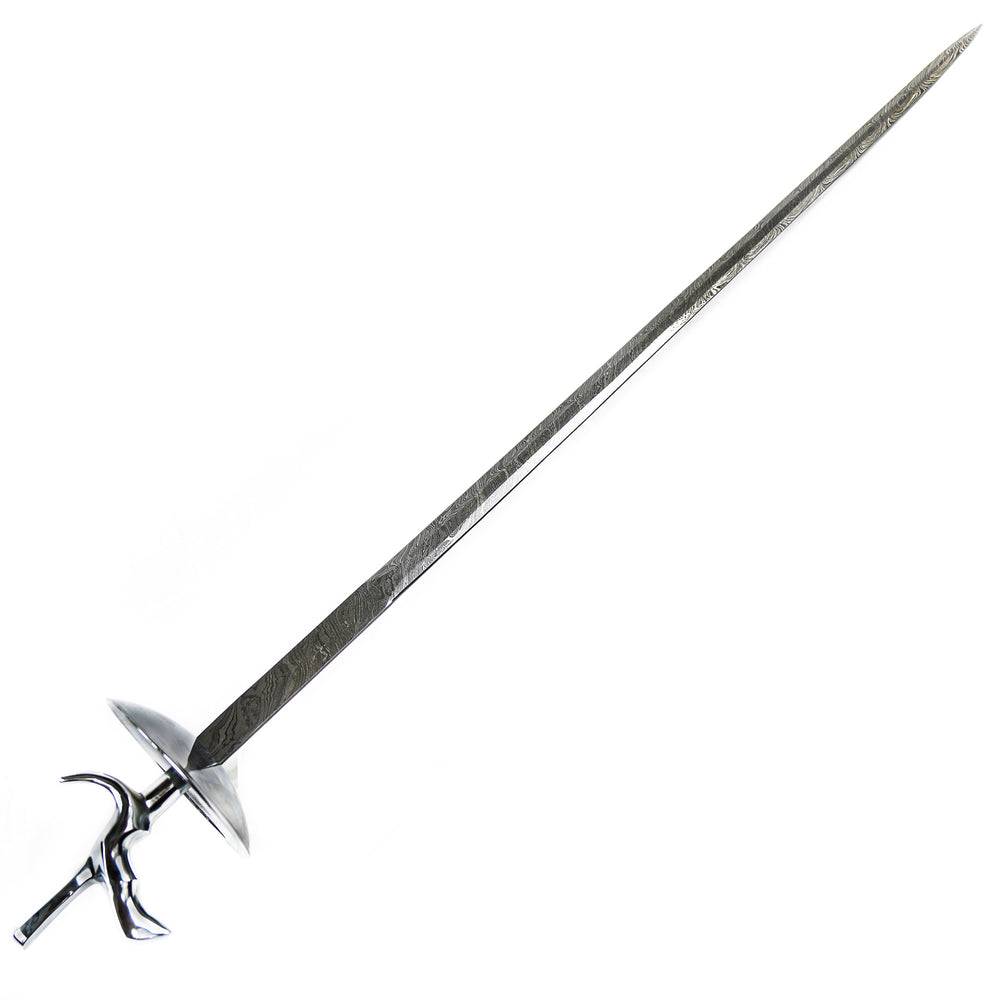
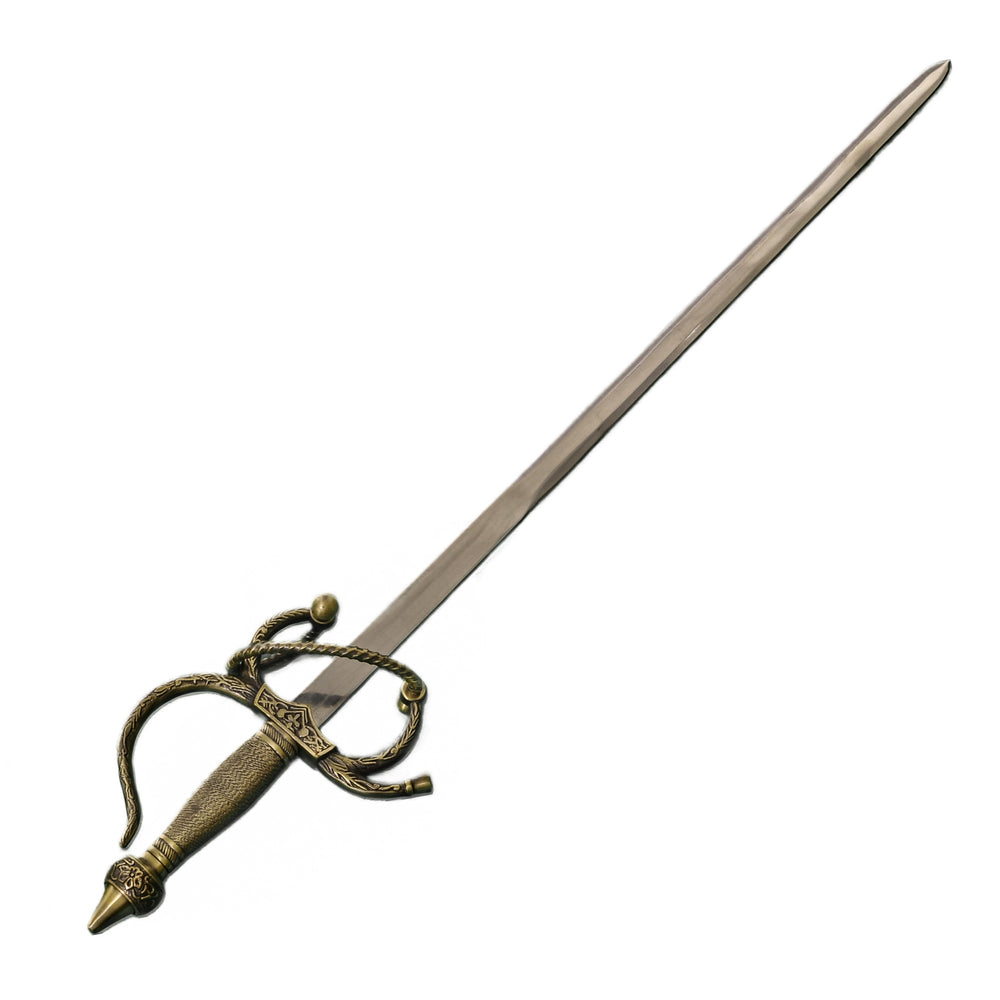
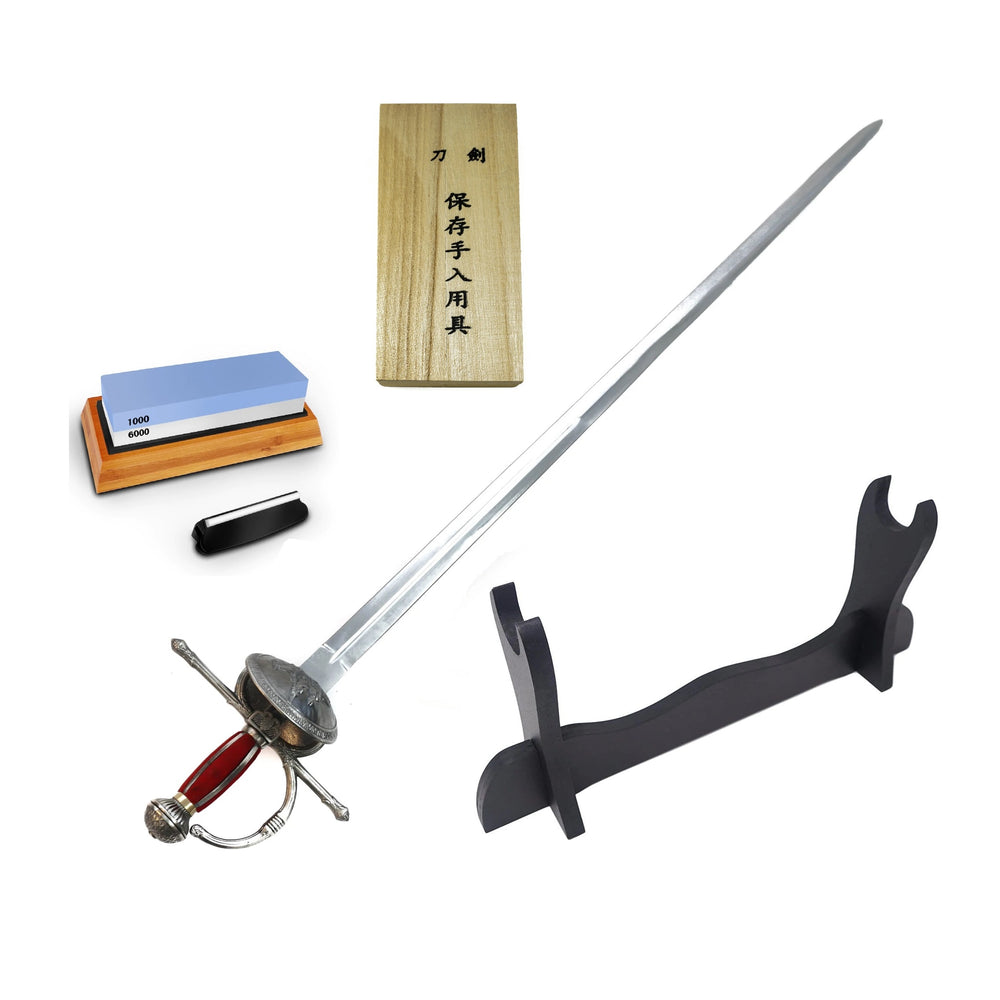
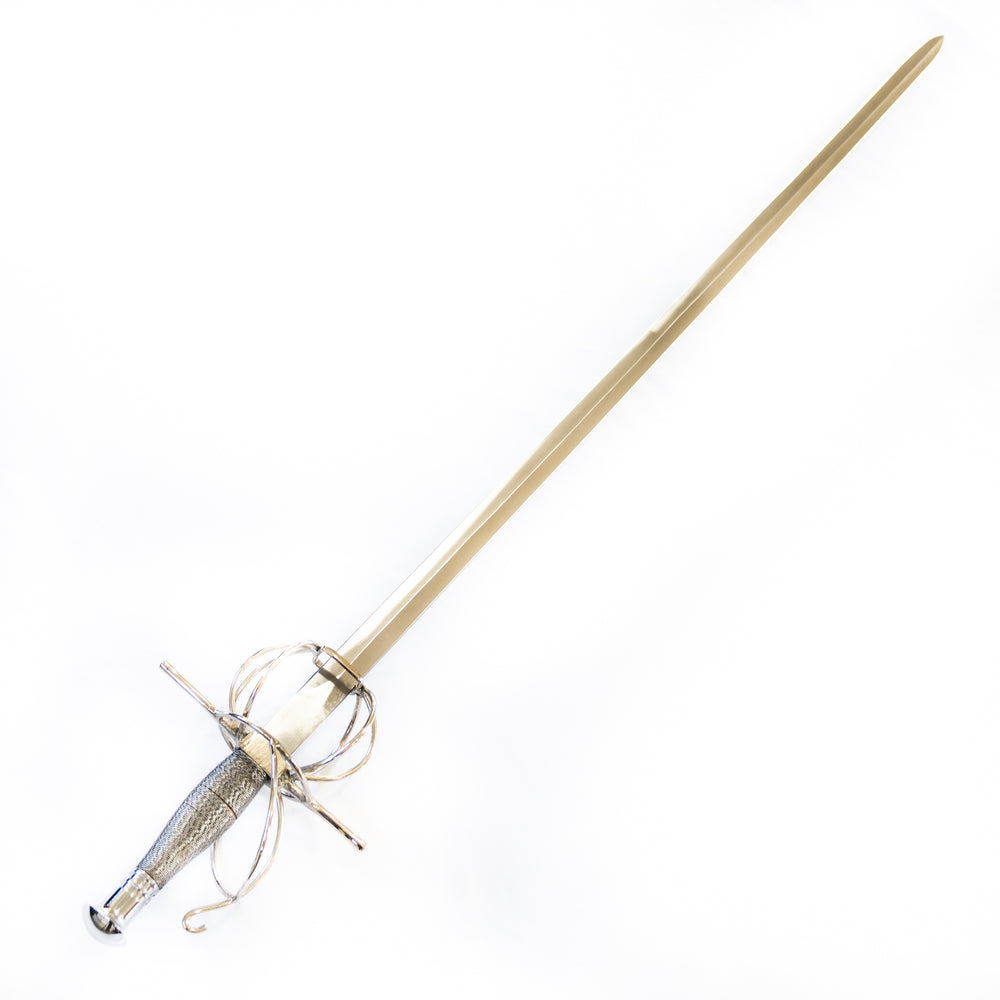
Our rapier collection includes designs with long, slender, sharply tapered blades, elaborate swept hilts, distinctive Spanish cup hilts, ring guards, knuckle bows, and pommels balanced for the thrust-focused techniques of historical Italian and Spanish masters. Blades are forged from high-carbon 1060 or 1095 steel for cutting and reenactment use, spring steel like 5160 or 9260 for serious HEMA practice, and stainless steel for decorative display pieces. Many feature traditional wire-wrapped grips with Turk's head knots at the ends, leather-wrapped scabbards, and authentic-style fittings.
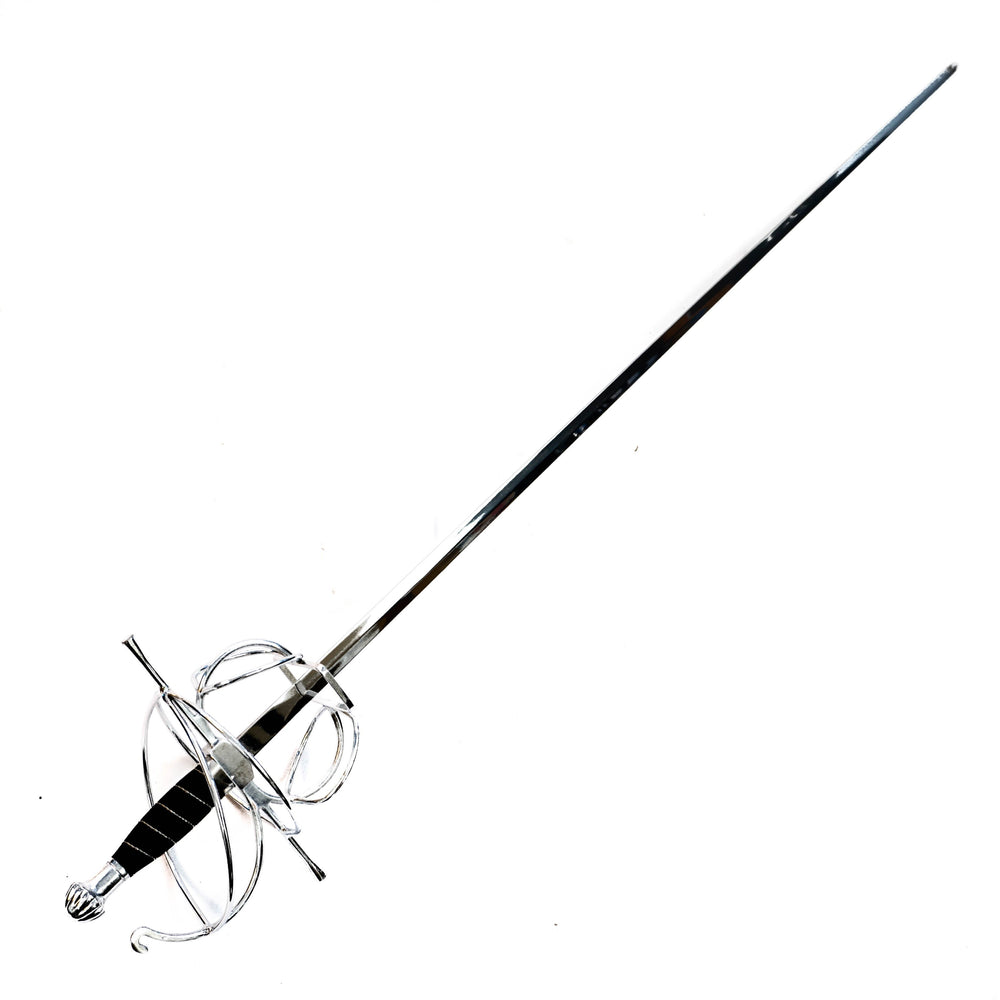
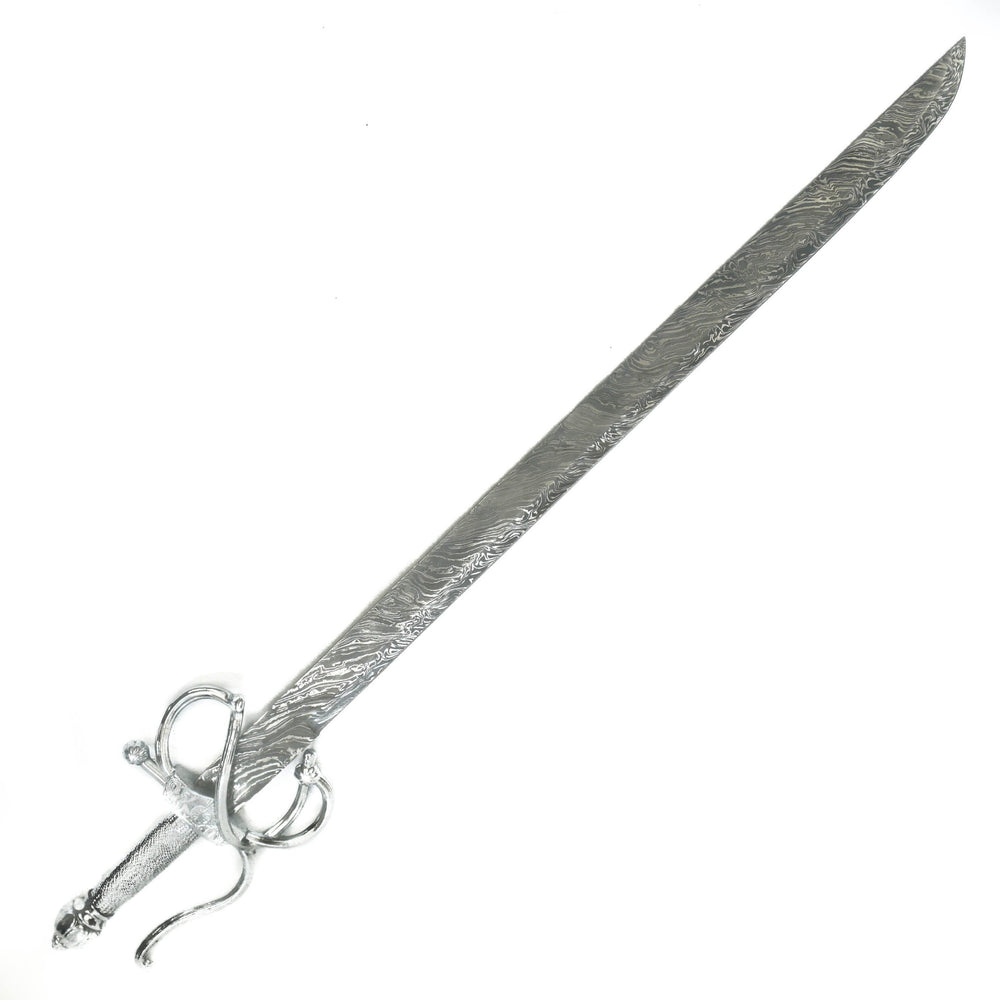
Rapiers evolved through several distinct regional and chronological styles. The side sword (or spada da lato) is the transitional Renaissance blade that bridged medieval arming swords and the true rapier — broader and more cut-capable than later rapiers, dominant from roughly 1500 to 1550. The classical Italian rapier of the late 16th and 17th centuries features the iconic swept hilt with flowing rings, finger rings, and complex bar work, paired with a long, narrow, diamond-section blade optimized for the thrust.
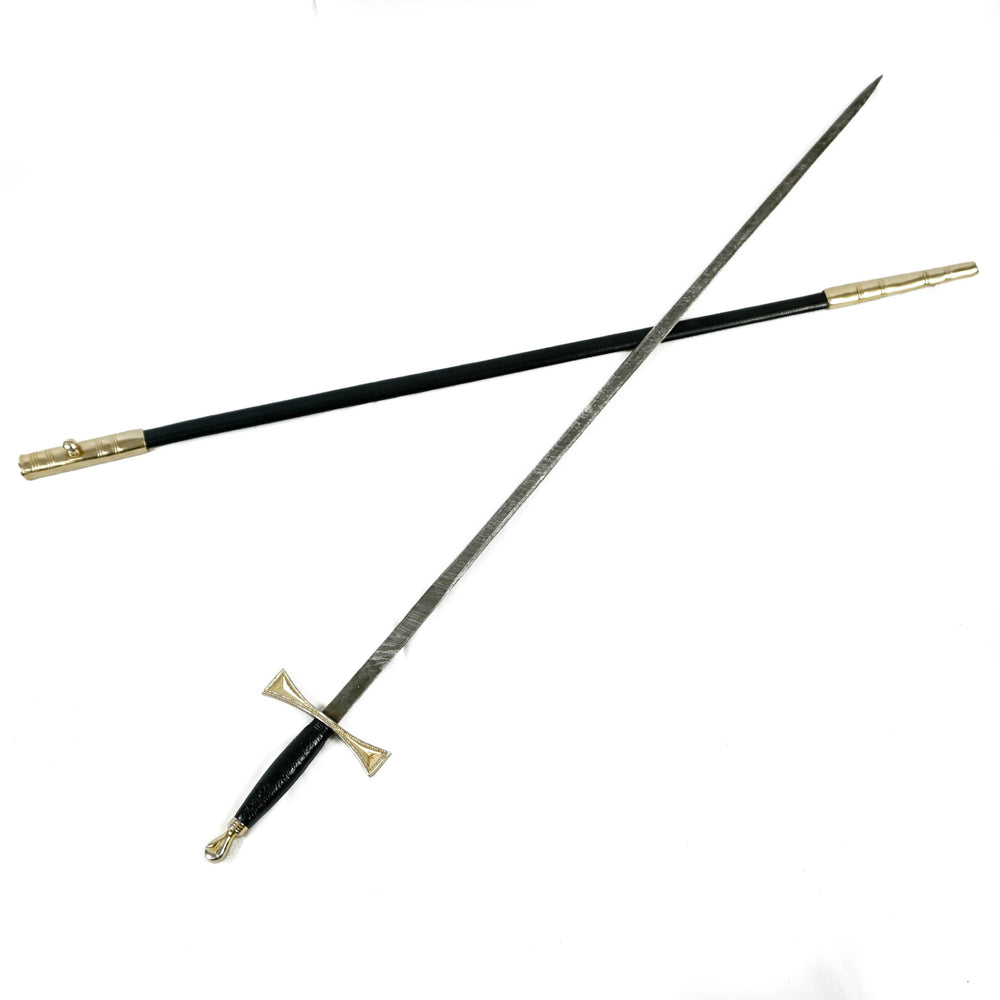
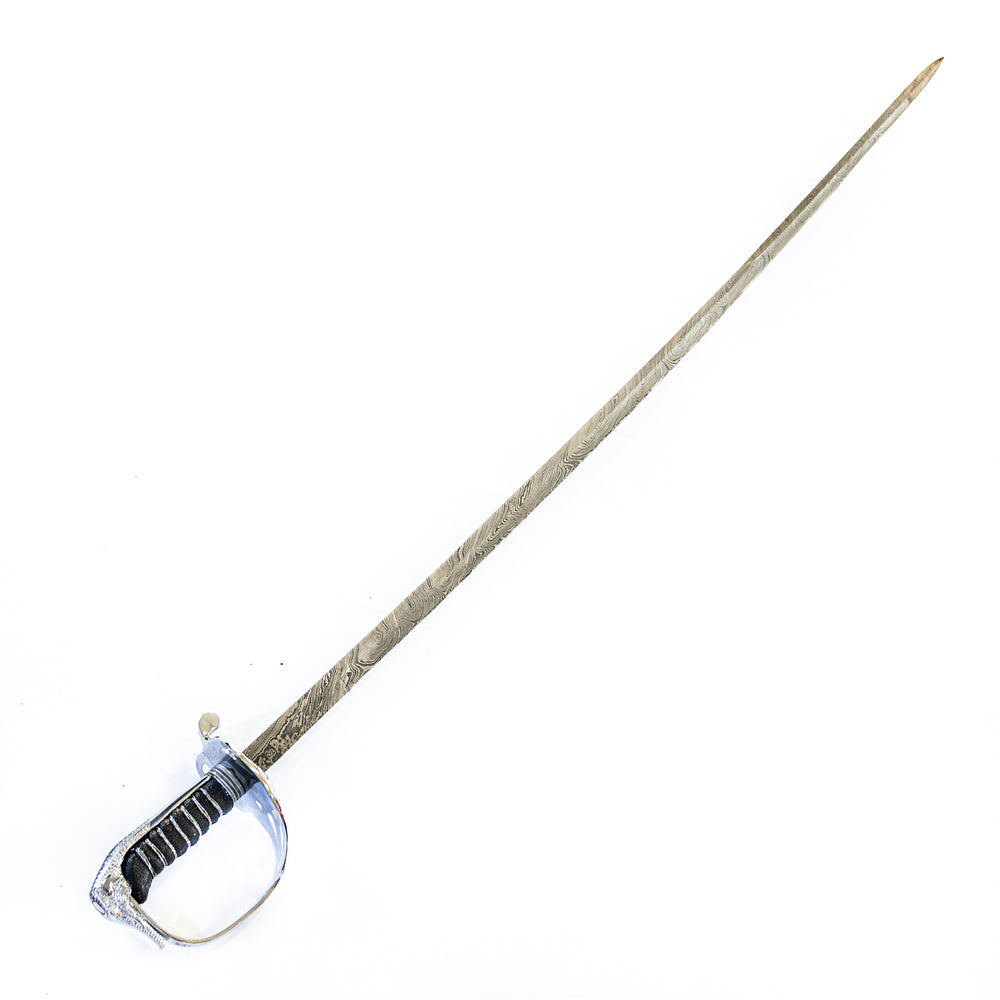
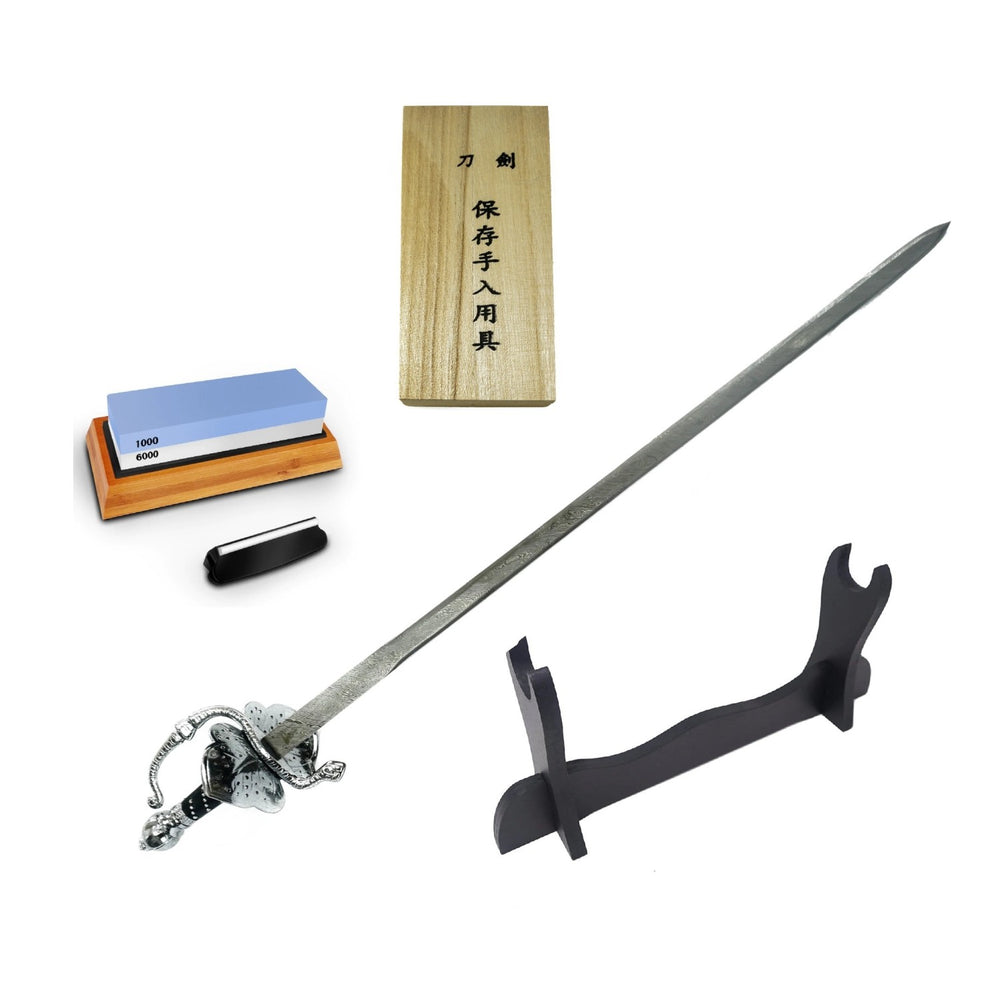
The Spanish cup-hilt rapier, dominant in 17th-century Spain and southern Italy, features a distinctive cup-shaped hand guard offering excellent protection — the sword of La Verdadera Destreza, the Spanish "true art" of fencing developed by masters like Carranza and Pacheco de Narváez. The swept-hilt rapier of England, Germany, and northern Europe favored more elaborate flowing guards. The pappenheimer rapier is the distinctive German style with pierced shell guards. As the rapier declined in the late 17th century, it gave way to the lighter smallsword — the small-sword that became the universal gentleman's blade of the 18th century and the direct ancestor of the modern fencing épée.
The rapier was the defining weapon of European civilian dueling for nearly two centuries. Unlike battlefield swords designed for armored war, the rapier was built for the duel of honor — single combat between gentlemen, often fought to first blood or death over insults, debts, or matters of reputation. Italian masters like Salvator Fabris, Ridolfo Capo Ferro, and Camillo Agrippa codified rapier fencing into sophisticated treatises that established the foundations of classical fencing theory: lines of attack, parries, time and distance, and the priority of the thrust over the cut. Spanish masters developed La Verdadera Destreza, a geometrically rigorous system based on the mysterious circle on the ground. These historical treatises remain the source texts for modern HEMA (Historical European Martial Arts) rapier practice today.
Battle-ready rapiers feature full-tang construction, high-carbon or spring steel blades, and proper heat treatment suitable for cutting practice (where applicable to broader side-sword forms), historical fencing study, and serious reenactment use. Decorative rapiers are typically made from stainless steel and are designed for wall display, costume use, cosplay (especially for Three Musketeers, Renaissance, and Elizabethan productions), and themed home decor. HEMA practitioners typically use blunted training rapiers or synthetic nylon rapier wasters for safer sparring while studying the historical treatises.
These rapiers are popular for HEMA practice and study of historical fencing treatises, classical fencing schools, Renaissance and Elizabethan reenactment, theatrical productions (Romeo and Juliet, The Three Musketeers, Cyrano de Bergerac, and other Renaissance-era stage works), Renaissance faires and Shakespeare festivals, museum-style home displays, themed dens and offices honoring Renaissance and Baroque history, cosplay for productions set in 16th and 17th century Europe, costume balls and masquerades, and collector pieces honoring one of the most refined dueling swords ever made. Many customers choose rapiers as meaningful gifts for fencers, fans of historical fiction, theater performers, and admirers of Renaissance culture.
Browse the collection to find Italian swept-hilt rapiers, Spanish cup-hilt rapiers, side swords, smallswords, and decorative wall blades that fit your training, collection, or display.
What is a rapier? A rapier is a long, slender, sharply pointed sword designed primarily for thrusting attacks, used as a civilian sidearm and dueling weapon across Europe from roughly 1500 to 1700. Worn daily by gentlemen as part of formal dress, rapiers featured elaborate protective hilts (swept hilts, cup hilts, or ring guards) and were the central weapon of Renaissance dueling culture and the Italian and Spanish fencing traditions.
What's the difference between a rapier and a smallsword? The rapier is the longer, heavier dueling sword of the 16th and 17th centuries, typically with a 40+ inch blade and an elaborate protective hilt. The smallsword that succeeded it in the late 17th and 18th centuries is shorter (around 30–32 inch blade), lighter, and built around an even more thrust-focused triangular or hollow-ground blade. The smallsword is the direct ancestor of the modern fencing épée and represents the rapier tradition's evolution into a faster, more refined civilian sword.
What is a swept hilt? A swept hilt is the elaborate flowing protective guard found on most classical rapiers, formed by curved bars and rings that sweep from the crossguard around to the pommel. The design protects the hand from cuts and thrusts during the close-range geometry of a rapier duel while still allowing the fingers to wrap around the crossguard for precise blade control. Swept hilts became increasingly ornate through the 16th and early 17th centuries before being largely replaced by the simpler, more protective cup hilt.
Can a rapier cut, or only thrust? Most true rapiers — the long, narrow late-period blades — are optimized almost entirely for the thrust, with edges sharp enough to slice but blade geometry too narrow and flexible for serious chopping cuts. Earlier transitional side swords (spada da lato) had broader blades capable of meaningful cuts, which is why historical Italian fencing treatises often include both cuts and thrusts. As the rapier evolved through the 17th century, it became increasingly thrust-only, eventually giving way to the smallsword.
Were rapiers actually used in real fights? Yes — rapiers were the genuine primary dueling weapon of Renaissance and early modern Europe, used in thousands of recorded duels of honor and countless unrecorded street fights. Italian, Spanish, French, and English fencing masters operated training schools (sale d'armi) in every major city, and surviving historical fencing manuscripts from Fabris, Capo Ferro, Agrippa, and others document detailed combat techniques that modern HEMA practitioners study and reconstruct today.