

 Fast & Free Shipping
 30 day Money Back
 Secure Checkout
 Fast & Free Shipping
30 day Money Back
Secure Checkout
Fast & Free Shipping
30 day Money Back
Secure Checkout
Explore claymore swords inspired by the legendary two-handed greatswords of medieval and Renaissance Scotland — the towering blades carried by Highland warriors, Scottish mercenaries, and the men who fought alongside William Wallace and Robert the Bruce. This collection includes traditional two-handed claymores, battle-ready Highland greatswords, hand-forged reproductions, and decorative display pieces designed for collectors, Scottish heritage enthusiasts, reenactors, HEMA practitioners, cosplayers, and anyone drawn to the raw power and cultural weight of Scotland's most iconic weapon.
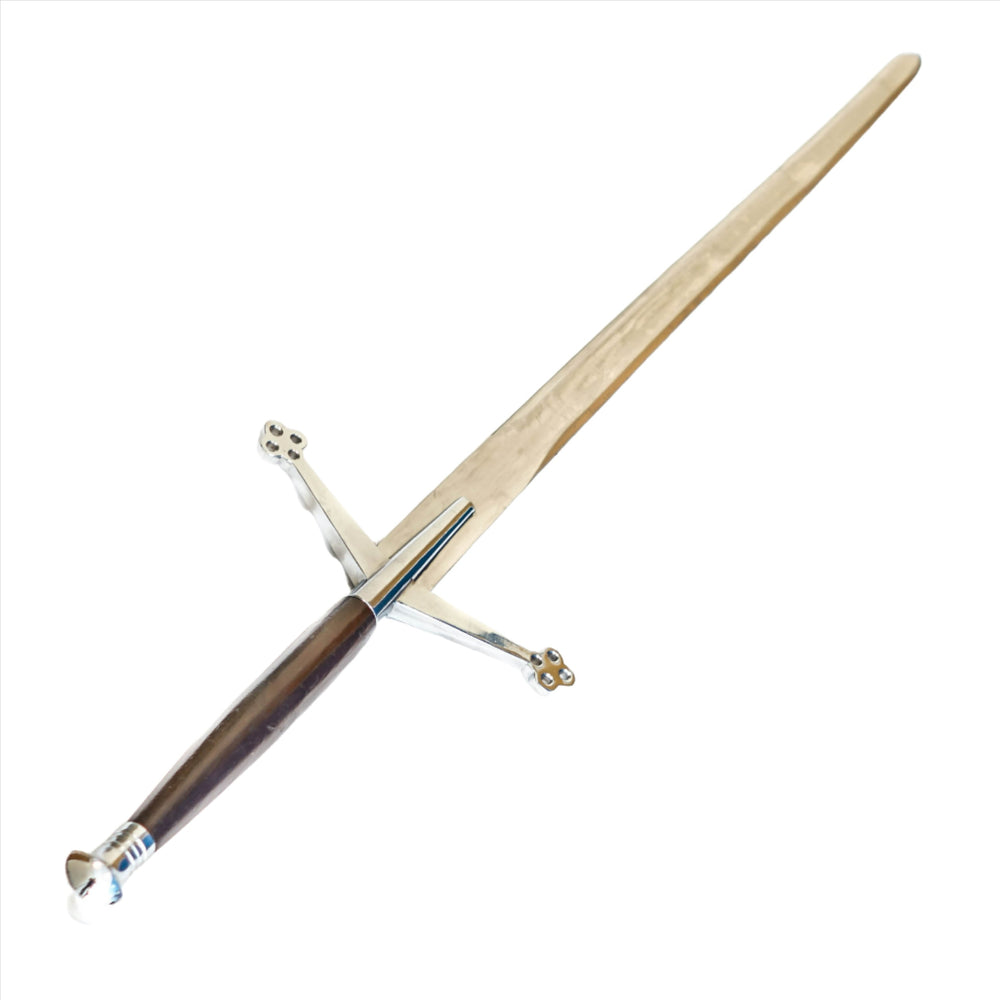
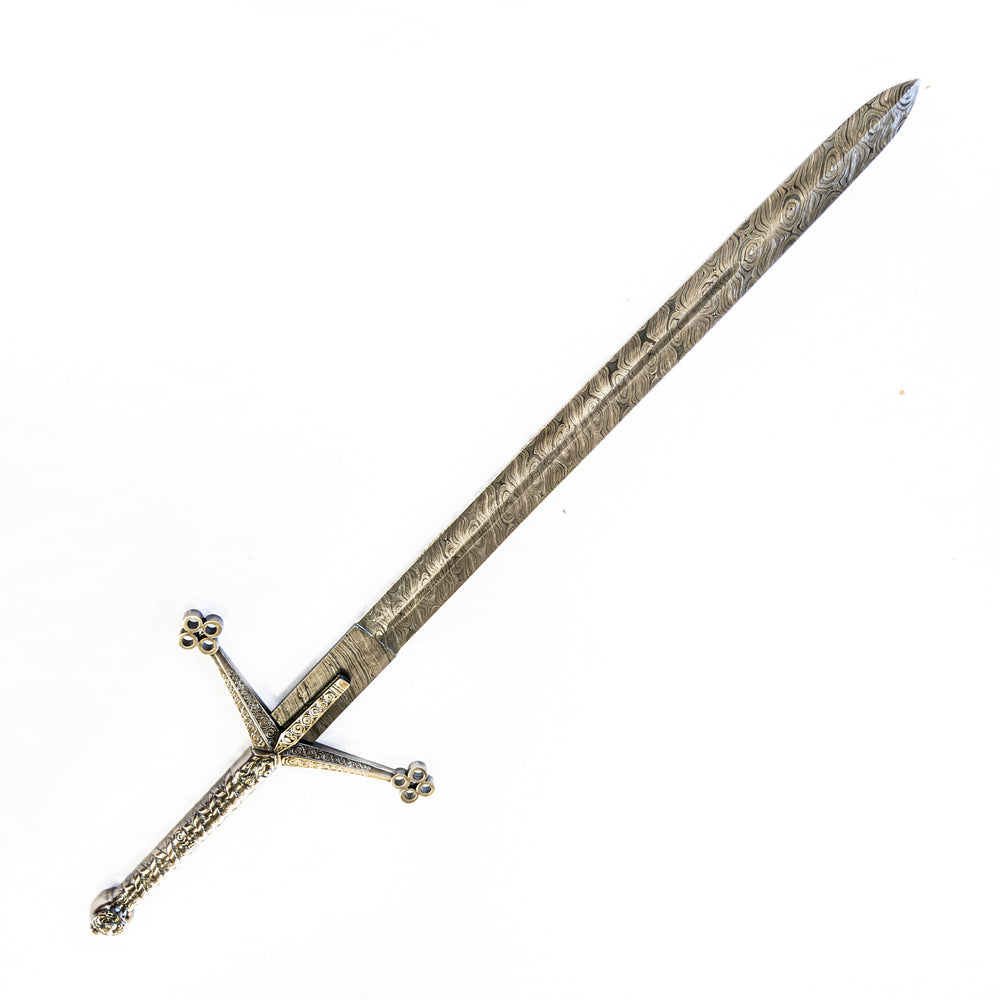
The claymore — from Scottish Gaelic claidheamh-mòr, meaning "great sword" — is the massive two-handed sword wielded by Highland warriors from roughly the late 15th century through the early 17th century. Towering up to five and a half feet in overall length, the claymore was the battlefield weapon of Highland clan champions, gallowglass mercenaries, and the elite warriors who served in some of the most brutal conflicts of late medieval Scotland and Ireland. Its distinctive forward-sloping quillons and quatrefoil (four-leaf) terminals at the end of the crossguard make it one of the most visually recognizable swords in European history — a weapon that immediately reads as Scottish at a glance.
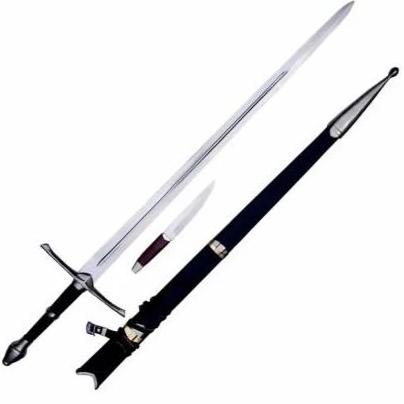
Our claymore collection includes designs with broad double-edged blades, hand-forged steel crossguards with the iconic forward-angled quillons and quatrefoil ends, leather-wrapped two-handed grips, wheel and pear-shaped pommels, and authentic-style leather scabbards or no scabbard at all (many claymores were historically carried over the shoulder or in baldric rigs without scabbards). Blades are forged from high-carbon 1060 or 1095 steel for cutting and reenactment use, spring steel like 5160 for serious HEMA practice, and stainless steel for decorative display pieces. Many are modeled on surviving museum examples from the National Museum of Scotland and Highland clan collections.
The claymore family includes several distinct variants. The two-handed claymore (or claidheamh-dà-làimh) is the classic Highland greatsword — typically 55 to 70 inches in overall length with a 42–55 inch blade, a long two-handed grip, and the iconic forward-sloping quillons ending in quatrefoil terminals. This is the sword most people picture when they hear "claymore." The gallowglass claymore is the closely related Irish-Scots variant carried by the gallóglaigh mercenaries — heavily armored Scottish warriors who served Irish chieftains from the 13th through 16th centuries. Many were essentially the same weapon under a different cultural context.
The clamshell claymore is a later variant featuring shell-shaped guards in addition to or replacing the quatrefoil quillons, common in 16th-century Lowland Scotland and along the borders. The Lowland claymore covers two-handed swords used by Scottish Lowland armies and tends to have a less distinctive guard than the Highland classic. The "hand-and-a-half claymore" is a modern term sometimes used for shorter two-handed Scottish swords that bridge between the claymore and the bastard sword in size. Confusingly, the term claymore was later borrowed in the 17th century to describe the Scottish basket-hilted broadsword — but in proper historical usage, "claymore" refers to the two-handed greatsword, while the one-handed basket-hilted sword is properly called a broadsword or claybeg.
The claymore was the weapon of the Highland warrior aristocracy — the clan champion, the chieftain's bodyguard, the elite warrior whose role was to break enemy formations through brute physical presence and reach. Wielded with two hands, the claymore's enormous reach and leverage allowed a single warrior to cut down massed infantry, break pike formations, and overwhelm opponents armed with shorter weapons. The famous gallowglass (from Gaelic gallóglaigh, "foreign warriors") were Scottish heavy infantry mercenaries who served Irish lords from the 1260s through the 1500s, fighting in heavy mail and wielding two-handed claymores as their signature weapon — their reputation was so formidable that Tudor English commanders specifically complained about facing them in the Nine Years' War.
By the late 16th and early 17th centuries, the two-handed claymore began to give way to the one-handed basket-hilted broadsword and changes in battlefield tactics that favored gunpowder weapons over massed melee. The claymore was largely retired as a primary battlefield weapon by the time of the Jacobite risings, replaced by the basket-hilted broadsword carried by Highland clansmen at Killiecrankie and Culloden. But its cultural legacy endured — and its association with figures like William Wallace (whose alleged sword, displayed at the Wallace Monument in Stirling, is a claymore-style two-hander) cemented the claymore as the symbol of Scottish martial heritage forever.
Battle-ready claymores feature full-tang construction, high-carbon or spring steel blades, and proper heat treatment suitable for cutting practice, HEMA study of historical two-handed sword traditions, and serious reenactment use. Decorative claymores are typically made from stainless steel with partial tangs and are designed for wall display, costume use, Highland dress for ceremonial occasions, cosplay, and themed home decor. Given their enormous size and dramatic visual impact, claymores are among the most popular swords for large-scale wall displays — a properly mounted claymore anchors an entire room. Blunt-edged training claymores are also available for HEMA practitioners studying two-handed sword traditions.
These claymores are popular for Scottish heritage celebrations and Highland reenactment, medieval Scottish and Irish living history (including gallowglass impressions), HEMA practice and study of two-handed sword traditions, Highland games and Scottish cultural events, museum-style home displays of Scottish weaponry, themed offices and dens honoring Scottish history and Celtic heritage, cosplay for productions set in medieval Scotland (Braveheart, Rob Roy, and Outlander-era productions), theatrical use, ceremonial gifts for those of Scottish descent or Highland heritage, family heritage displays honoring Scottish ancestry, and serious collector pieces honoring one of the most culturally significant sword traditions in European history. Many customers choose claymores as commemorative gifts for milestone occasions and as anchor pieces for Scottish-themed displays.
Browse the collection to find traditional two-handed claymores, gallowglass-style Scottish greatswords, hand-forged Highland war blades, and decorative display pieces that fit your collection or themed display.
What is a claymore? A claymore (from Scottish Gaelic claidheamh-mòr, "great sword") is properly the massive two-handed sword used by Highland warriors and Scottish-Irish gallowglass mercenaries from roughly the late 15th century through the early 17th century. Defined by its broad double-edged blade, long two-handed grip, and distinctive forward-sloping quillons ending in quatrefoil terminals, the claymore was the elite warrior's battlefield weapon. The term was later extended to describe the basket-hilted broadsword as well, but in strict historical usage "claymore" means the two-handed greatsword.
How big is a claymore? A typical two-handed claymore measured 55 to 70 inches in overall length with a 42 to 55 inch blade and weighed between 5 and 7 pounds. Despite the size, well-balanced claymores were surprisingly nimble in trained hands — historical accounts and modern HEMA practice both confirm that a properly weighted claymore could be wielded with speed and control by an experienced warrior. The "impossibly heavy" claymores of fantasy gaming and film are exaggerated; real historical greatswords were carefully balanced fighting weapons, not just oversized props.
Did William Wallace really use a claymore? The sword traditionally attributed to William Wallace and displayed at the Wallace Monument in Stirling is a 5-foot, 6-inch two-handed sword in the claymore tradition. Historians debate whether the surviving sword is actually Wallace's personal weapon or a later memorial sword — the blade itself shows signs of being assembled from different parts over the centuries. What's clear is that two-handed swords in the claymore tradition were carried by Scottish warriors of Wallace's era and after, and the cultural association between Wallace and the claymore is now permanently fixed in Scottish identity regardless of the specific provenance of the monument sword.
Who were the gallowglass? The gallowglass (from Gaelic gallóglaigh, "foreign young warriors") were Scottish heavy infantry mercenaries who served Irish lords from the mid-13th century through the early 17th century. Heavily armored in mail and helms, wielding two-handed claymores and battle axes, they were the elite shock troops of Gaelic Ireland — feared throughout the Anglo-Irish conflicts of the late medieval period. Tudor English military reports specifically complained about the difficulty of facing gallowglass formations, and many surviving claymores from this era come from gallowglass contexts rather than purely Scottish Highland use.
What are the four-leaf shapes on the claymore's crossguard? The distinctive quatrefoil terminals at the ends of the claymore's forward-sloping quillons are one of the sword's most recognizable features. The four-leaf shapes likely served multiple purposes: they reinforced the ends of the quillons against breakage, they could catch and trap an opponent's blade during a parry, and they carried Christian symbolism (the four-leaf form was associated with the cross and the four Gospels in medieval Christian iconography). Their precise origin and meaning remain debated by sword historians, but their visual signature is so distinctive that they're now used worldwide as shorthand for "Highland Scottish sword."