

 Fast & Free Shipping
 30 day Money Back
 Secure Checkout
 Fast & Free Shipping
30 day Money Back
Secure Checkout
Fast & Free Shipping
30 day Money Back
Secure Checkout
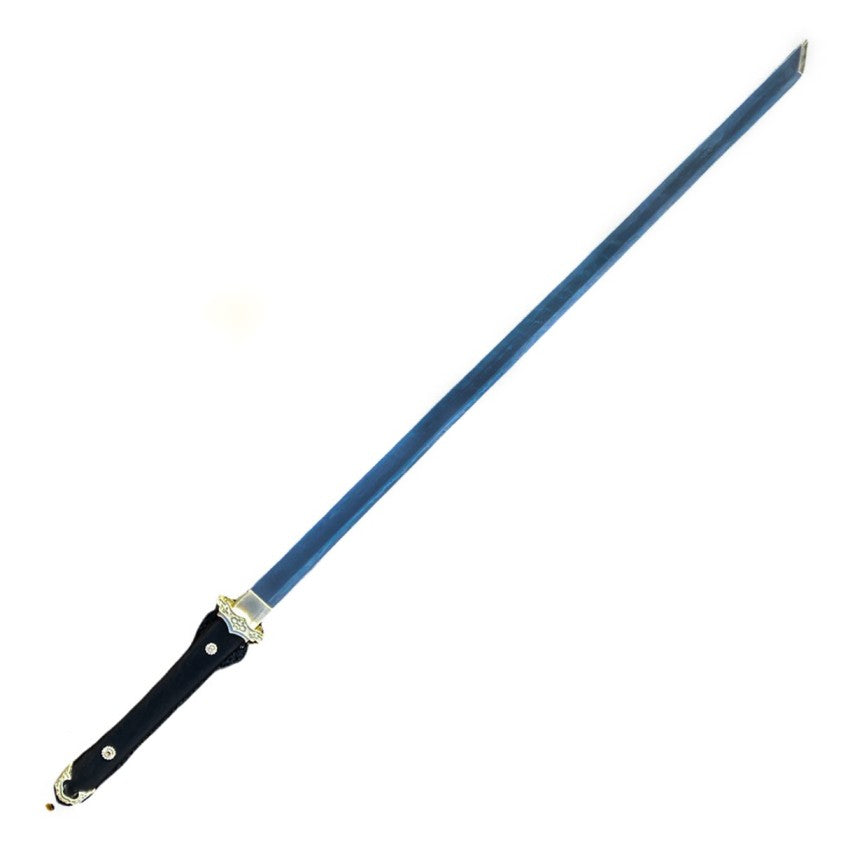
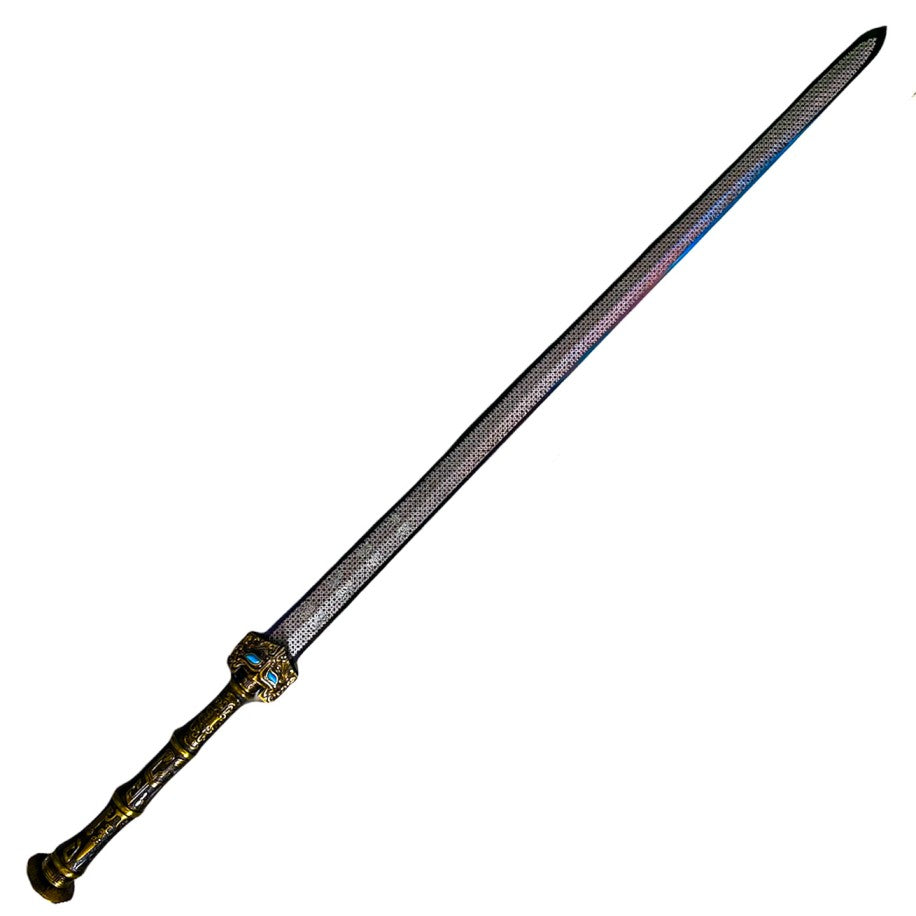
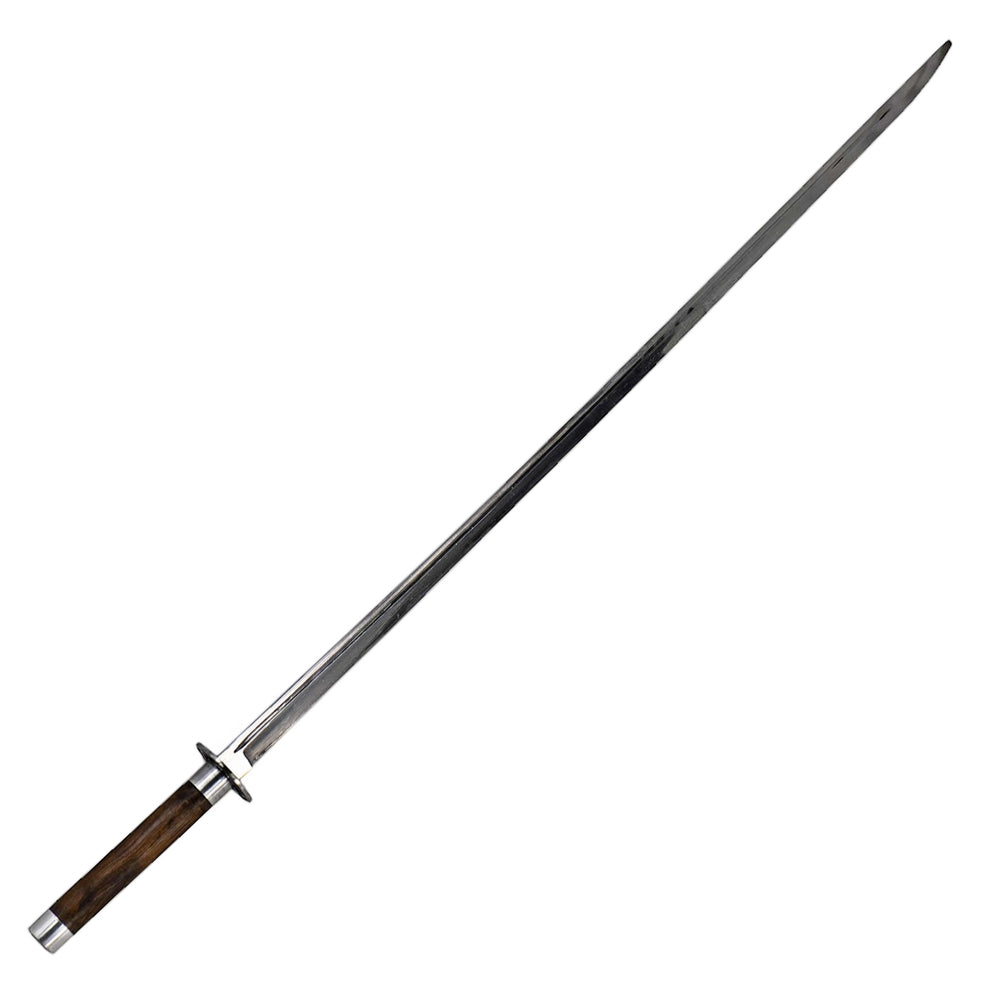
Explore Chinese swords inspired by more than three thousand years of Chinese sword-making tradition — from the Shang dynasty bronze blades to the elegant straight swords of Tang dynasty scholars and the curved sabers of Qing dynasty cavalry. This collection includes jian straight swords, dao curved sabers, tai chi practice swords, kung fu training blades, ceremonial scholar's swords, and decorative Chinese swords designed for martial artists, collectors, reenactors, cosplayers, and anyone drawn to the artistry of Chinese blade culture.
The Chinese sword tradition is one of the oldest and most refined in world history. Where European sword design changed dramatically across the medieval, Renaissance, and modern periods, Chinese swords maintained a remarkable continuity — the basic jian straight sword and dao curved saber forms developed during the Bronze Age and Iron Age remained recognizable through three thousand years of Chinese history. Chinese swords appear in poetry, philosophy, opera, Taoist religious practice, and martial arts traditions that remain alive today, from Wudang temple swordsmanship to modern wushu performance.
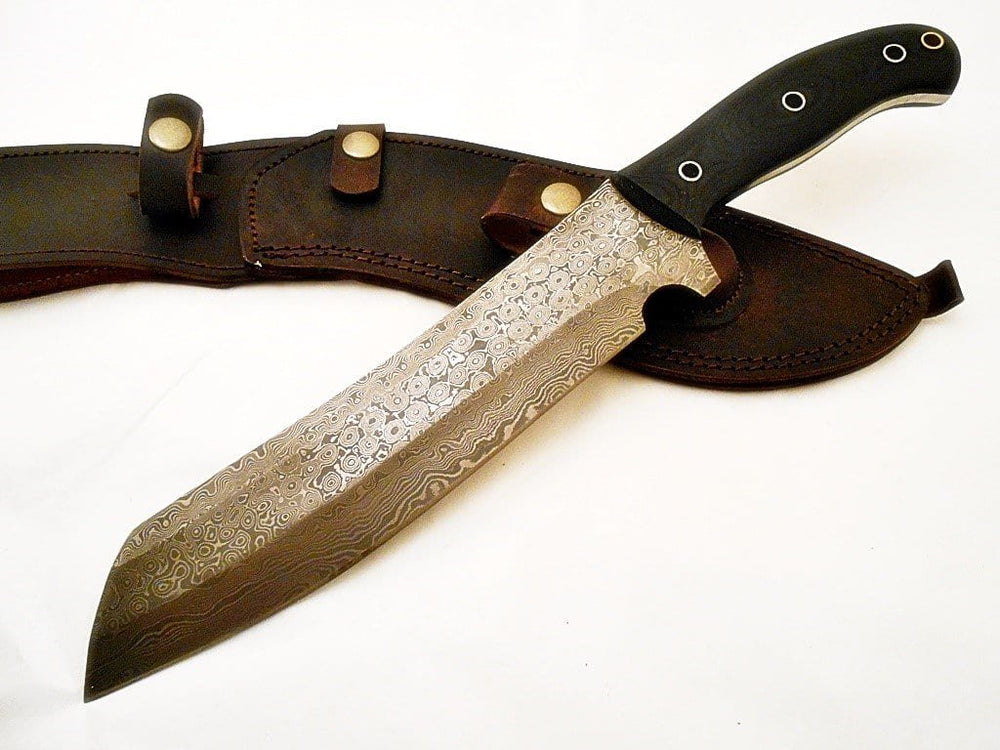
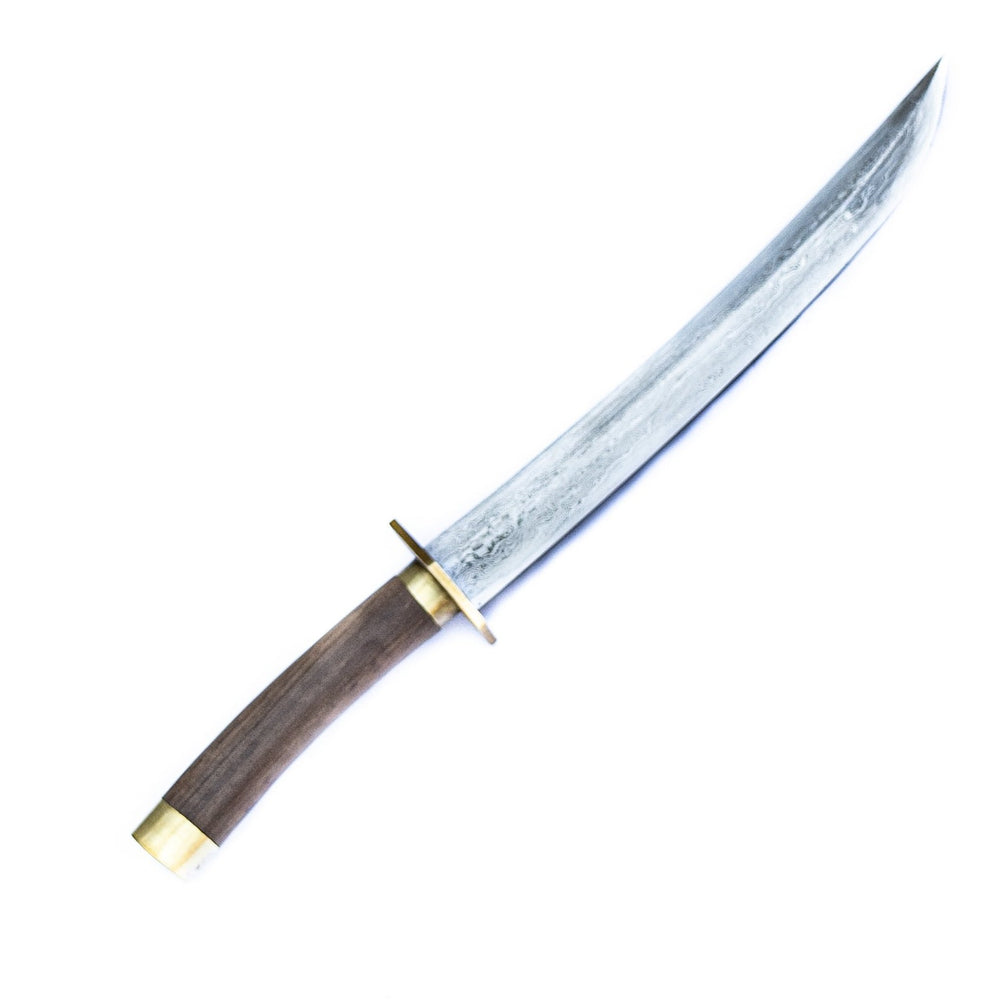
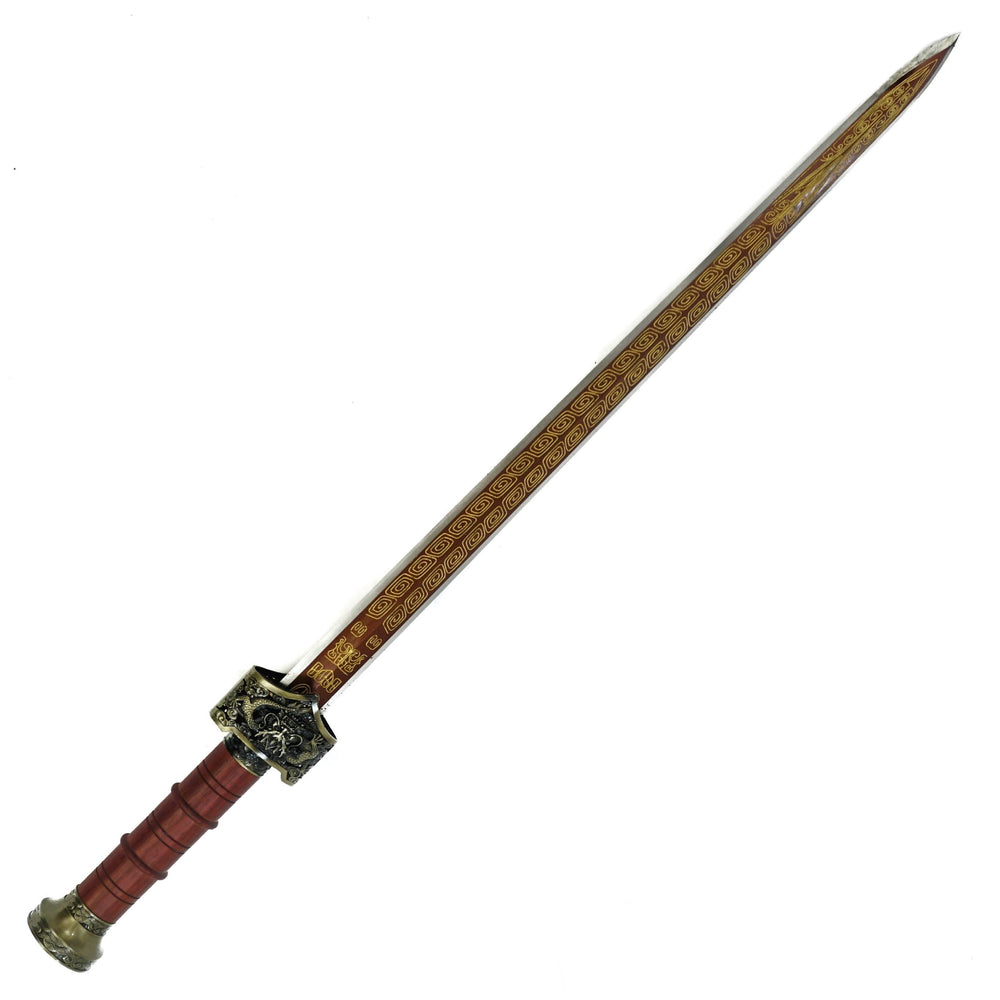
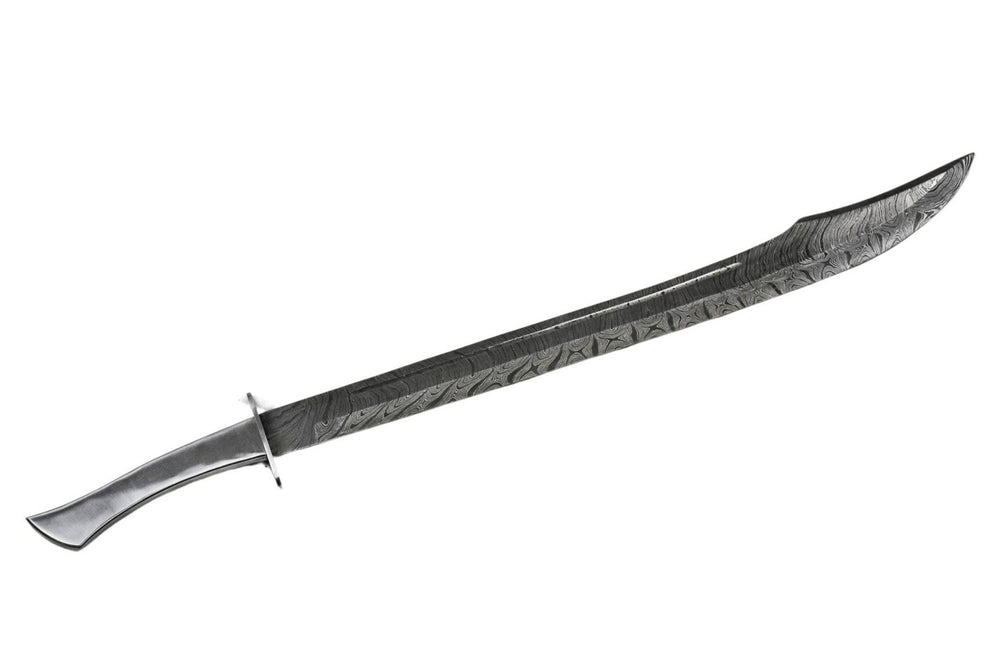
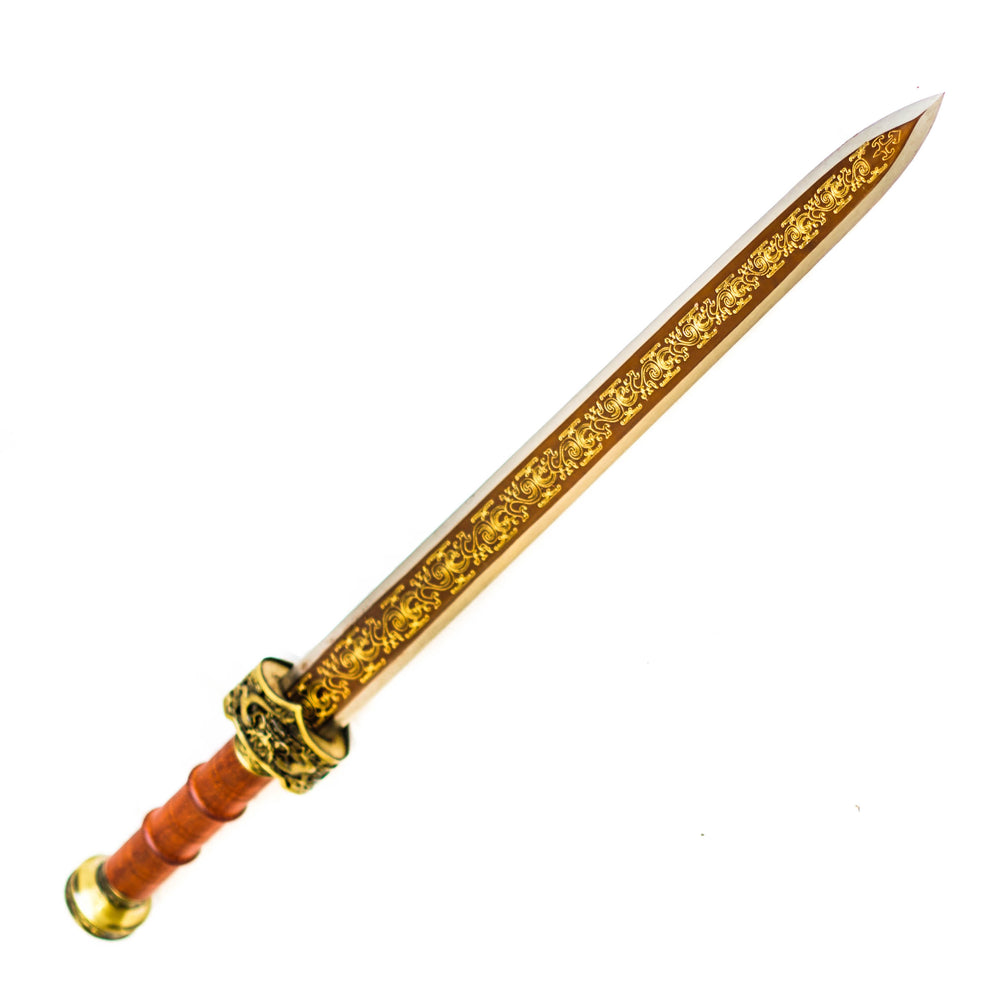
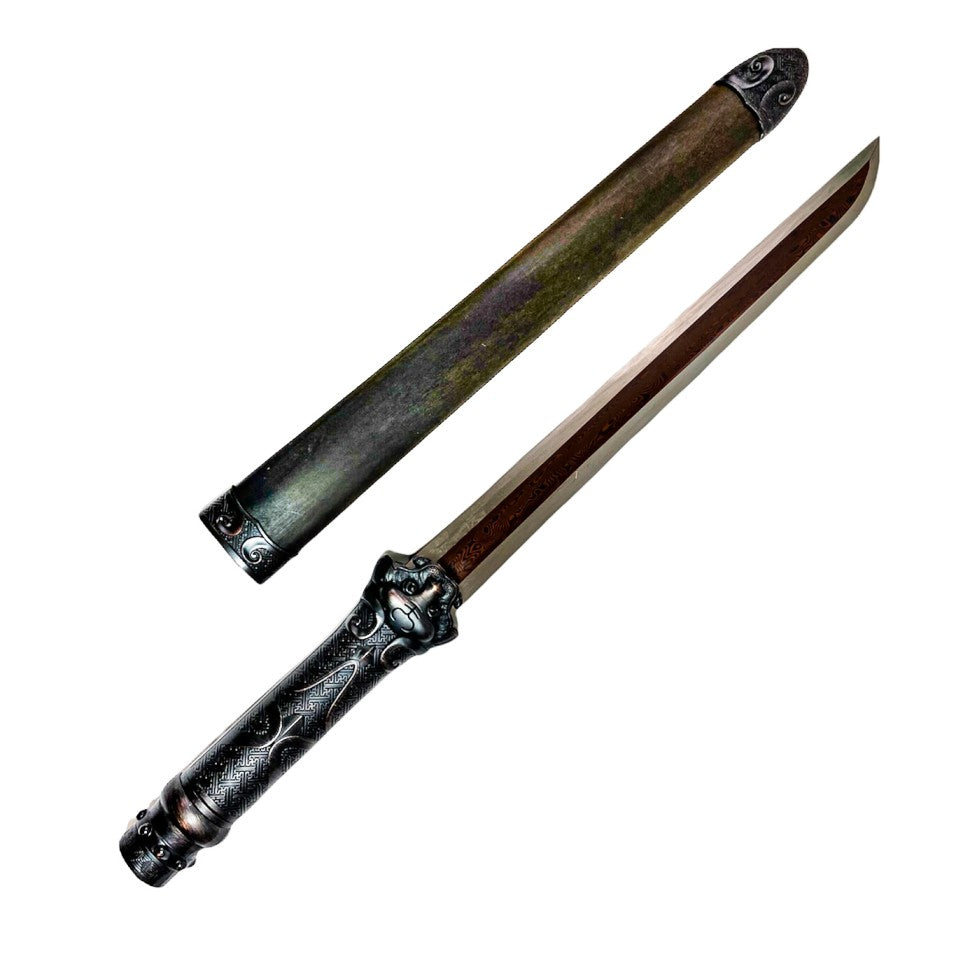
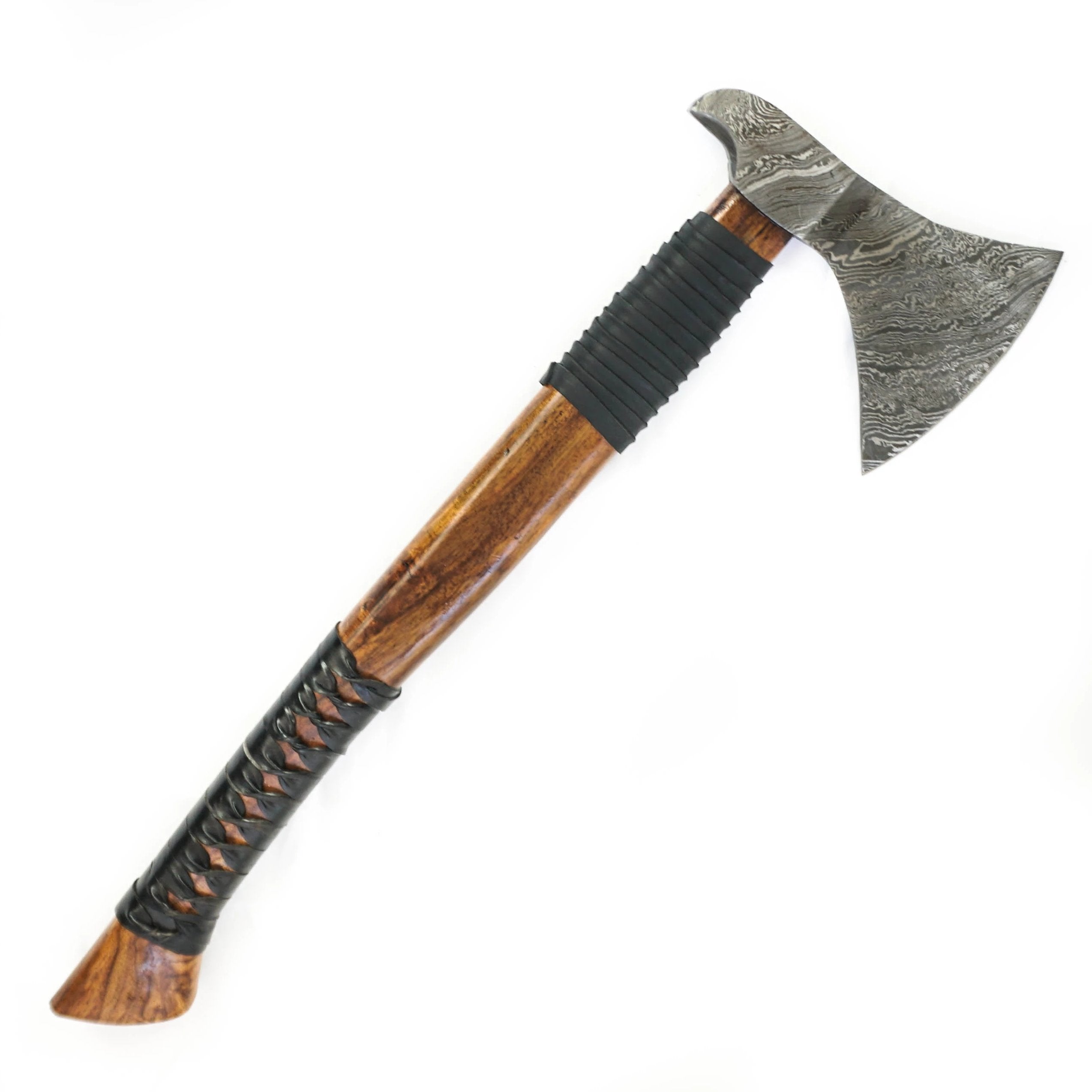
Our Chinese sword collection includes designs with high-carbon steel blades, traditional folded steel construction echoing classical Chinese forging techniques, rosewood and ebony handles, brass and steel fittings, distinctive Chinese pommels, and lacquered wooden scabbards with brass mounts. Blades are forged from 1060 or 1095 carbon steel, T10 tool steel, or pattern-welded Damascus steel for cutting and serious martial arts use, with stainless steel options for decorative display and lighter practice. Many include traditional sword tassels (jian sui) and authentic Chinese mountings.
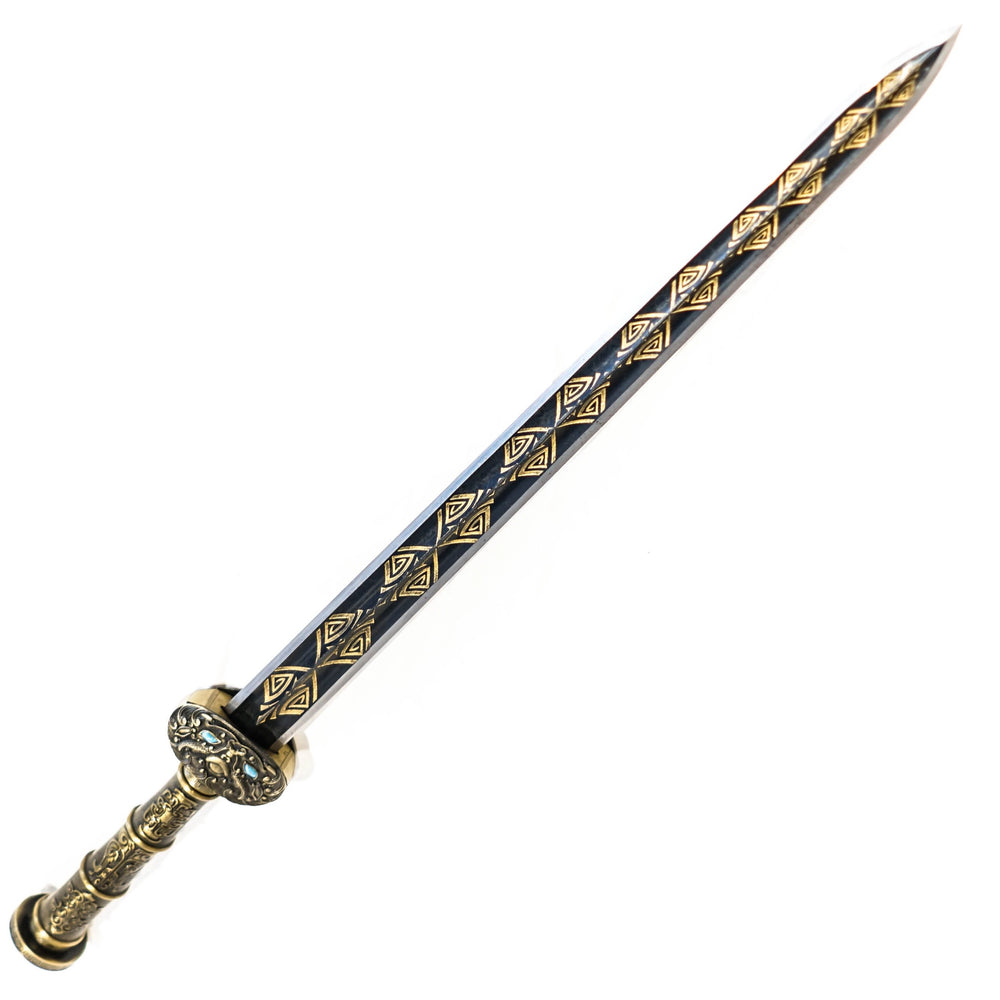
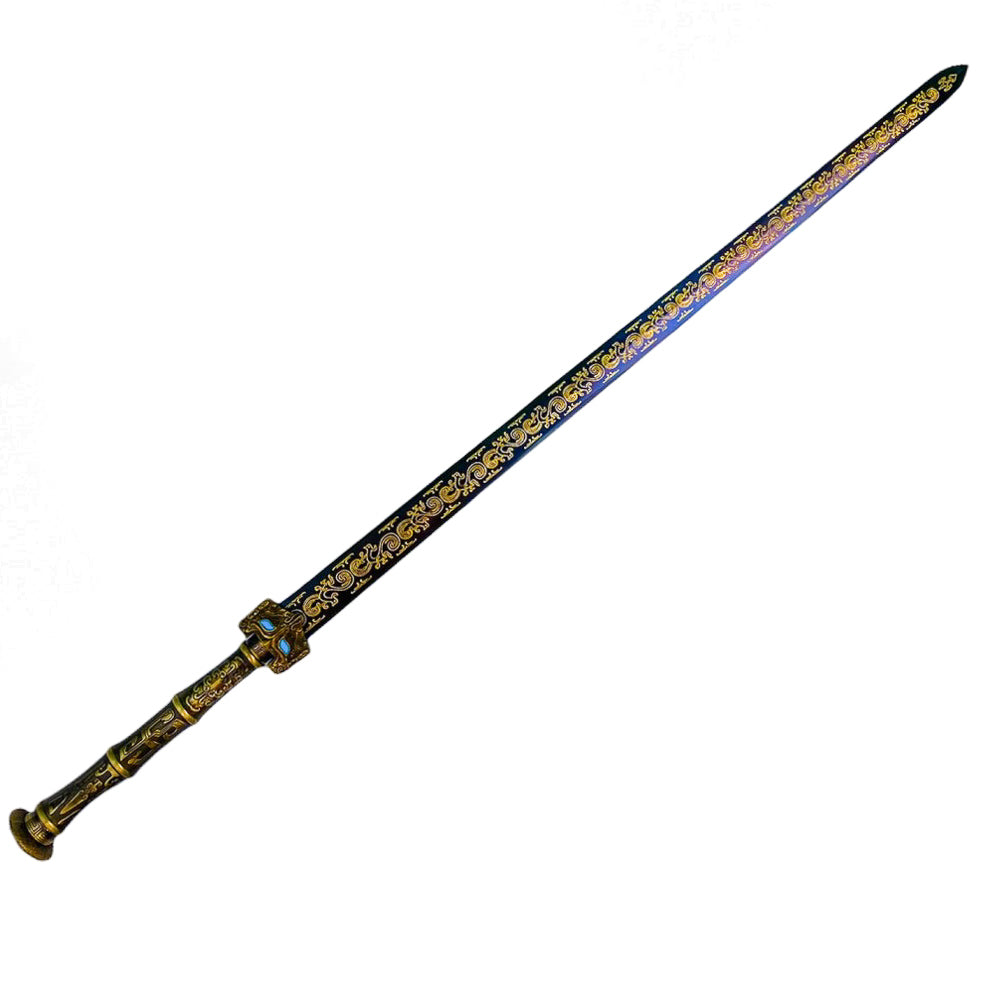
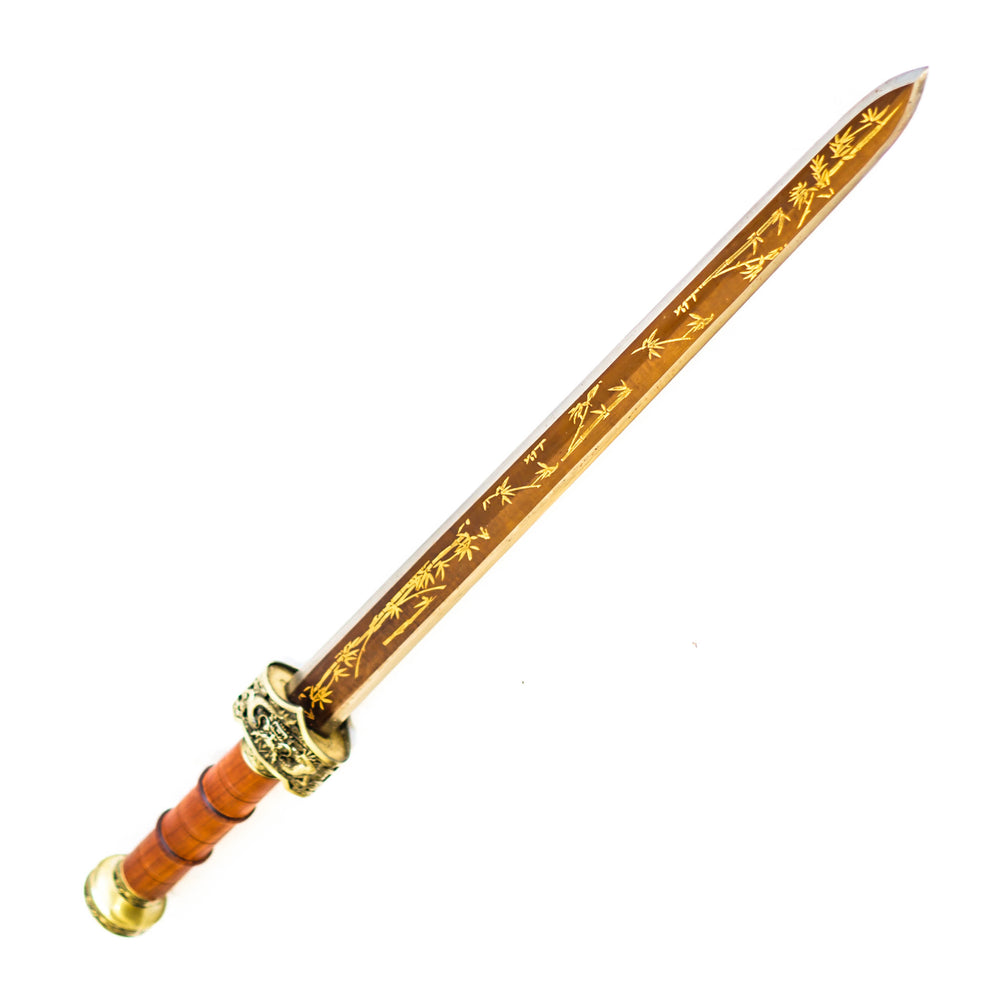
The Chinese sword family splits into two main lineages with distinct philosophies and uses. The jian is the straight, double-edged Chinese sword — known in classical Chinese culture as the "gentleman of weapons" (君子之器) and associated with scholars, Taoist priests, military officers, and the refined martial arts traditions of tai chi and Wudang swordsmanship. The jian's straight blade and emphasis on precision, footwork, and circular technique reflect the philosophical depth of Chinese sword culture. Variants include the tai chi jian (often lighter and more flexible for the slow-form practice of taijiquan), the Han jian (the historical Han dynasty straight sword with a distinctive long blade), and the wushu jian (the flexible competition sword used in modern Chinese martial arts performance).
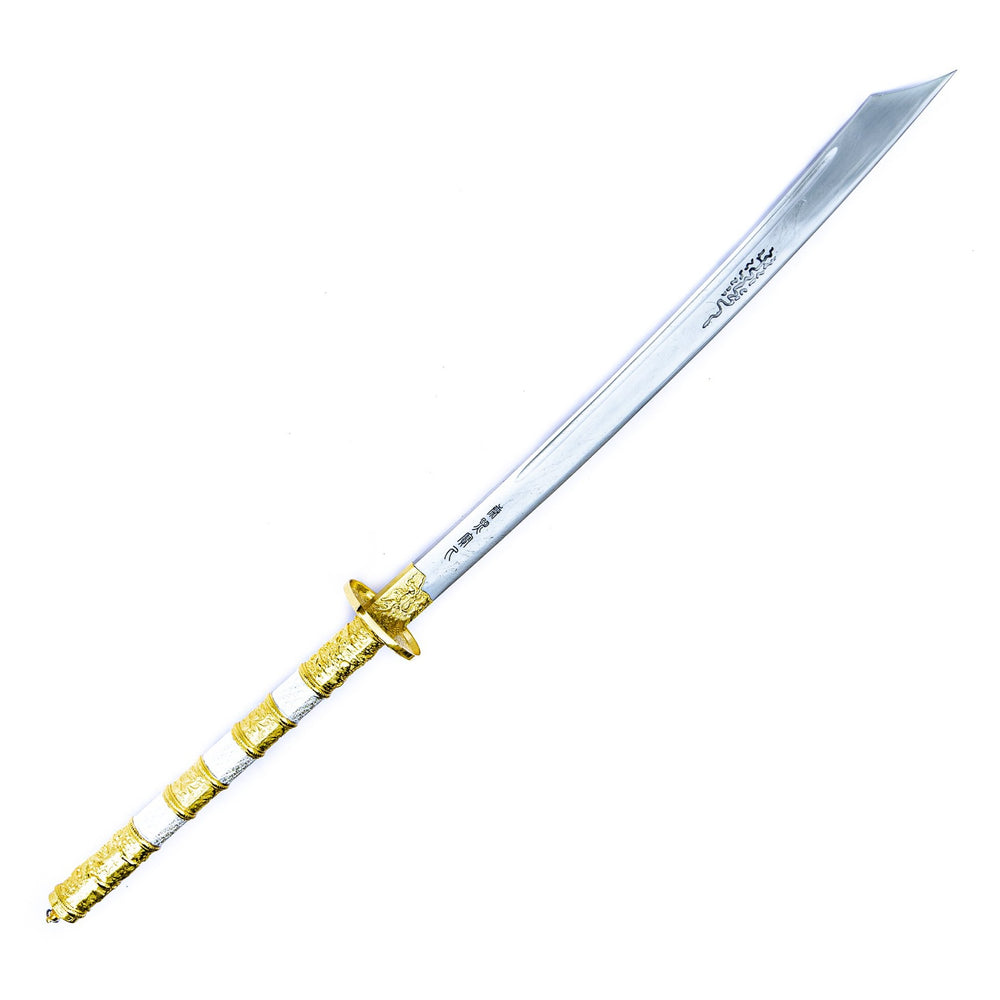
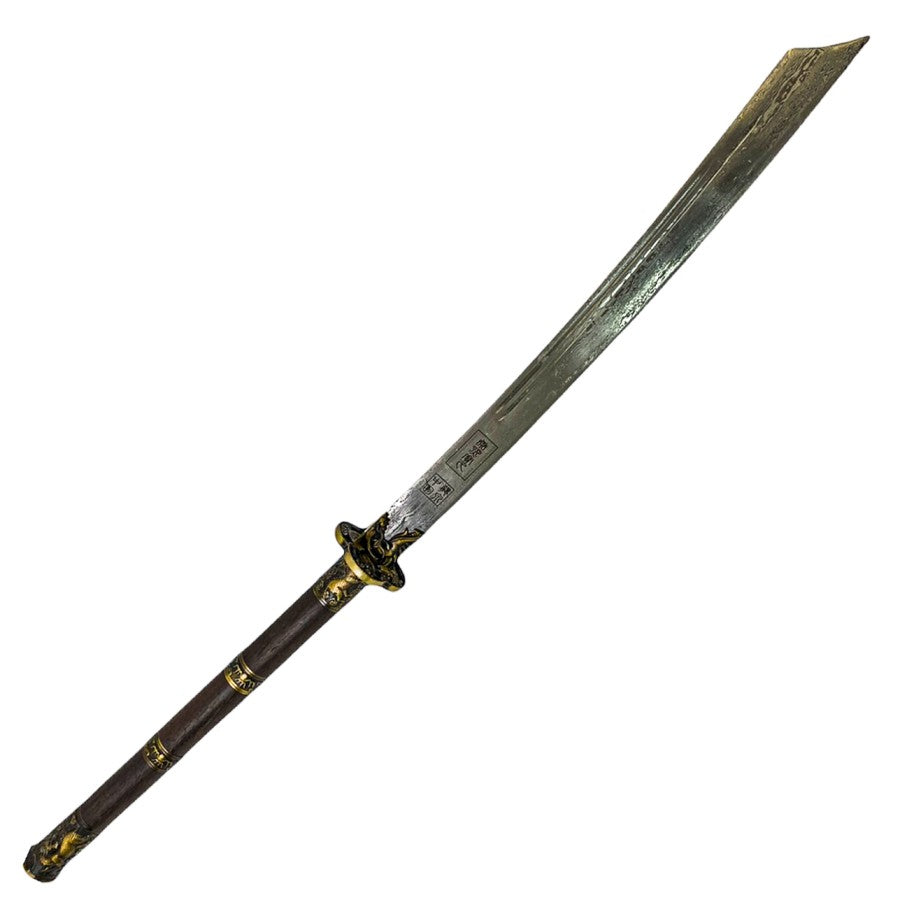
The dao is the single-edged curved Chinese saber — called the "general of weapons" (百兵之帅) and traditionally associated with soldiers, cavalry, and battlefield use. Where the jian represented scholarly refinement, the dao represented military pragmatism. The liuyedao ("willow leaf saber") is the classic Ming and Qing dynasty cavalry dao with a moderate curve. The yanmaodao ("goose-quill saber") is the straighter dao variant, blending dao and jian characteristics. The niuweidao ("oxtail saber") is the late Qing civilian dao with a flared tip section — one of the most recognizable Chinese swords in kung fu cinema. The piandao is the deeply curved naval and dueling saber.
Specialty Chinese sword designs include the butterfly swords (hudie shuangdao) — paired short blades used in Wing Chun kung fu, traditionally carried in a single shared scabbard. The nine-ring broadsword features nine metal rings along the spine that produce a distinctive sound during cuts and serve as both decorative and tactile feedback. The changdao (or miaodao) is the two-handed long saber used by Chinese troops to counter Japanese piracy along the Ming-era coast, drawing on Japanese sword tactics adapted for Chinese military use. Modern kung fu practice swords and wushu performance swords round out the collection with flexible, lightweight designs optimized for form practice and competition.
The jian holds a unique place in Chinese culture. Across three millennia, it became the sword of choice for scholars, officials, Taoist priests, and the educated elite — a symbol of refinement, discipline, and moral cultivation rather than raw battlefield use. Confucian and Taoist philosophy linked the jian's straight, balanced geometry to virtues like honesty, integrity, and the cultivated self. Tang dynasty poets wrote about jian practice as a path to inner clarity. Taoist priests carried wooden or steel jian as ritual implements for ceremonies. The legendary swords of Chinese mythology — Gan Jiang and Mo Ye, the paired swords forged by master smiths and named for the husband-and-wife smiths who created them — are jian. This cultural weight is why jian remain central to tai chi practice, Wudang martial arts, and modern Chinese sword culture, where the focus is as much on personal development as combat application.
Battle-ready Chinese swords feature full-tang construction, high-carbon or spring steel blades, and proper heat treatment suitable for cutting practice and serious martial arts use. Decorative Chinese swords are typically made from stainless steel and are designed for wall display, costume use, cosplay, and themed home decor. Wushu performance swords occupy a unique middle category — built to be flexible and lightweight enough to flex dramatically during competition forms, where the blade's vibration and "wave" is part of the visual presentation. Tai chi practice swords are typically blunt, balanced for slow-form practice, and built for thousands of repetitions of the standardized taijiquan sword forms.
These Chinese swords are popular for tai chi and taijiquan sword practice, Wudang and Shaolin martial arts study, Chinese wushu competition and performance, kung fu cinema enthusiasts, traditional Chinese culture collecting, museum-style home displays of Asian weaponry, themed offices and dens honoring Chinese history and philosophy, cosplay for productions set in dynastic China, lunar new year and Chinese cultural celebrations, ceremonial gifts honoring Chinese heritage, and collector pieces celebrating one of the world's most continuously refined sword traditions. Many customers choose Chinese swords as meaningful gifts for tai chi practitioners, kung fu students, fans of wuxia literature and films, and admirers of Chinese culture.
Browse the collection to find jian straight swords, dao curved sabers, tai chi practice blades, butterfly swords, and decorative Chinese swords that fit your training, collection, or display.
What's the difference between a jian and a dao? The jian is the straight, double-edged Chinese sword associated with scholars, Taoist priests, and refined martial arts like tai chi — known as the "gentleman of weapons." The dao is the single-edged curved Chinese saber associated with soldiers, cavalry, and battlefield use — known as the "general of weapons." Jian emphasize precision, footwork, and thrust-and-cut technique; dao emphasize powerful slashing cuts and were the standard Chinese military sword for most of imperial history. They represent the two foundational philosophies of Chinese sword tradition.
What is a tai chi sword? A tai chi sword is a jian — the straight double-edged Chinese sword — designed specifically for taijiquan sword practice (taijijian). Tai chi swords are typically blunt or only lightly sharpened, with flexible blades balanced for the slow, deliberate movements of the taijiquan sword forms. The practice emphasizes whole-body coordination, footwork, breathing, and the meditative qualities of slow-form movement rather than combat application. Tai chi swords are central to traditional taijiquan curriculum and modern tai chi schools worldwide.
What is a wushu sword? A wushu sword is a modern Chinese martial arts competition sword designed for the standardized wushu forms practiced in modern Chinese sport martial arts. Wushu jian and dao are typically thinner and more flexible than traditional swords, built to flex dramatically during cuts and produce visible blade vibration that's considered part of the visual presentation in competition. They are performance instruments, not combat weapons, and shouldn't be confused with traditional or battle-ready Chinese swords.
What are butterfly swords? Butterfly swords (hudie shuangdao, "butterfly double swords") are short paired blades used in Wing Chun kung fu and other southern Chinese martial arts. Each blade is roughly forearm-length with a D-shaped guard protecting the hand and a hooked quillon for catching opposing weapons. They are traditionally carried as a matched pair in a single shared scabbard and used together in coordinated two-hand techniques. Butterfly swords were the highest-level weapon in traditional Wing Chun curriculum and remain central to Wing Chun training today.
Did Chinese swords use folded steel like Japanese swords? Yes — Chinese smiths used folded steel construction long before the technique became famous through Japanese swords. Han dynasty Chinese blades from over 2,000 years ago show pattern-welded and folded construction, and Chinese metallurgy was highly advanced throughout the imperial era. Some scholars argue Chinese folded steel techniques influenced or paralleled Japanese development. Modern Chinese swords continue to be made with traditional folded steel, pattern welding, and Damascus construction alongside more modern monosteel methods.