

Real vs. Imitation Damascus Steel: What Buyers Need to Know
Real vs. Imitation Damascus Steel: A Buyer's Guide
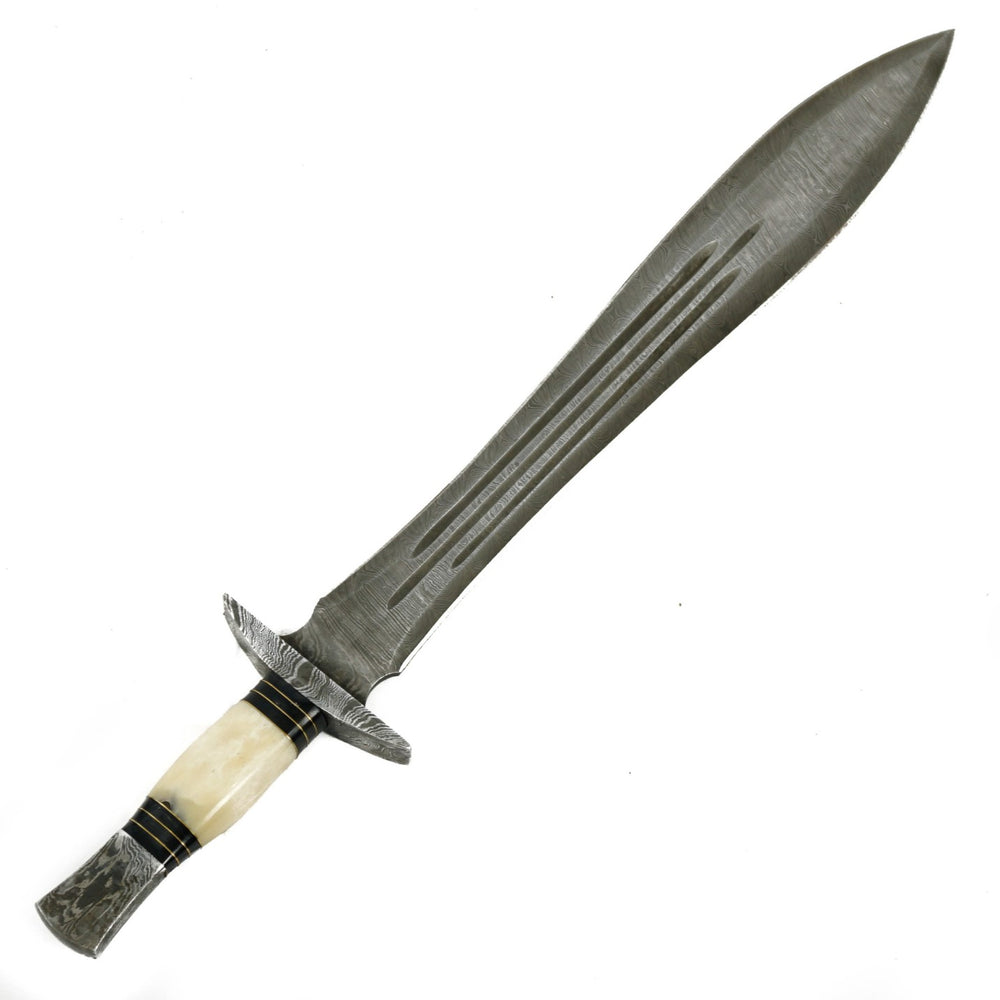
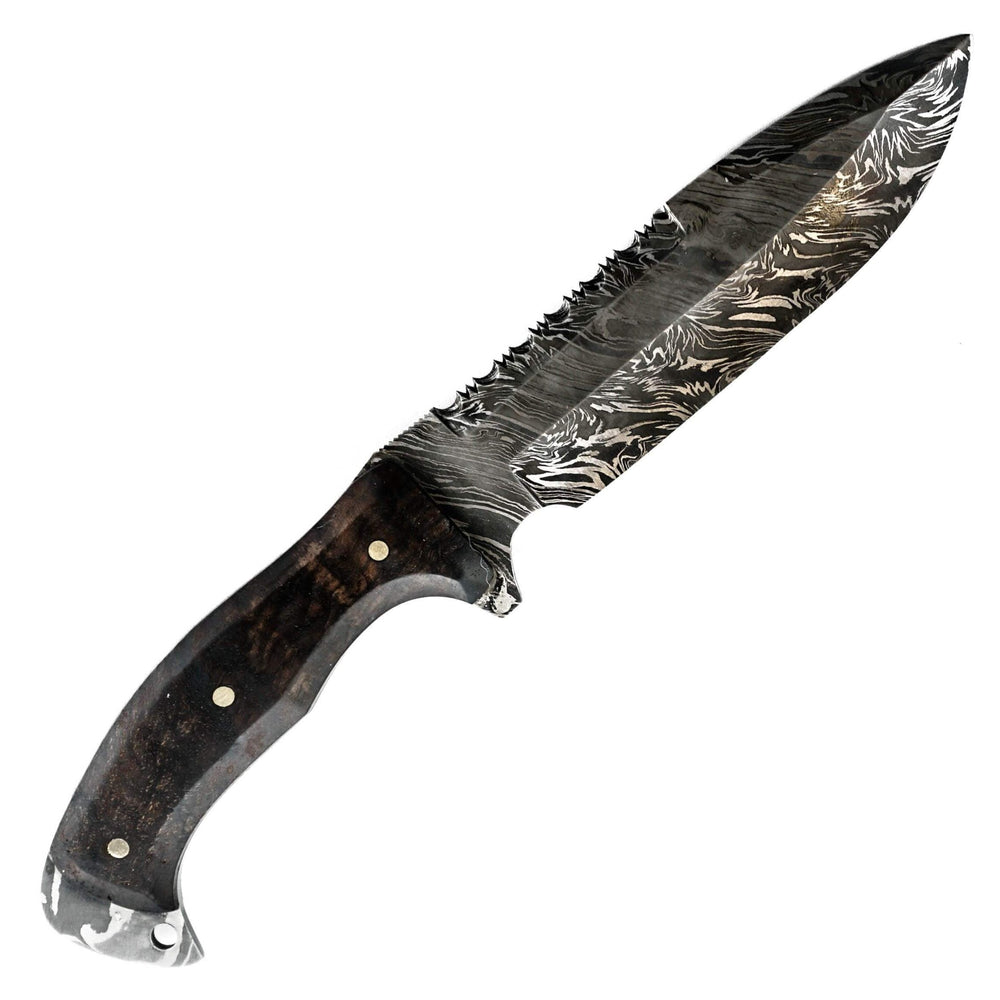
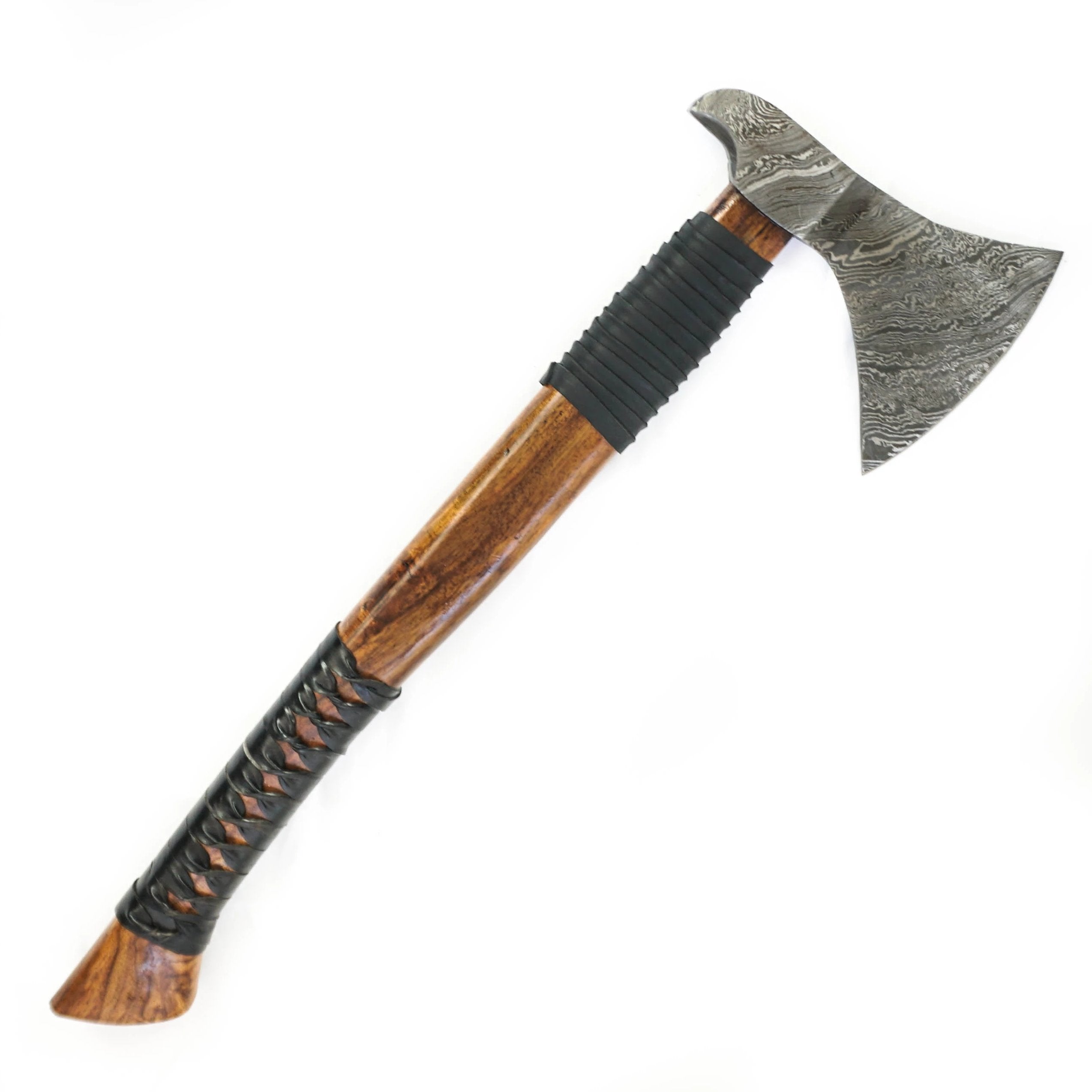
Damascus steel is one of the most recognizable blade patterns in the market and one of the most frequently misapplied terms. Real Damascus, also called pattern-welded steel, is made by forge-welding layers of different steels together, manipulating the billet to build up layers, then grinding the surface to reveal a flowing, wave-like pattern that reflects actual structural variation in the steel.
Some blades labeled Damascus use a surface treatment applied to monosteel. The pattern on these is etched or surface-patterned onto a single piece of steel and does not reflect any difference in the underlying material. Both types exist in the market, and understanding the distinction helps buyers evaluate what a listing is actually offering.
This guide explains how to read a listing, what to expect in terms of performance, and how to care for genuine pattern-welded Damascus steel correctly.
Browse Damascus steel swords and knives for the full collection.
What Is Damascus Steel?
Pattern-welded Damascus gets its characteristic appearance from the forge-welding process itself. The pattern reflects actual structural variation between the steel layers, not a surface coating.
Pattern-welded Damascus is produced by forge-welding two or more types of steel together. A common combination pairs a high-carbon steel like 1095 with a lower-carbon or nickel-containing steel such as 15N20. The smith heats both materials to welding temperature and joins them under hammer pressure, then continues folding or manipulating the billet to build up layers.
When the finished blade is acid-etched, the two steel types react differently. High-carbon areas etch darker. Lower-carbon or nickel-rich areas resist the etch and remain brighter. The contrast between them reveals the flowing pattern Damascus is known for.
Layer count is sometimes listed as a quality indicator. Higher layer counts can produce finer, more uniform patterns. Lower layer counts tend toward bolder contrast. Layer count is one factor among several in evaluating a Damascus blade, alongside the specific steels used and the quality of heat treatment. It is not a direct measure of performance on its own.
The term "Damascus" in the modern sword and knife market refers to this pattern-welded construction. It is a different material from the legendary Wootz steel historically produced in South Asia, though both have carried the name at different times.
Real vs. Surface-Treated: How to Read a Listing
The key question is whether the pattern is part of the steel or applied to its surface. Listing details and a direct question to the seller are the most reliable ways to find out.
On a genuine pattern-welded blade, the visual pattern is a result of physically layering different steels during the forging process. The pattern runs through the depth of the blade because it is a structural feature of the material itself.
On a surface-treated blade, the pattern is applied to the outside of monosteel through acid etching, laser marking, or mechanical surface treatment. The underlying steel is uniform throughout. This does not make the blade a poor performer. A well-made monosteel blade in 1095 carbon steel can cut well and hold an edge. The distinction matters for buyers who are paying for or expecting genuine forge-welded construction.
Useful things to check in a listing:
-
Look for the phrase "pattern-welded" in the specification, not just in the product title.
-
A stated layer count is a useful signal that the seller is describing genuine layered construction. Listings that describe the visual pattern but provide no layer count or steel combination are worth a follow-up question.
-
Price is a practical guide. Genuine pattern-welded Damascus at full sword length requires significant forge time. Listings at very low price points for full-size Damascus swords may reflect surface treatment rather than forge-welded construction.
-
Contacting the seller to ask about the steel types and layer count is the most direct route. Sellers of genuine Damascus can typically confirm this information readily.
Why Genuine Damascus Costs More
The price premium for genuine Damascus reflects the time and skill involved in forge-welding and manipulating the billet. Each finished blade is genuinely unique in its pattern.
Creating a pattern-welded billet requires multiple forge-welding sessions, careful temperature management at each stage, controlled folding or manipulation to build the desired pattern structure, and post-forge finishing work. This takes meaningfully longer than working a monosteel blank of the same dimensions.
The material cost is also higher because the steel combination is selected for both pattern contrast and performance characteristics. Two different steels need to be sourced, prepared, and joined.
The visual result is also genuinely distinct. No two pattern-welded billets produce exactly the same pattern. Each Damascus blade is unique in a way that a machined or surface-treated monosteel blade cannot replicate.
Damascus Steel Performance: What to Expect
Performance from a Damascus blade depends more on the base steels and heat treatment than on the layered construction itself. Genuine Damascus is not automatically sharper or tougher than a well-made monosteel.
A well-made Damascus blade using 1095 and 15N20 steel, properly heat-treated, can perform comparably to a monosteel blade of similar carbon content and construction. The visual pattern does not add or reduce cutting performance as a direct function of the layering process.
Edge retention on a well-made Damascus blade can be good, and some practitioners find that the alternating zones produce a useful edge effect over time. This depends on the specific steels used, the layer structure, and the heat treatment applied rather than being a guaranteed property of Damascus construction in general.
What does differ is maintenance. Because Damascus contains zones of both higher and lower carbon content, the high-carbon areas can be more reactive to moisture and air than a uniform monosteel blade. Regular oiling after handling is an important part of owning Damascus steel.
How to Care for Damascus Steel
Damascus steel rewards consistent maintenance. A routine of wiping and oiling after every handling session helps preserve both the pattern and the blade's structural condition.
The three care steps are cleaning, oiling, and storage. All three matter.
Cleaning
After any handling session, use a clean, lint-free cloth to remove fingerprints and surface moisture. Fingerprints carry oils and salts from skin that can react with high-carbon steel. Use a clean cloth when wiping the blade, and avoid leaving fingerprints or moisture on steel surfaces.
Wipe slowly from the guard toward the tip, keeping your hand away from the sharpened edge at all times. If there is visible contamination, apply a small amount of blade oil to the cloth before wiping. Do not apply liquid directly to the blade surface. Avoid water, household cleaners, and solvents, which can damage the etched pattern and strip the protective oil barrier.
Oiling
Apply a thin, even coat of oil after every cleaning session and before any extended storage period. The oil creates a barrier between the steel surface and moisture in the air. Without it, the high-carbon areas of a Damascus blade are more vulnerable to surface oxidation than monosteel.
Use a clean, lint-free cloth or cotton applicator. Work the oil evenly across both flats, both bevels, and the full blade length. Remove excess oil with a clean dry cloth. Pooled oil at the guard or in groove areas can attract dust over time, so wiping off the excess is part of the process.
For displayed Damascus, checking and re-oiling every two to three months is a reasonable minimum. In climates with higher humidity or during seasons with significant moisture changes, more frequent attention is worthwhile.
Storage
Store Damascus steel in a dry, stable environment. Leather-lined scabbards and some wood-lined cases can trap moisture against the blade surface over extended periods. Some wood types, particularly oak, release organic compounds that react with steel over time. For longer-term storage, wrapping the blade in a clean, lightly oiled cloth and using silica gel packs in the storage area provides better protection than most traditional scabbard storage.
For care products, see the cleaning kits and sharpeners collection.
Finding Damascus Steel at Battling Blades
Listings that specify layer count and steel combination give you the clearest picture of what you are buying before committing to a purchase.
Battling Blades carries a range of pattern-welded Damascus swords and knives across several collections. Product pages in this range typically include layer counts and steel combination details where the seller has provided them. The Damascus Dynasty collection focuses specifically on pattern-welded artistry across blade types.
Browse the Damascus steel collection for the full range.
Explore the Damascus Dynasty collection for pieces selected for visual quality and pattern-welded construction.
Frequently Asked Questions
Q: What is the difference between real Damascus and surface-treated Damascus?
A: Genuine pattern-welded Damascus is made by forge-welding multiple steel types together. The pattern runs through the full depth of the blade and reflects actual variation in the steel layers. Surface-treated blades have the Damascus pattern applied to the outside of monosteel through etching or other surface processes. The pattern does not extend below the surface.
Q: Does Damascus steel perform better than monosteel?
A: Not automatically. Performance depends on the base steels used and the quality of heat treatment applied. A well-made monosteel blade and a well-made Damascus blade of comparable carbon content can perform similarly in cutting contexts. Damascus has a distinctive appearance and requires more maintenance, but is not inherently sharper or tougher than a comparable monosteel blade.
Q: How do I verify a Damascus listing before buying?
A: Look for a stated layer count, the specific steel types used in the billet construction, and a description that confirms pattern-welded construction rather than surface treatment. If the listing does not include these details, contacting the seller directly is the most reliable approach. Sellers of genuine Damascus are generally able to confirm this information.
Q: Can Damascus steel rust?
A: Yes. The high-carbon areas in a Damascus blade are reactive to moisture and can develop surface oxidation if the blade is left unprotected. The time frame depends on conditions including ambient humidity and temperature. Regular oiling after handling and consistent checks during display or storage are the most effective ways to prevent it.
Q: What is the return policy if my Damascus sword arrives damaged?
A: Battling Blades offers a 30-day return window on eligible items. Original shipping charges are not refundable. Return shipping is at the buyer's expense. Customized or engraved items may not be eligible for return. Full details are on the refund policy page.
Browse the Damascus steel collection.
View cleaning kits and sharpeners for care supplies.
Read customer reviews at Battling Blades reviews.